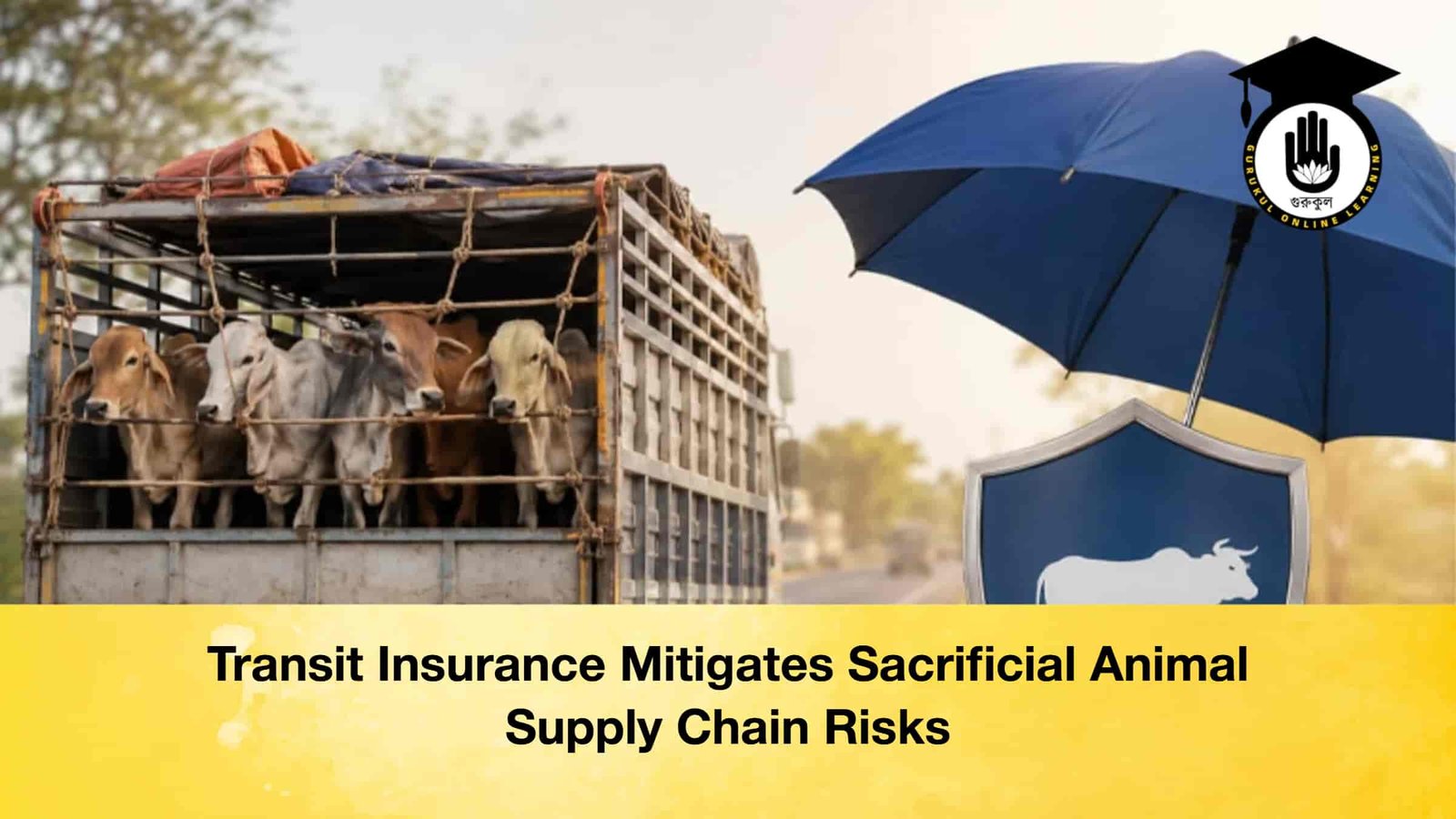
As the annual Eid-ul-Adha festival approaches, a substantial logistical network has emerged across Bangladesh to facilitate the supply of sacrificial livestock. Official data released by the Ministry of Fisheries and Livestock indicates that the total volume of sacrificial animals available for the 2026 festive period stands at 12,333,840 heads. This aggregate livestock inventory includes 5,695,878 cattle and buffaloes, 6,632,307 goats and sheep, and 5,655 animals of other distinct species.
Government projections estimate national demand at approximately 10,106,334 animals, resulting in a net domestic surplus of 2,227,506 animals. This supply surplus mirrors patterns recorded during previous market cycles. In 2025, total national sacrifices reached 9,136,734 heads, leaving an unsold surplus of approximately 3.31 million animals. Market analysts note that domestic livestock rearing and festive trading have developed into a multi-billion Taka economic sector.
Supply Chain Logistics and Transport Demands
A significant portion of the livestock economy relies on nationwide logistics. Thousands of animals are transported daily via commercial trucks from primary breeding regions—including the Northern districts, Kushtia, Jessore, Rajshahi, and Jamalpur—to designated markets in Dhaka and other major urban centres.
However, long-distance road transport exposes traders and farmers to serious operational hazards. These include highway accidents, severe vehicle overcrowding, prolonged traffic congestion, and heatstroke caused by extreme summer temperatures. Traders also frequently cite extortion along transport routes as a persistent financial challenge. A single vehicular accident can result in the loss of multiple cattle, causing sudden financial losses for smallholder farmers and seasonal merchants.
Alternative Rail Operations and Insurance Parameters
To lower these risks, Bangladesh Railway has reintroduced its specialised “Cattle Special Train” service for the 2026 festive season. The official operational costs and capacity thresholds for this rail-based transport alternative are structured in the table below:
| Transport Framework / Service | Unit Rental Cost | Per-Unit Livestock Capacity | Equivalent Cost Per Head |
| Bangladesh Railway Cattle Special Train | BDT 8,000 per wagon | Approximately 16 cattle | BDT 500 |
| Conventional Commercial Road Trucks | Market-driven rates | Variable based on truck size | High (Exposed to traffic and environmental risks) |
While the rail infrastructure lowers individual transit costs to approximately BDT 500 per head, its overall capacity remains limited. As a result, the vast majority of livestock transport across the country continues to rely on road networks.
Livestock Transit Insurance Coverages
Given these transport risks, livestock transit insurance policies have become increasingly important. Multiple non-life insurance institutions, including Phoenix Insurance PLC, Nitol Insurance PLC, and Green Delta Insurance PLC, now offer targeted livestock transit policies. These insurance frameworks protect policyholders against risks encountered during transit, including:
-
Accidental falls from moving transport vehicles.
-
Fatalities or severe injuries resulting from road traffic accidents.
-
Natural hazards such as lightning strikes, severe storms, flooding, and accidental fires.
-
Fatalities resulting from venomous animal bites or severe heatstroke.
-
Financial compensation for emergency slaughter executed under the direct supervision of a registered veterinary surgeon.
Invasive technological integrations, such as digital tracking, Internet of Things (IoT) devices, and biosensors, are also being introduced to monitor animal location and vital signs in transit. This allows insurers to quickly verify accident metrics and accelerate claims processing timelines.
Premium Structures and Claims Verification Processes
The underwriting fees for these policies are calculated as a percentage of the total assessed market value of the livestock. Baseline annual premiums generally range between 2.75 per cent and 5.5 per cent. However, short-term policies tailored exclusively for the brief Eid transit period are offered at significantly lower rates, making them more affordable for seasonal merchants.
The claims settlement framework has been digitised to expedite payouts through mobile financial services or direct bank transfers. In the event of an accident or transit fatality, the claimant must follow a structured verification process:
Market Management and Market Awareness Challenges
Government data shows that 3,678 livestock markets will operate nationwide for the 2026 festive period. This includes 27 temporary markets authorized across the two municipal corporations of Dhaka. The Ministry has deployed 20 mobile veterinary medical teams alongside two specialized specialist medical teams to monitor animal welfare across these urban locations. The state has also integrated digital sales channels, removing all conventional market taxes (khajna) for online transactions to encourage digital trade.
Despite these institutional arrangements and insurance options, limited awareness among marginal farmers and seasonal traders remains a major challenge. Insurance experts note that setting up on-site transit insurance booths at major highway entry points, ferry terminals, and primary livestock markets could significantly lower seasonal financial losses across the agricultural sector. Given the scale of the sacrificial animal trade, expanding insurance coverage is essential to protect livelihoods and build a more resilient agricultural economy.