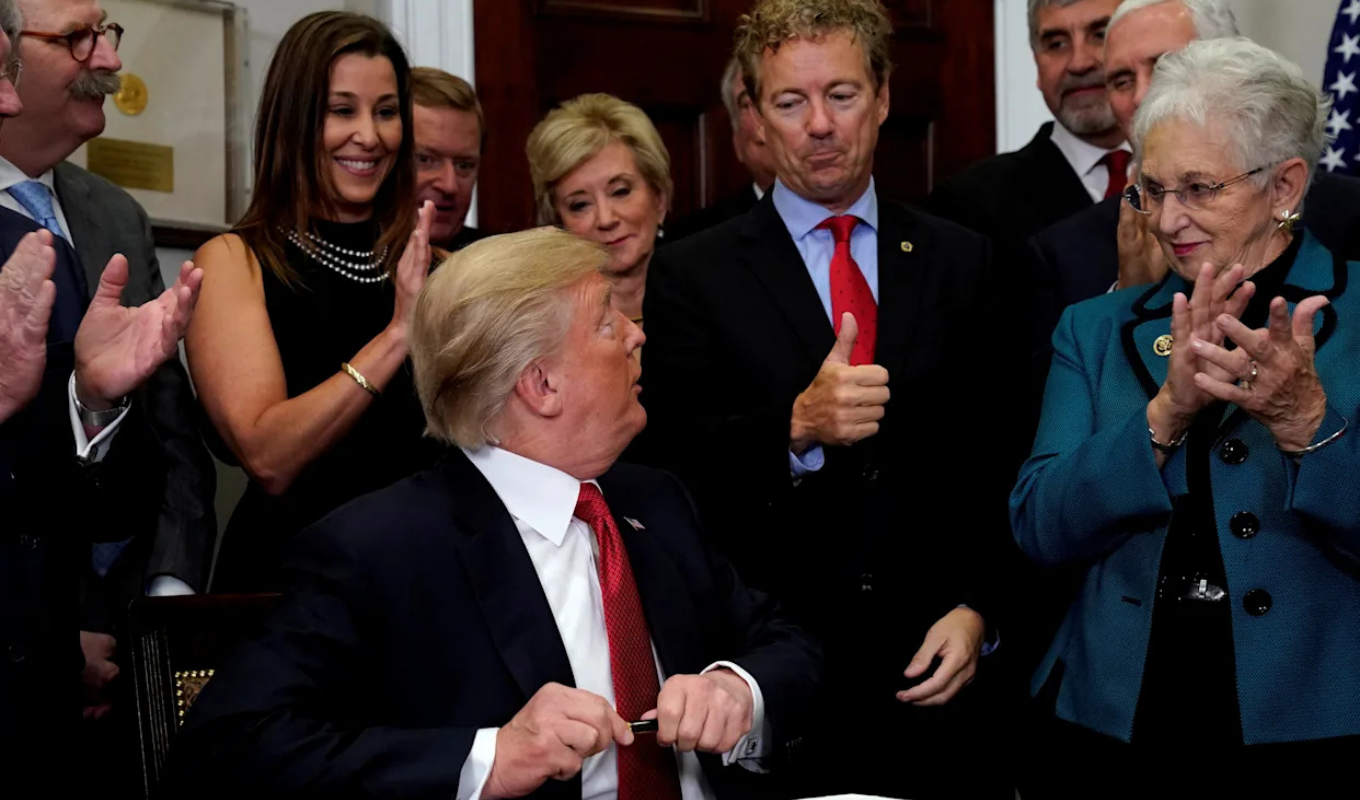
President Donald Trump, along with Republican lawmakers, has proposed a new alternative to the Affordable Care Act (ACA), one that would send health care money directly to consumers rather than to insurance companies. While details of the plan remain vague, this idea has garnered attention as Congress debates the future of affordable health insurance for millions of Americans.
The Debate Over ACA Tax Credits
Currently, Democrats are advocating for an extension of enhanced tax credits, which were introduced during the COVID-19 pandemic to help subsidize insurance premiums for low-income Americans. These enhanced credits are set to expire at the end of 2025, and without an extension, the cost of coverage for approximately 22 million Americans could more than double starting January 1, 2026.
Senate Majority Leader John Thune (R-SD) has promised a vote on the tax credits by mid-December, but Republicans, including House Speaker Mike Johnson (R-LA), have not committed to supporting them. The debate centers around whether the government should continue funding these subsidies or pursue other solutions.
Trump’s Proposal: Moving Money Directly to Consumers
Trump has expressed support for a system where money goes directly to consumers rather than to health insurers. In a Nov. 18 post on Truth Social, he reiterated his stance: “THE ONLY HEALTHCARE I WILL SUPPORT OR APPROVE IS SENDING THE MONEY DIRECTLY BACK TO THE PEOPLE.”
While the specifics are unclear, some lawmakers and former Trump administration officials are exploring ways to achieve this, such as utilizing Health Savings Accounts (HSAs). These accounts allow individuals to save money tax-free for medical expenses, and many working-age Americans already use them in conjunction with high-deductible health plans.
Sen. Bill Cassidy (R-LA) has proposed that families on ACA plans be given federal money to fund HSAs, allowing them to shop for health care independently. Former White House adviser Brian Blase has suggested shifting part of Obamacare funding to low-income consumers’ HSAs, rather than sending subsidies directly to insurers. Another Republican proposal, from Sen. Rick Scott (R-FL), would convert cost-sharing reduction payments into “Trump Health Freedom Accounts,” which could also be used to pay for insurance premiums.
Potential Problems with Trump’s Plan
Democrats and health policy experts have expressed concerns about these Republican proposals. Sen. Catherine Cortez Masto (D-NV) warned that there isn’t enough time to implement such changes before the expiration of tax credits in January, potentially leaving millions without affordable coverage. Sen. Ron Wyden (D-OR) also stressed that a rushed proposal could cause harm to ACA enrollees.
Additionally, health policy experts argue that diverting ACA subsidies to HSAs could destabilize the health insurance marketplaces. Cynthia Cox from the Kaiser Family Foundation (KFF) warned that without the current tax credits, the market could collapse, leaving people with preexisting conditions unable to obtain affordable coverage.
Economists like Robert Kaestner from the University of Chicago also raised concerns about the practicality of HSAs for low-income families. While the accounts may work for middle- and higher-income individuals, they could leave those with lower incomes vulnerable, especially in the case of catastrophic health expenses such as cancer treatment.
Conclusion: A Complex Debate
The proposal to send money directly to consumers instead of insurance companies is part of a broader discussion about how to fix the ACA and reduce healthcare costs in America. While the idea has some appeal, particularly among Republicans, it raises important questions about the future of health insurance markets and the ability of low-income families to access necessary care.
As the debate continues, it’s clear that both sides will need to work quickly to find a solution before the expiration of the enhanced tax credits in 2025. Whether or not Trump’s proposal or similar plans will be successful remains to be seen, but it’s evident that healthcare reform is one of the most pressing issues for lawmakers heading into the next year.