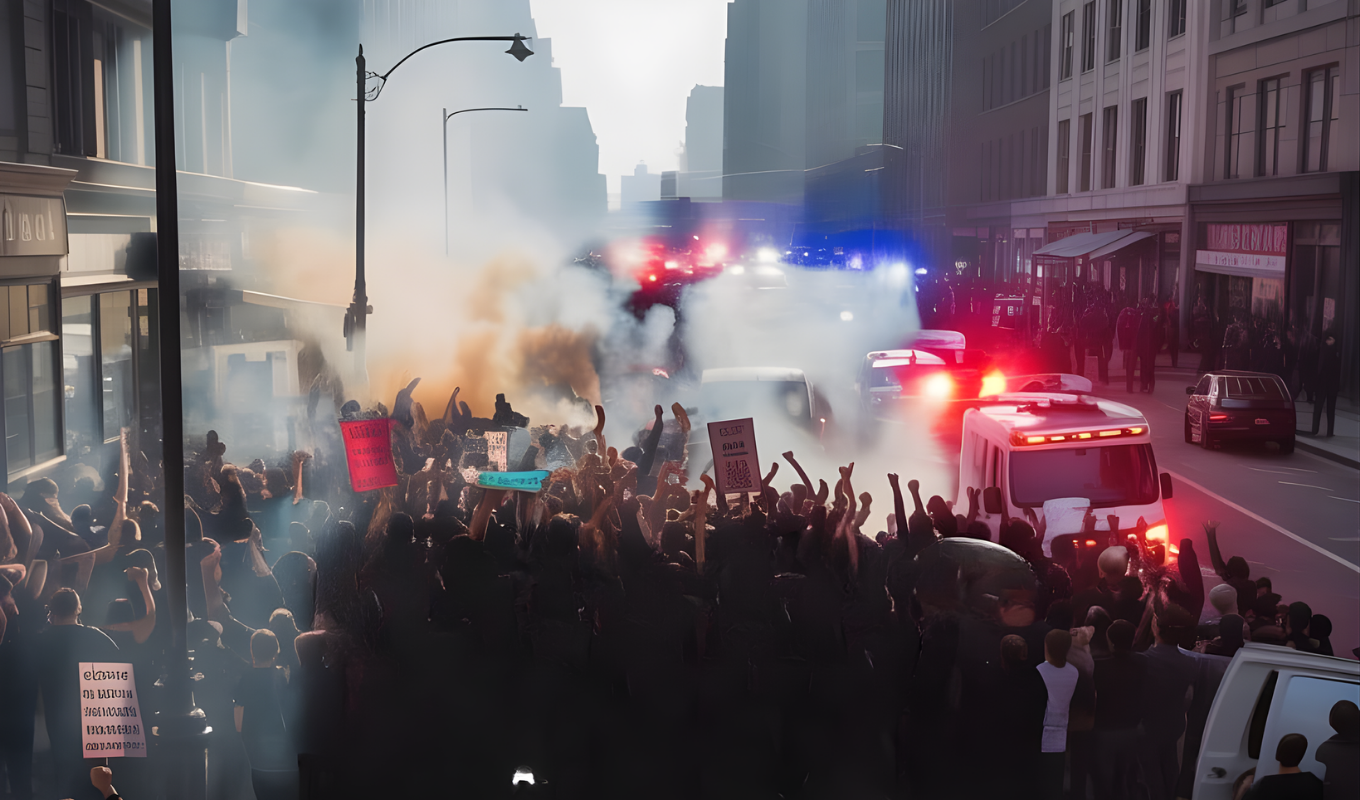
In the realm of insurance, understanding the scope of coverage for politically and socially motivated events is crucial for both policyholders and insurers. Key areas of interest include mass uprisings, SRCC (Strikes, Riots and Civil Commotion), and malicious damage, each with distinct definitions, conditions, and limitations under standard insurance policies.
1. Mass Uprising
A mass uprising refers to a large-scale, sustained public movement wherein a significant number of people collectively act against a government, state authority, or administrative system. Such events often encompass nationwide or city-wide protests, violent demonstrations, attacks on government properties, infrastructural destruction, or any large-scale havoc caused by public action.
Insurance coverage for damage arising from a mass uprising is only applicable if explicitly stated in the policy schedule or endorsements. Coverage is subject to all applicable terms, exceptions, deductibles, and limitations. Without a clear specification, losses resulting from mass uprisings are generally excluded from the policy.
2. SRCC (Strikes, Riots and Civil Commotion)
SRCC is an extension that covers losses arising from:
-
Strike: Coordinated work stoppages or industrial actions that result in public disorder and property damage.
-
Riot: Violent acts by an unlawful assembly that lead to property loss or damage.
-
Civil Commotion: Localised disturbances or unrest caused by groups of people, which may or may not have political motives.
Coverage under SRCC is only valid when the SRCC extension is active and the corresponding premium has been paid. Losses are governed by the policy’s standard terms, sub-limits, and deductibles.
3. Malicious Damage (MD)
Malicious damage refers to deliberate, wrongful, and unlawful acts by an individual or group that cause damage to insured property. This may include acts of vengeance, criminal intent, vandalism, sabotage, or wilful destruction not covered under SRCC or mass uprisings. MD is covered only if explicitly included in the policy, and all terms, conditions, and special provisions apply.
Comparative Overview of Coverage:
| Aspect | Mass Uprising | SRCC | Malicious Damage (MD) |
|---|---|---|---|
| Nature of Event | Large-scale political or social upheaval | Strikes, riots, local civil disturbances | Deliberate acts by individuals or small groups |
| Purpose | Political or governmental change | Social or economic discontent | Personal vendetta or criminal intent |
| Coverage Requirement | Explicitly mentioned in policy | SRCC extension active and premium paid | Policy must explicitly include MD |
| Reinsurance Position | Political Violence category; stringent conditions | Generally acceptable to reinsurers | Covered under standard property treaty |
| Claims Assessment Complexity | High; widespread losses | Medium; limited to specific areas | Low; event-specific losses |
General Exclusions:
Unless otherwise specified, policies typically exclude damage resulting from mass uprisings, war, rebellion, insurrection, revolutionary acts, armed revolt, or terrorism.
A thorough understanding of these definitions is vital for businesses and property owners, as it determines whether losses from public unrest, labour disputes, or malicious acts fall within the scope of their insurance coverage. Properly structuring policies with the right endorsements ensures that risks are adequately managed in an increasingly unpredictable environment.