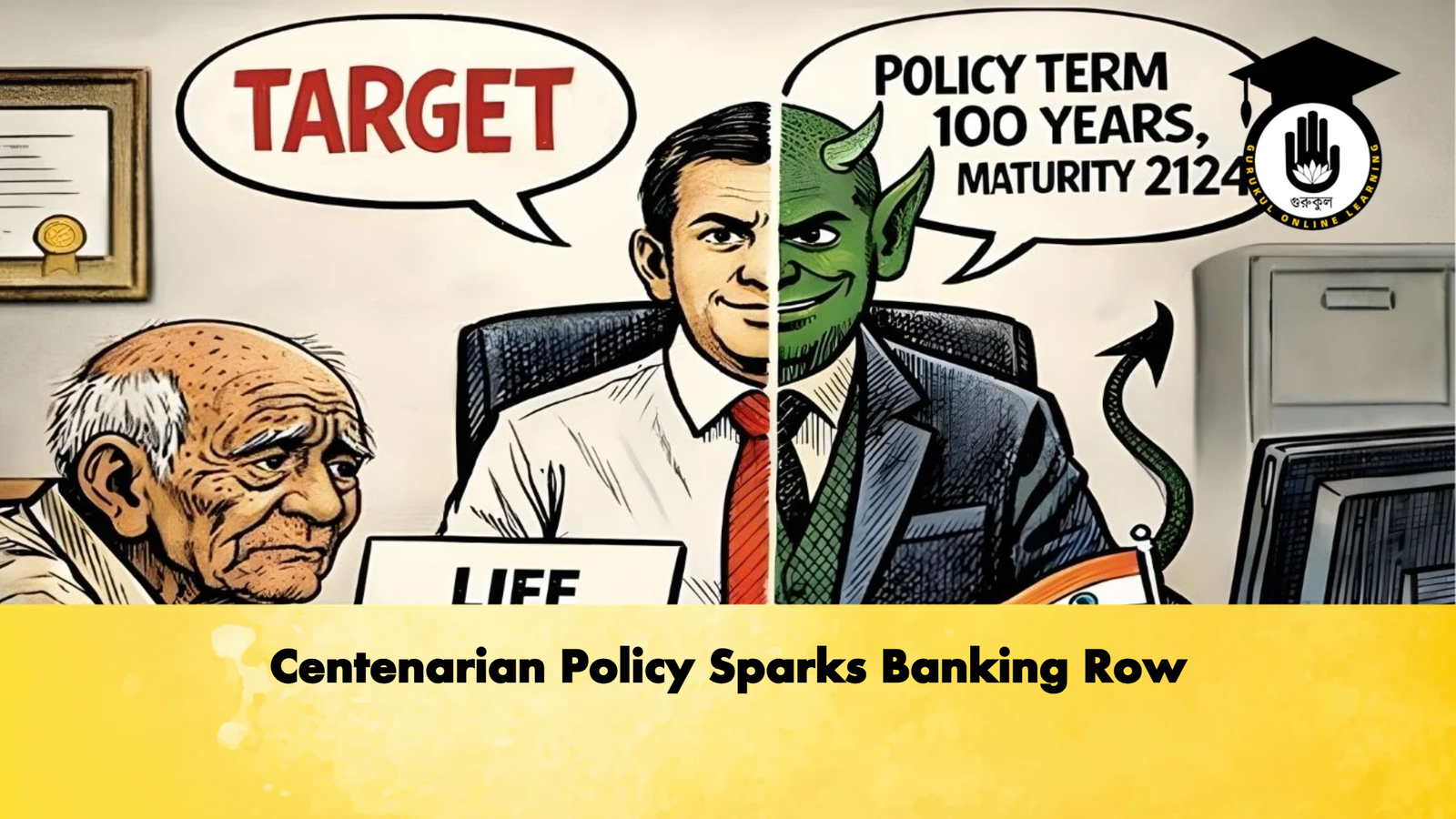
A controversy has erupted in Nagpur after allegations surfaced that a 100-year life insurance policy was issued in the name of a 90-year-old customer by a branch manager of a state-owned bank. The episode has ignited a nationwide debate on consumer protection, mis-selling, informed consent and the ethical responsibilities of financial institutions, with experts warning that the case may reflect deeper structural weaknesses rather than an isolated lapse.
According to the complaint, the policy was taken out in 2024 in the name of a long-standing elderly customer of the branch. The maturity date was set for 2124—when the policyholder would theoretically turn 190. The annual premium was fixed at ₹200,000. Over the past two years, ₹400,000 was debited from the customer’s bank account. The matter came to light in February this year when a notification for the third instalment reached the family, prompting them to raise objections.
Family members allege that the branch manager, relying on prior acquaintance and trust, persuaded the elderly client that the product was “essential”. Given the customer’s frail physical condition and inability to complete documentation independently, bank staff reportedly filled in the forms. This has raised serious concerns about transparency, due diligence and the authenticity of informed consent. Financial experts stress that when selling complex products to customers over 60, institutions should undertake detailed assessments of risk profile, income stability, financial objectives and health status before proceeding.
Policy Summary
| Item | Details |
|---|---|
| Age of customer | 90 years |
| Policy term | 100 years (maturity in 2124) |
| Annual premium | ₹200,000 |
| Premium paid | ₹400,000 (over two years) |
| Core allegation | Mis-selling and influenced consent |
The case quickly gained traction on social media, where many commentators described it as a “predatory sales practice”. Amid mounting public pressure, the bank reportedly intervened and refunded the deducted premiums to the customer’s account. Yet the refund has not quelled broader concerns. Observers question how such a policy passed multiple stages of Know Your Customer (KYC) verification, underwriting scrutiny and internal audit oversight. Why, critics ask, did a maturity date a century into the future not trigger compliance red flags?
Data from the Insurance Regulatory and Development Authority of India indicate that in the 2024–25 financial year, complaints relating to mis-selling exceeded 250,000, with nearly half concerning life insurance products. The upward trend suggests that questionable sales practices may be systemic. Meanwhile, the Reserve Bank of India has emphasised enhanced safeguards for senior citizens, recommending multi-layer verification processes and cooling-off periods for high-risk financial products.
Industry specialists advocate technological safeguards, such as automated alerts for unusual policy durations or age-product mismatches, mandatory audio-visual recording of consent for elderly clients, and independent third-party verification prior to policy issuance. They also argue that relentless sales targets can incentivise aggressive behaviour, undermining ethical standards.
The Nagpur incident, therefore, is more than a localised controversy. It serves as a critical test of trust within India’s financial services sector and underscores the urgent need for stronger consumer-centric governance frameworks.