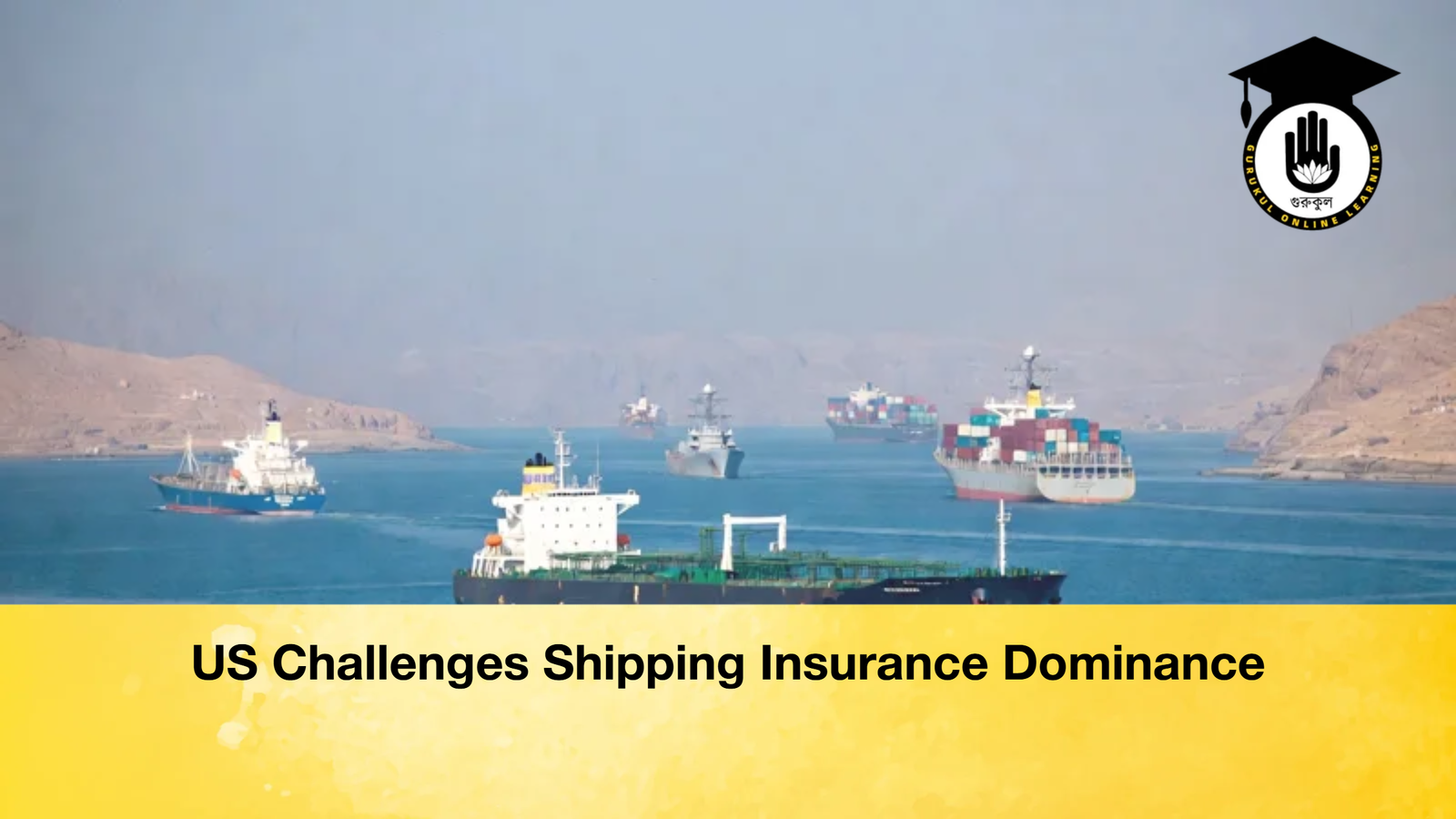
The United States has moved to challenge the long-standing dominance of the United Kingdom in the international shipping insurance sector, particularly focusing on high-risk maritime routes such as the Strait of Hormuz. The initiative represents a significant policy development in global marine and war-risk insurance markets.
In March 2026, the United States administration instructed the U.S. International Development Finance Corporation (DFC) to establish a government-supported reinsurance facility worth 20 billion US dollars. This fund is intended to provide insurance coverage for ship hulls, cargo, and political risks, with a particular focus on vessels operating in the Persian Gulf region.
The proposed facility aims to offer insurance services at lower premiums compared with existing market rates. In addition, it has been noted that the possibility of providing United States Navy escort services to commercial vessels, where necessary, is also under consideration as part of the broader framework.
The initiative comes at a time when the United Kingdom has maintained a dominant position for more than three centuries in the global marine and war-risk insurance market. Lloyd’s of London has recently faced criticism from market participants, who have raised concerns over increasing insurance premiums and restrictions in coverage, particularly in the context of rising security risks and reported attacks on commercial shipping.
According to the objectives outlined in the US plan, the new structure is intended to restore confidence in international maritime trade, stabilise key energy supply routes, and redirect a portion of insurance premium flows towards US-backed institutions. As part of this approach, there are also plans to develop partnerships with several insurance companies, including Chubb Limited.
The framework is being developed under the supervision of the U.S. International Development Finance Corporation, which is expected to play a central role in structuring and supporting the proposed reinsurance mechanism. The facility is designed to operate alongside private sector participants in order to create a hybrid public–private insurance arrangement.
Lloyd’s of London has stated that it views the US initiative positively and remains open to cooperation. The institution has also maintained that its central role in the global war-risk insurance market remains intact despite emerging competitive pressures.
Industry analysts suggest that, if implemented, the US reinsurance facility could lead to a partial shift of business away from London-based markets. However, they also note that the established networks, long-standing expertise, and global reach of the London insurance market are likely to allow it to retain a significant share of the sector.
At the same time, analysts have highlighted that the long-term impact of the initiative remains uncertain, particularly due to potential implementation challenges and limitations in coverage capacity. As such, while the policy represents a notable development in the global insurance landscape, its overall effect on market structure has yet to be determined.
Summary of US Reinsurance Initiative
| Aspect | Details |
|---|---|
| Initiative value | 20 billion US dollars |
| Responsible body | U.S. International Development Finance Corporation (DFC) |
| Focus regions | Strait of Hormuz and Persian Gulf shipping routes |
| Coverage scope | Ship hull, cargo, and political risk insurance |
| Core objective | Lower premiums and stabilisation of maritime trade routes |
| Proposed partners | Including Chubb Limited and other insurers |
| Market impact | Potential partial shift from London-based insurance markets |
| Key competing hub | Lloyd’s of London global insurance market |