
Agriculture remains the most climate-sensitive and risk-prone sector of the global economy. Despite technological advances, farmers across the world continue to face uncertainties beyond their control — droughts, floods, storms, pests, diseases, and volatile markets. These events can wipe out months of labour and investment in a single season, pushing millions into poverty and destabilising food supply chains.
Crop insurance has therefore emerged as one of the most critical instruments for agricultural risk management, helping farmers recover from losses, sustain livelihoods, and secure the continuity of food production. Its fundamental purpose is simple yet powerful — to provide financial protection against crop failure due to insured perils.
Yet, the ways in which countries design, implement, and regulate crop insurance differ dramatically. Some rely heavily on public subsidies and government administration, while others employ private-sector models, index-based innovations, or hybrid arrangements combining both.
This article offers a comprehensive exploration of crop insurance models across countries, examining their evolution, operational structures, public–private partnerships, and global trends shaping the future of agricultural risk coverage.
The Concept and Principles of Crop Insurance
What Is Crop Insurance?
Crop insurance is a financial arrangement that compensates farmers for losses in crop yield or revenue resulting from specific natural or man-made events. The objective is not merely to reimburse losses but to stabilise farm income and promote agricultural investment by transferring risk from individual farmers to a larger risk pool shared among many participants and often supported by government or reinsurance markets.
Crop insurance products fall broadly into three categories:
-
Yield-based insurance – compensates when actual yield falls below a predetermined threshold.
-
Revenue-based insurance – covers shortfalls in income due to both yield loss and price decline.
-
Index-based insurance – uses measurable parameters (rainfall, temperature, etc.) as proxies for loss, providing quick and objective payouts.
Principles of Operation
The core principles guiding crop insurance include:
-
Pooling of Risk: Losses of the few are shared among the many.
-
Indemnity: Compensation corresponds to the degree of loss.
-
Insurable Interest: The insured must have a financial stake in the crop.
-
Good Faith: Both insurer and insured must disclose accurate information.
-
Public Purpose: Agricultural insurance often serves developmental and social objectives, beyond profit.
Evolution of Crop Insurance: From Indemnity to Index
Crop insurance has evolved through three main stages globally:
Stage 1: Indemnity-Based Systems (1930s–1980s)
The earliest schemes were government-led indemnity models, compensating actual losses verified through field inspections. Countries like the United States and Japan pioneered such programmes in the mid-20th century. While effective for large-scale farms, these models were administratively heavy, costly, and vulnerable to moral hazard and delayed payments.
Stage 2: Public–Private Partnerships (1990s–2000s)
Many countries moved towards shared-responsibility models, combining government support (subsidies, reinsurance) with private insurers’ operational expertise. India, Mexico, and Spain exemplified this transition, achieving scale through collaboration between public and private sectors.
Stage 3: Index and Parametric Insurance (2000s–present)
Technological advancement introduced weather-index and satellite-based products, enabling faster, objective, and scalable coverage. Such innovations now dominate pilot projects in Africa, Asia, and Latin America, offering solutions for smallholders previously excluded from traditional insurance.
4. Crop Insurance Models: Global Classifications
Globally, crop insurance models can be categorised into four broad frameworks:
-
Fully Public Model – Designed, funded, and managed by government agencies.
-
Public–Private Partnership (PPP) Model – Government supports with subsidies and regulation; private insurers handle operations.
-
Market-Based Private Model – Insurers assume full underwriting and pricing risk with limited public intervention.
-
Community or Mutual Model – Farmer cooperatives or mutual funds share risk collectively.
Each model reflects a country’s agricultural structure, policy priorities, and fiscal capacity.
5. Country Models: Comparative Analysis
5.1 United States — The Federal Crop Insurance Programme (FCIP)
The United States operates one of the most extensive crop insurance systems in the world, managed by the Risk Management Agency (RMA) under the U.S. Department of Agriculture (USDA).
-
Structure: The FCIP is a public–private partnership. Private insurance companies deliver policies and adjust claims, while the federal government subsidises premiums (averaging 60%) and provides reinsurance.
-
Coverage: Over 130 crops insured across all states, with policies covering both yield and revenue.
-
Product Types: Yield Protection, Revenue Protection, Area Risk Protection, and Whole-Farm Revenue Protection.
-
Scale: Covers more than 380 million acres annually.
-
Strengths: High penetration, strong reinsurance support, and sophisticated risk modelling.
-
Weaknesses: High fiscal cost and concentration among large-scale farms.
The U.S. model illustrates how public policy and private market efficiency can coexist through risk-sharing and federal reinsurance mechanisms.
5.2 Canada — AgriInsurance and Whole Farm Programmes
Canada’s agricultural risk management is coordinated under the Canadian Agricultural Partnership (CAP) between federal and provincial governments.
-
Model: Publicly funded, jointly administered by federal and provincial authorities.
-
Coverage: Insures yield, quality, and production cost; covers more than 60 commodities.
-
Features: Strong data infrastructure, transparent indemnity formulas, and integration with income stabilisation schemes (AgriStability).
-
Strength: Government guarantees ensure affordability and solvency.
-
Innovation: Expanding into environmental and weather-indexed products.
5.3 India — Hybrid Mass-Scale Public–Private Model
India represents one of the largest and most complex agricultural insurance ecosystems globally. Its Pradhan Mantri Fasal Bima Yojana (PMFBY) covers tens of millions of farmers.
-
Model: Public–private partnership where private insurers underwrite risk; the central and state governments subsidise 80–90% of premiums.
-
Coverage: All major food and cash crops; yield-based insurance using area sampling for loss assessment.
-
Data: Uses satellite imagery and mobile apps for damage verification.
-
Challenges: Delay in claim settlements due to coordination issues between states and insurers.
-
Strengths: Massive scale, government backing, and ongoing shift toward remote-sensing–based assessment.
India’s approach underscores the importance of public commitment in making insurance accessible to smallholders in developing economies.
5.4 China — State-Directed Expansion with Regional Flexibility
China’s crop insurance has expanded rapidly since 2007, supported by heavy central and provincial subsidies.
-
Model: Primarily public, but delivered through state-owned and private insurers.
-
Coverage: Over 200 million farmers and more than 20 key crops.
-
Premium Subsidy: Around 70% shared between central and local governments.
-
Innovation: Index-based pilots for rice, maize, and cotton using satellite data.
-
Feature: Integration with rural credit and poverty alleviation programmes.
-
Result: Dramatic growth in penetration and reduction of rural vulnerability.
China’s system highlights the power of government investment in scaling insurance infrastructure.
5.5 Japan — Mutual and Government-Backed System
Japan’s agricultural insurance is rooted in mutual aid cooperatives, supported by government reinsurance.
-
Model: Farmer cooperatives administer insurance under the supervision of the National Agricultural Insurance Association (NAIA).
-
Coverage: Multi-peril crop and livestock insurance with government subsidies up to 50%.
-
Reinsurance: 100% reinsured by the national government.
-
Strength: High farmer participation and trusted community governance.
-
Limitation: Ageing farming population and cost pressures on cooperatives.
Japan’s model combines social solidarity with financial prudence, ensuring stability through collective action.
5.6 European Union — Subsidised and Regulated Market Model
Within the European Union (EU), crop insurance frameworks vary by member state but share common principles shaped by the Common Agricultural Policy (CAP).
-
Structure: Private insurance markets with strong government premium subsidies (30–65%).
-
Examples:
-
Spain: The Agroseguro system — a PPP with multiple insurers and a central pool.
-
France: Public subsidies and reinsurance via the Caisse Centrale de Réassurance.
-
Italy: Multi-peril crop insurance supported by EU rural development funds.
-
-
Trends: Shift toward climate resilience and index-based pilots.
-
Strength: Regulatory harmonisation and EU-wide disaster reserve mechanisms.
The European model balances market competition with policy-driven support for sustainable agriculture.
5.7 Mexico — Index-Based National Framework
Mexico’s Agroasemex and CADENA Programme pioneered index-based insurance for smallholders.
-
Model: Publicly financed with regional and national risk pooling.
-
Coverage: Weather and area-yield index products for droughts, frost, and excess rainfall.
-
Delivery: Sold through state governments and farmer cooperatives.
-
Result: Millions of small farmers insured against catastrophic events.
-
Significance: Among the first large-scale applications of index insurance globally.
5.8 African Continent — Emerging Index-Based Systems
Many African nations, with support from development agencies, have adopted innovative models suited for smallholder farmers.
Kenya
-
Public–private partnerships under the Kenya Agriculture Insurance Programme (KAIP).
-
Uses satellite rainfall data; premium subsidies from the government.
Ethiopia
-
Pioneered weather index pilots through cooperative unions.
-
Integration with microfinance and safety-net schemes.
Ghana, Nigeria, and Zambia
-
Mobile-enabled index insurance sold via telecom networks.
-
Supported by the African Risk Capacity and regional reinsurers.
Across Africa, index insurance represents a low-cost, scalable solution for climate-vulnerable farmers, though affordability and awareness remain key challenges.
5.9 Brazil and Argentina — Agro-industrial Market Approaches
Latin America’s agricultural giants, Brazil and Argentina, follow semi-liberalised models:
-
Brazil: Federal and state premium subsidies support private insurers; products include yield and revenue insurance. Strong reinsurance support from international markets.
-
Argentina: Predominantly private-market operation; large-scale producers purchase coverage, while smallholders rely on public disaster funds.
-
Trend: Growing adoption of weather-index and parametric models for soybean and maize.
Comparative Overview of Global Models
| Model Type | Countries | Key Characteristics | Advantages | Challenges |
|---|---|---|---|---|
| Public/Government Managed | China, Canada, Japan (partially) | Fully or mostly state-run with subsidies and reinsurance | Universal access, affordability | Fiscal burden, limited efficiency |
| Public–Private Partnership (PPP) | USA, India, Spain, Mexico | Shared responsibilities; public subsidy and private delivery | Scale, efficiency, innovation | Coordination complexity |
| Market-Driven Private Model | Argentina, South Africa | Premium-based, limited subsidy | Flexibility, efficiency | Low penetration among smallholders |
| Community/Mutual Model | Japan, France (local cooperatives) | Farmer-led, government-backed | Trust, peer monitoring | Limited scalability |
| Index-Based/Parametric Model | Kenya, Mexico, India (pilots) | Data-driven payouts | Speed, transparency | Basis risk, data quality issues |
Role of Reinsurance and International Support
Crop insurance is inherently systemic — widespread drought or flood can cause correlated losses across vast regions. To remain solvent, insurers depend on reinsurance and public risk-sharing mechanisms.
-
Global reinsurers such as Munich Re, Swiss Re, and African Re provide capacity for catastrophic years.
-
Public reinsurance funds, e.g., the U.S. Federal Crop Reinsurance Fund and Japan’s government reinsurance, ensure stability.
-
Multilateral initiatives, like the World Bank’s Global Index Insurance Facility (GIIF), support research, training, and pilot projects.
Reinsurance transforms agricultural insurance from a local protection tool into a global financial safety net against climate volatility.
Technological Innovations Shaping the Future
Remote Sensing and Satellites
Satellite imagery and NDVI (Normalised Difference Vegetation Index) data now enable real-time crop monitoring, reducing moral hazard and accelerating claims.
Mobile Platforms and Fintech
Mobile technology allows farmers to purchase microinsurance, pay premiums, and receive payouts instantly, even in remote areas.
Artificial Intelligence and Big Data
AI-driven models analyse weather patterns, soil data, and crop health to create dynamic premium pricing and predictive loss alerts.
Blockchain for Transparency
Blockchain technology is being explored for transparent policy administration and claim automation via smart contracts, enhancing trust.
These technologies are democratising insurance access for smallholders, once considered uninsurable.
Challenges in Global Crop Insurance
Despite its progress, several structural issues persist:
-
High Administrative Costs – Field assessments and data verification remain costly in traditional models.
-
Basis Risk – Index products may fail to match actual farm-level losses.
-
Limited Farmer Awareness – Insurance literacy remains low in rural communities.
-
Affordability – Premiums often exceed the capacity of small farmers without subsidies.
-
Moral Hazard and Adverse Selection – Persist in yield-based schemes where individual behaviour affects outcomes.
-
Climate Change Uncertainty – Historical data used for pricing may not reflect future realities.
-
Political and Fiscal Constraints – Governments face budget pressures in maintaining subsidies.
Global reform efforts now focus on digital efficiency, risk layering, and social inclusion to overcome these barriers.
Policy Lessons and Best Practices
Success Factors
-
Government Commitment: Sustained funding and clear policy frameworks.
-
Accurate Data Infrastructure: Reliable weather and yield data for pricing and claims.
-
Public–Private Synergy: Shared accountability between state and market actors.
-
Education and Trust Building: Continuous engagement with farmers.
-
Integration with Credit: Bundling insurance with agricultural loans ensures uptake.
-
Scalable Technology: Mobile and satellite tools for enrolment and monitoring.
Country Lessons
-
The U.S. and Canada showcase maturity through federal reinsurance and actuarial sophistication.
-
India and China prove that scale requires government leadership.
-
Spain and Japan demonstrate cooperative strength.
-
Kenya and Mexico reveal innovation through index models.
The Future of Crop Insurance: From Protection to Resilience
The future of agricultural insurance lies beyond indemnity; it lies in building resilience. As climate volatility intensifies, the emphasis will shift from compensating loss to preventing it through data, technology, and adaptive management.
Emerging directions include:
-
Integrated Climate Risk Management linking insurance with irrigation, seed resilience, and advisory services.
-
Regional Risk Pools sharing exposure across borders (e.g., African Risk Capacity).
-
Parametric Reinsurance Markets enabling capital market participation.
-
ESG-Aligned Agriculture Insurance, supporting sustainable and regenerative farming.
Ultimately, crop insurance will evolve into a climate security instrument, bridging agriculture, finance, and environmental sustainability.
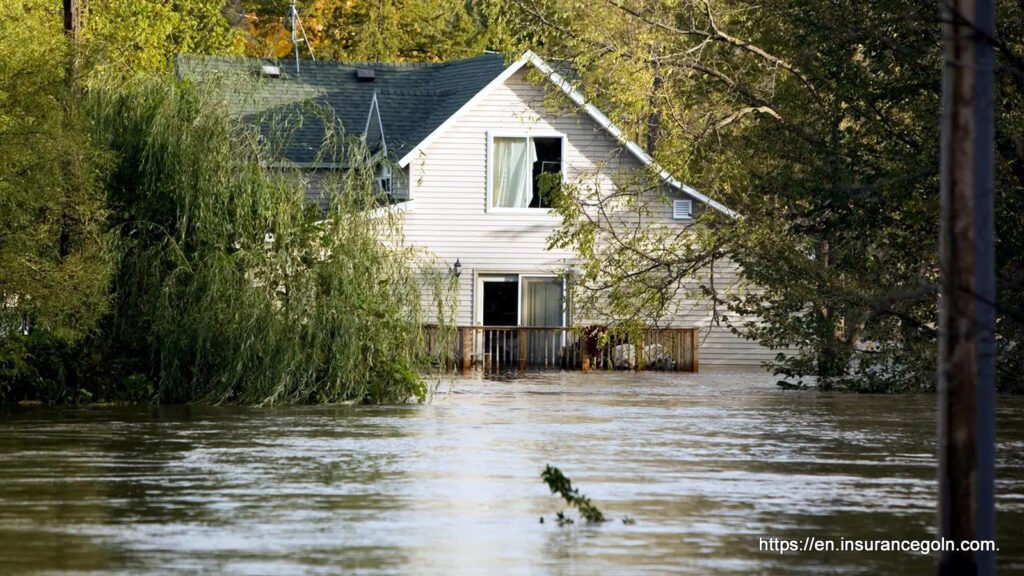
Crop insurance is no longer just a financial product; it is a public good and a global necessity. From the mechanised fields of the American Midwest to the rainfed farms of Africa and Asia, insurance transforms uncertainty into opportunity, empowering farmers to invest, innovate, and endure.
The diversity of models — from state-led systems to data-driven parametric products — demonstrates that there is no one-size-fits-all solution. Each country must align insurance design with its own agroecological, socio-economic, and institutional realities. Yet, the shared goal remains universal: to safeguard livelihoods and ensure food security in a changing climate.
As technology advances and collaboration deepens, crop insurance will become more inclusive, responsive, and intelligent — not only compensating for loss but cultivating resilience, equity, and confidence in the future of global agriculture.