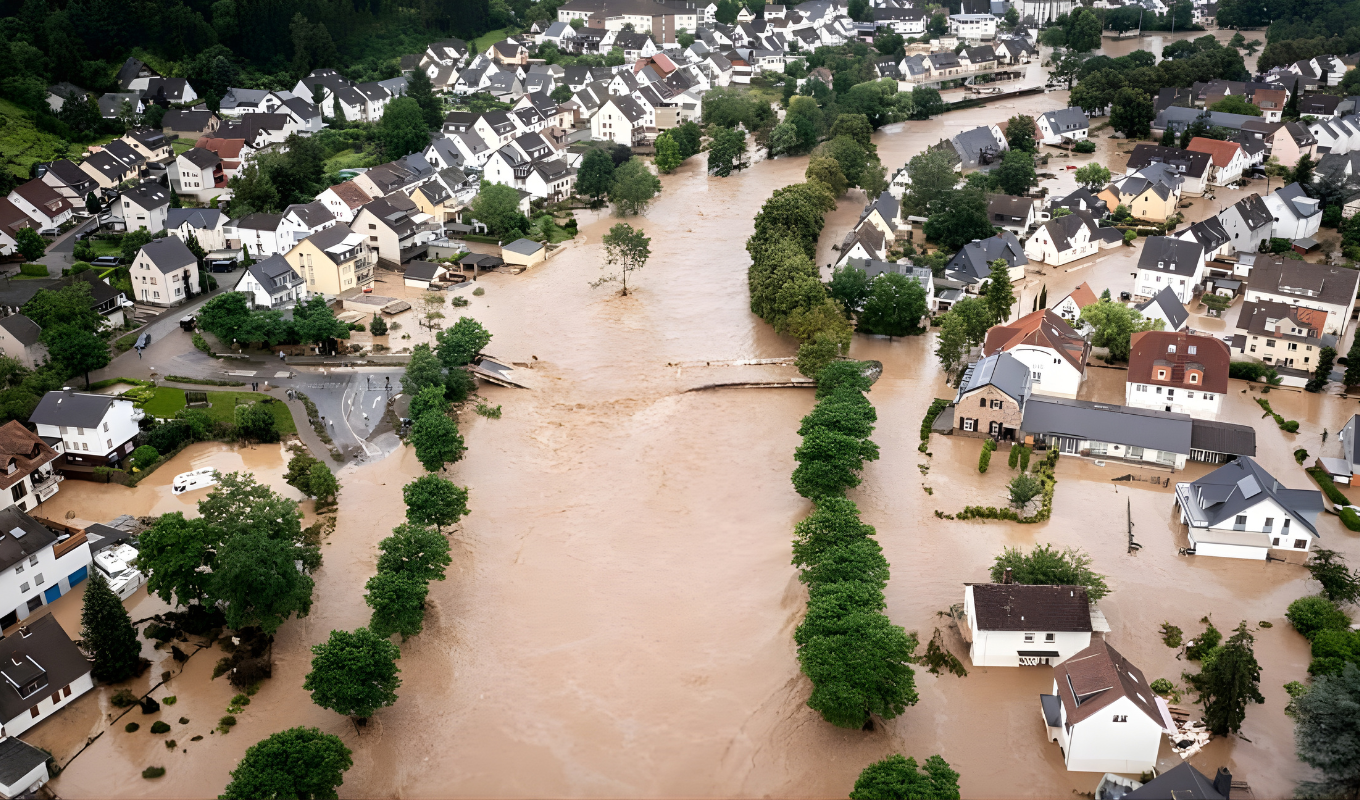
Imagine waking up to find your living room submerged — for the second time in five years. You contact your insurer, only to be told that your property is now uninsurable. Premiums have tripled, your mortgage lender is growing uneasy, and your most valuable asset — your home — is rapidly losing its worth.
This is not merely a personal misfortune; it is a warning sign of a far broader and deeper crisis.
The Growing Financial Shock of Climate Change
The escalating risks associated with climate change are pushing the global insurance industry to breaking point. Over the past decade, the frequency of floods has quadrupled in tropical regions and risen by 2.5 times in mid-latitude zones. In the United Kingdom, one in six people now live in flood-prone areas. Heavy rainfall events are becoming more extreme, and projections suggest that annual flood-related damages could rise by 27% by the 2050s.
The consequences are already being felt. The Association of British Insurers (ABI) — the trade body representing the UK’s insurance and long-term savings sector — recently reported a record £585 million in home weather-damage claims for 2024 alone.
Climate change is fuelling more frequent, severe, and unpredictable events, stretching traditional insurance models to their limits. Insurers are increasingly left with two unpalatable choices: raise premiums sharply or withdraw coverage altogether.
When insurance becomes unaffordable or unavailable, the impact ripples outward. Households are left financially exposed; property values decline; mortgages become harder to secure; and the foundations of the housing market — and, by extension, the broader financial system — begin to tremble.
A Nation Lagging Behind in Resilience
Research into the UK insurance market reveals a troubling trend: national resilience is failing to keep pace with the rising tide of climate risk.
In an attempt to stave off an insurance affordability crisis, policymakers introduced Flood Re in 2016 — a joint initiative between the government and the insurance industry designed to keep premiums affordable for households in high-risk flood zones.
Flood Re was intended as a temporary safety net, due to expire in 2039, by which time the government expected to have bolstered flood defences, improved drainage systems, and implemented more climate-conscious land-use planning.
However, progress has been painfully slow. In January 2024, the House of Commons Public Accounts Committee revealed that the government’s £5.2 billion flood defence programme was running 40% behind schedule. The scheme is now expected to protect just 200,000 properties by 2027, falling far short of its original 336,000 target.
The Storm on the Horizon
The combination of escalating climate risks, sluggish infrastructure investment, and mounting insurance withdrawals paints a stark picture: climate change is no longer a distant environmental issue — it is an unfolding economic emergency.
Without urgent, coordinated action between government, insurers, and planners, more homes will become uninsurable, communities will face mounting financial strain, and the UK could soon find itself confronting not just a climate crisis, but an insurance crisis of national scale.