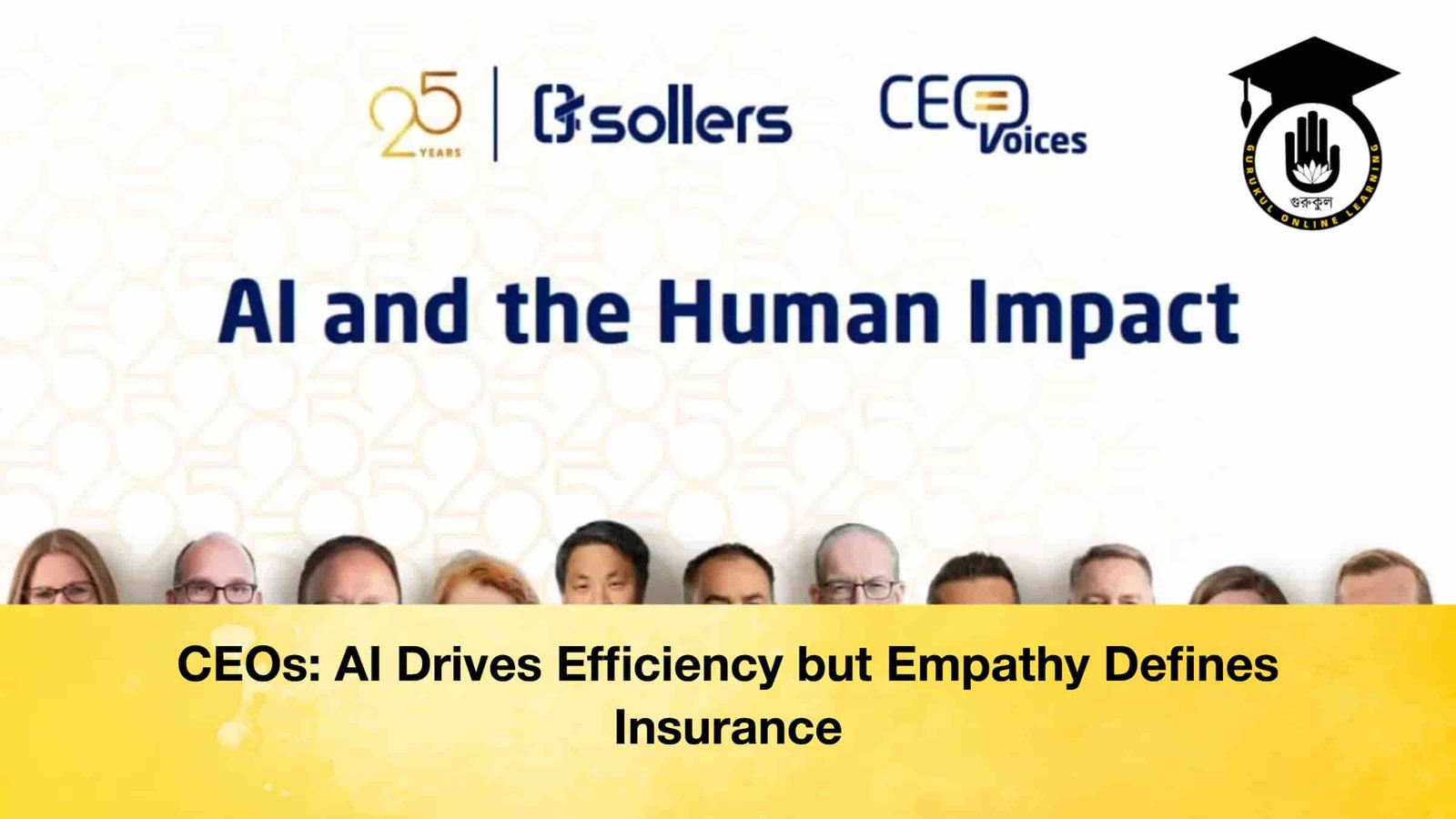
Artificial intelligence (AI) has emerged as the pre-eminent technological force redefining the global insurance landscape, according to a recent executive study conducted by the consultancy firm Sollers. The research, which synthesised the perspectives of 11 chief executive officers from leading international insurers, suggests that while AI is fundamentally altering operational workflows, it cannot replicate the essential human element of empathy in the sector.
Core Findings of the Sollers Study
The participating CEOs reached a consensus that AI is exerting a transformative influence across the entire insurance value chain. Key areas of impact include underwriting, actuarial pricing, claims processing, and customer relationship management. Michal Trochimczuk, President and Co-founder of Sollers, noted that the technology has significantly improved the industry’s ability to process and analyse unstructured data.
Mr Trochimczuk emphasised that cost control remains the primary driver of competitiveness in the modern market. He highlighted several critical investment areas, including:
-
Advanced automation of repetitive tasks.
-
The implementation of simplified, modern standard architectures.
-
Sophisticated rating systems for more accurate premium calculations.
-
Intelligent risk selection using predictive analytics.
Empathy and the Face-to-Face Interaction
A primary theme of the study was the preservation of the human touch. The executives stressed that AI should be utilised to enhance personalisation rather than erode it. The consensus among the leaders was that technology must support, not replace, face-to-face interactions and the empathy required during complex or sensitive claims scenarios.
The study predicts that AI will soon become embedded in every facet of the industry, ranging from product design and pricing engines to risk management and the automation of customer service interactions.
Participating Global Insurance Executives
The study included insights from a diverse range of CEOs representing various international markets and specialisations:
| Name | Role | Organisation | Country |
| Frank Walthes | CEO | VKB | Germany |
| Andrew Horton | CEO | QBE | Australia |
| Simon Wilson | CEO | Markel Insurance | USA |
| Jean-Daniel Laffely | CEO | La Vaudoise | Switzerland |
| Ken Norgrove | CEO | Intact UK&I | United Kingdom |
| Marcus Ryu | Partner | Battery Ventures | USA |
| Isabelle Le Bot | CEO | La France Mutualiste | France |
| Agnès Paquin | CEO | CNP Assurances | France |
| Andrej Slapar | CEO | Triglav | Slovenia |
| Dr Jürg Schiltknecht | CEO | Helvetia Germany | Germany |
| Brenda Gibson | CEO | Red River Mutual | Canada |
Future Strategic Implementation
According to the findings, the successful insurer of the future will balance high-tech efficiency with high-touch service. The embedding of AI into claims automation is expected to reduce administrative overheads, allowing human adjusters to focus on the qualitative aspects of risk assessment and customer support. The CEOs maintained that while “intelligent risk selection” will define the financial health of an insurer, the quality of “customer interaction” will remain the defining feature of its brand reputation.