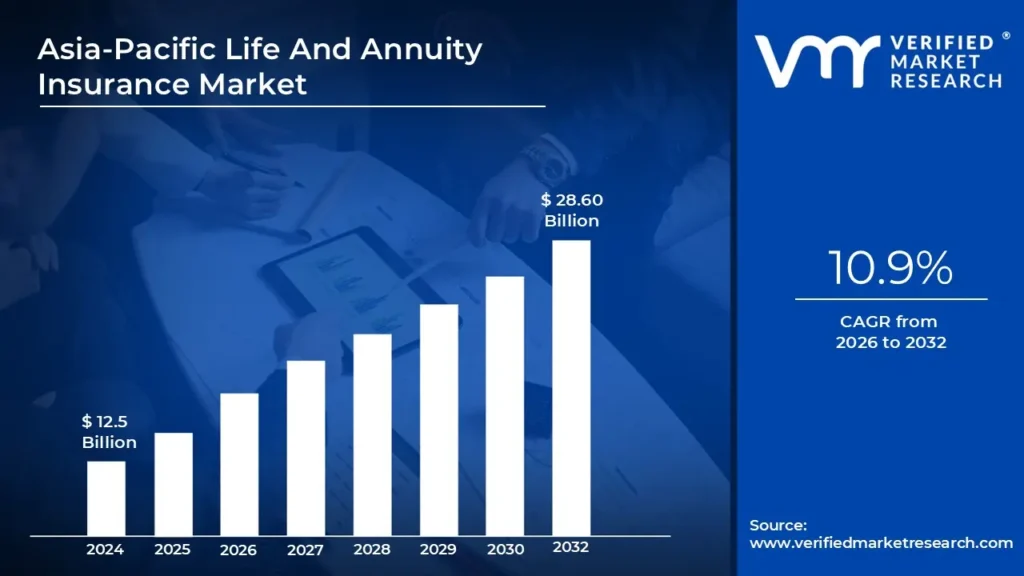
The Asia-Pacific life insurance market is entering a period of sustained expansion, with its market value expected to grow from approximately US$1.2 trillion to US$1.6 trillion by 2029, according to GlobalData. This projection reflects a compound annual growth rate of 7.3%, underscoring the region’s critical role in the global insurance landscape.
By 2025, it is anticipated that one-third of the world’s life insurance premium volume will originate from the Asia-Pacific region, highlighting the concentration of growth opportunities within this geographic market. Several factors are converging to support this expansion, although market participants will need to navigate shifting regulatory frameworks and macroeconomic uncertainties.
The expansion of the Asia-Pacific life insurance market will largely be driven by China and India between 2025 and 2029. These countries stand out as the only developing markets to secure positions within the world’s top 10 largest life insurance sectors, reflecting their strategic importance in the region’s growth trajectory.
China’s Life Insurance Market Undergoes Regulatory Changes
China’s life insurance market is currently undergoing significant structural adjustments due to a series of regulatory interventions aimed at addressing market inefficiencies and enhancing consumer protection. Year-on-year premium growth in the sector was only 1% in the first four months of 2025 (FM2025), a stark contrast to the 5% growth seen in non-life insurance sectors. One of the key challenges for Chinese insurers is adapting to persistently low interest rates, which have led to a shift towards products with lower guaranteed returns, thus balancing risk mitigation with market competitiveness.
The regulatory environment in China has become more prescriptive. The National Financial Regulatory Administration introduced a tiered agent classification system in 2024 to mitigate consumer protection concerns and align sales methodologies with client needs, with implementation set for February 2026. In addition, tighter bancassurance regulations introduced in mid-2024 have imposed restrictions on commission structures and standardised fee schedules.
India’s Insurance Market Shows Steady Growth
India’s life insurance market demonstrated significant momentum in September 2025, with new business premiums reaching ₹40,206.67 crore, a 14.81% year-on-year increase compared to ₹35,020.28 crore in the same month the previous year. This growth contributed to a cumulative year-to-date premium collection of ₹2,03,668.19 crore, representing a 7.64% increase compared to the first nine months of 2024.
Demographic Shifts and Wealth Accumulation Create Market Segmentation
Markets in the region with aging populations, such as Japan, South Korea, Hong Kong, and Taiwan, are witnessing a fundamental shift in product development priorities. Japan and South Korea currently have over 20% of their populations aged 65 or older, with projections indicating that by 2030, these percentages will rise to 32.3% and 30.8%, respectively. Insurers are increasingly focusing on affluent consumers and aging demographics, developing specialized products such as indexed universal life policies and estate planning solutions.
Manogna Vangari, an insurance analyst at GlobalData, remarked, “Insurers who can integrate AI into their operations and develop products tailored to the aging population and high-net-worth individuals will be well-positioned to capitalise on market opportunities despite economic challenges.”