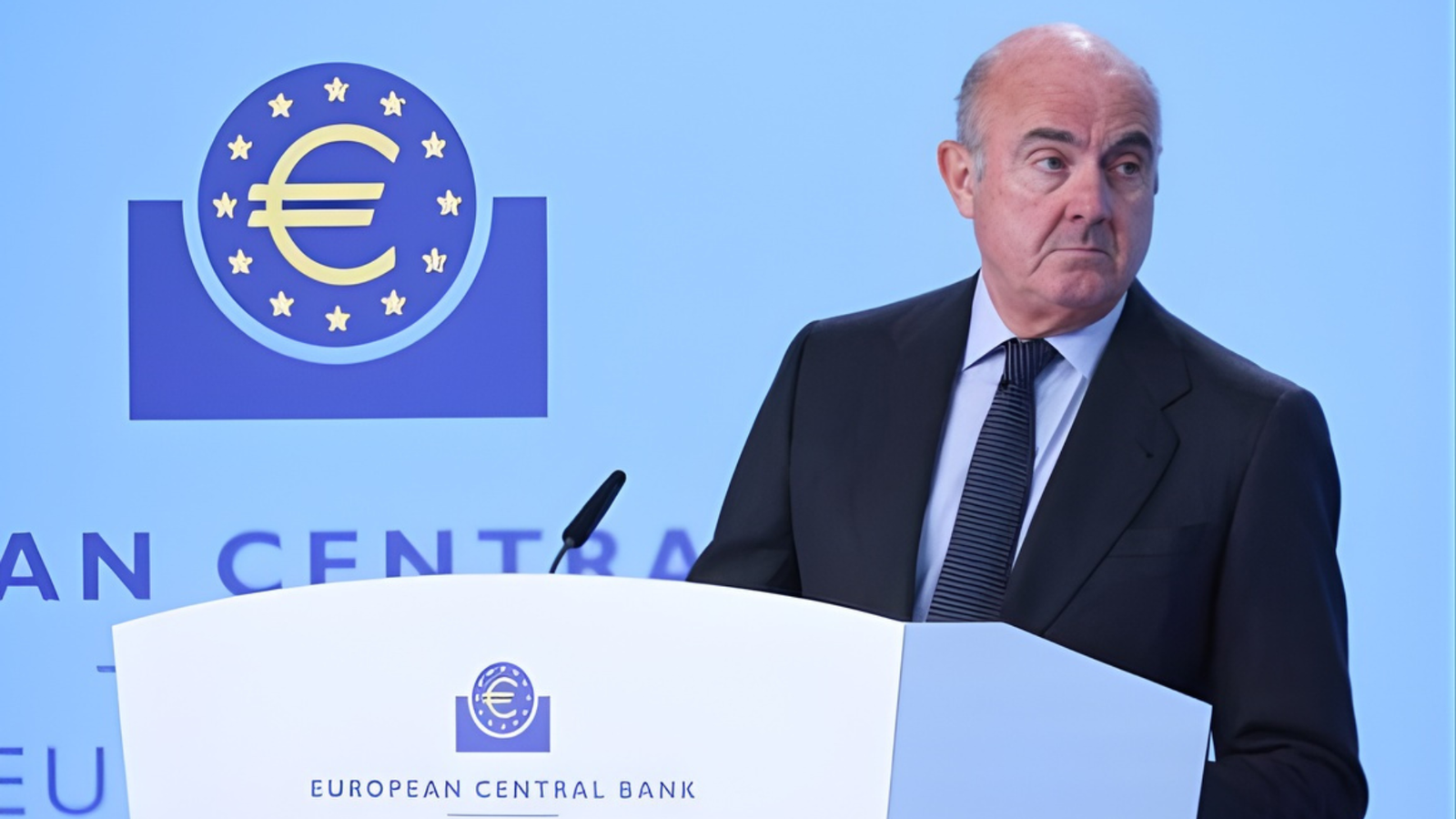
European Central Bank (ECB) Vice President Luis de Guindos has warned that financial-stability risks remain elevated due to the unpredictable outlook for the global economy and international trade. He made these remarks during a speech in Frankfurt on Monday.
“Vulnerabilities remain elevated in view of uncertainty over geo-economic trends and the ultimate impact of tariffs in a volatile international environment,” Guindos said.
He highlighted the main sources of risk in financial markets, which include:
-
High valuations and concentration in financial markets,
-
Credit-risk exposures to tariff-sensitive firms,
-
Sovereign risk in several major advanced economies.
| Risk Type | Details |
|---|---|
| High valuations | Excessive pricing in stock and bond markets |
| Credit risk | Debt exposure of tariff-sensitive firms |
| Sovereign risk | Debt vulnerabilities in advanced economies |
Guindos stressed that maintaining the resilience of banks and the broader financial system is “crucial.” He specifically urged closer monitoring and strengthening of the macro-prudential framework for the non-bank sector.
His comments come ahead of the ECB’s twice-yearly Financial Stability Review, due next week, which will assess the growing threats to banks that remain the primary source of financing for Europe’s companies.
Despite these risks, Europe’s economy has so far held up surprisingly well. The ECB is currently not inclined to cut interest rates further, as growth is slightly above expectations and inflation is gradually converging towards the 2% target over the medium term.
Globally, central banks and financial watchdogs have recently warned about financial-stability risks such as inflated valuations in AI companies, challenges to the Federal Reserve’s independence, and the rapid rise of stablecoins.
The Bundesbank has highlighted that geopolitical tensions, trade conflicts, and rising public debt across Europe are weighing on Germany’s financial stability, increasing the risk of a sharp market downturn. Similarly, the IMF warned that cracks in non-bank financial sectors, including hedge funds and alternative asset managers, could pose significant capital risks to traditional lenders.
On a national level, the Netherlands and Ireland voiced similar concerns. The Dutch central bank stated, “Global uncertainty has reached levels not seen in decades. The question is no longer whether shocks will occur, but when and where.” Meanwhile, Irish central-bank Governor Gabriel Makhlouf noted that market valuations remain stretched despite high economic uncertainty, with potential vulnerabilities in US tech and AI-related sectors that could trigger market corrections.
Europe now faces a complex and uncertain financial landscape, with risks spreading across banks, non-banks, and international markets alike.