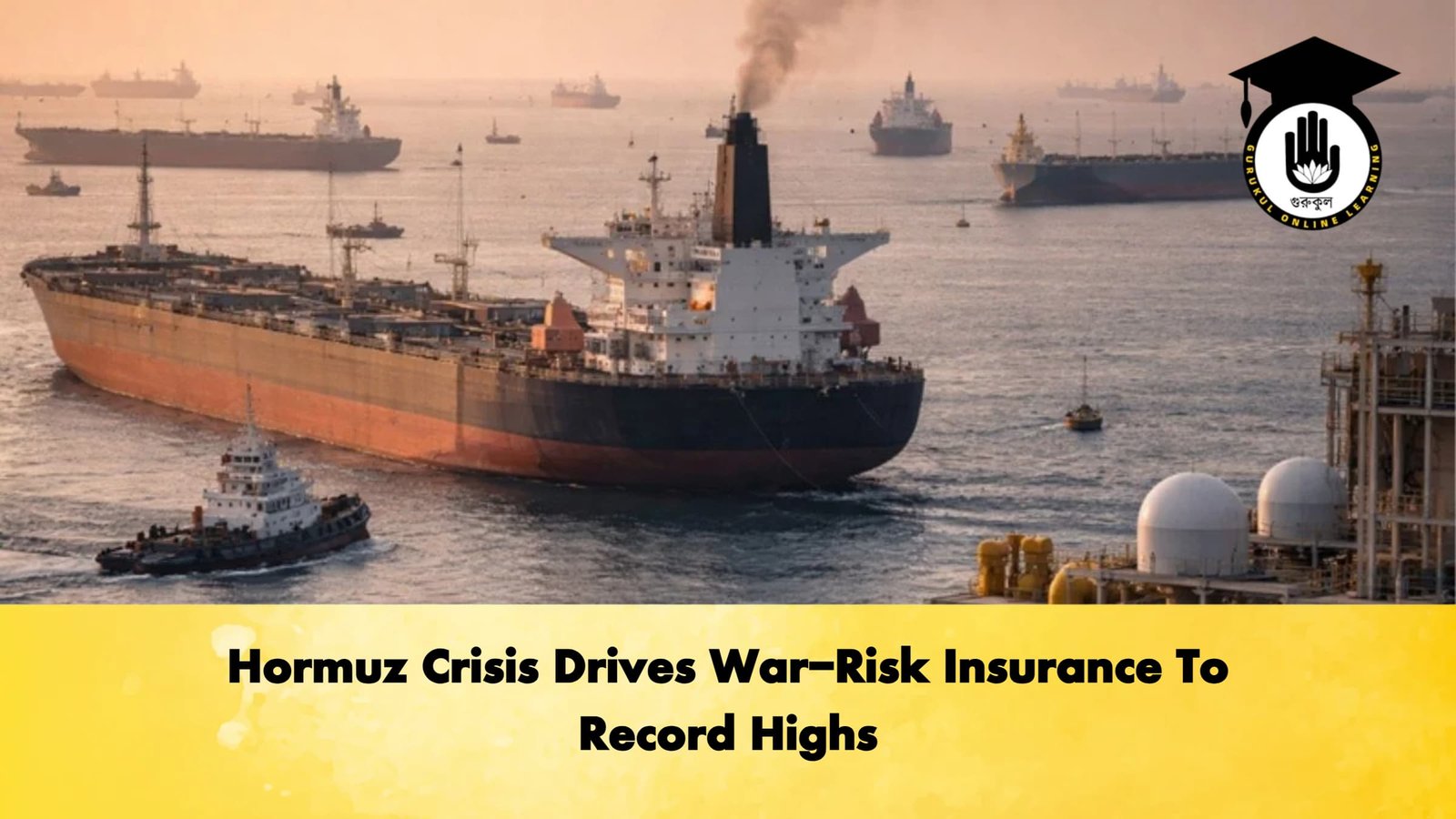
The intensifying military volatility surrounding the Strait of Hormuz has fundamentally reshaped the economics of global shipping, with the maritime insurance sector acting as the primary barometer of regional risk. As threats of kinetic strikes, vessel seizures, and naval skirmishes escalate, the cost of indemnifying ships has transitioned from a standard operational expense to a prohibitive financial barrier, threatening the stability of global energy markets.
The Surge in War-Risk Premiums
In marine insurance, coverage is traditionally bifurcated into “Hull and Machinery” (standard protection) and “War-Risk” coverage. In light of current hostilities, global underwriters—led by the Joint War Committee (JWC) in London—have designated the Persian Gulf and the Gulf of Oman as high-risk “Listed Areas.”
According to industry analysts at Marsh, the “war-risk premium,” calculated as a percentage of the ship’s total value for a single seven-day transit, has spiked by over 50% in a matter of days. Previously, a transit might have carried a premium of 0.25% of the hull’s value. That figure is now rapidly approaching 0.40% to 0.50%, representing a staggering fiscal burden for high-value assets.
Financial Breakdown of Insurance Volatility
The following table illustrates the dramatic shift in insurance overheads for various vessel classes based on current market valuations and reported premium hikes.
| Vessel Type | Estimated Hull Value | Pre-Crisis Premium (0.25%) | Current Premium (0.40%+) | Additional Cost per Trip |
| VLCC (Oil Tanker) | $120,000,000 | $300,000 | $480,000 | +$180,000 |
| LNG Carrier | $200,000,000 | $500,000 | $800,000 | +$300,000 |
| Container Ship | $150,000,000 | $375,000 | $600,000 | +$225,000 |
Contractual Disruptions and “Notice of Cancellation”
The crisis has introduced administrative hurdles beyond mere price increases. Underwriters are increasingly invoking “Notice of Cancellation” clauses. This does not necessarily terminate the policy but allows insurers to “reset” the terms. Shipowners are typically given a seven-day window to accept much higher rates or lose coverage entirely while in the conflict zone.
Furthermore, shipping companies are facing a growing “logjam” near the Strait. Reports indicate that over 150 tankers are currently anchored in the Arabian Sea, awaiting safer transit windows or clear instructions from their insurers.
Geopolitical Fallout for the UAE
As a premier regional hub, the United Arab Emirates (UAE) finds itself under immense pressure. While the Habshan-Fujairah pipeline offers a partial bypass for crude oil, the nation’s reliance on the Strait for LNG and container transshipment remains high. Major ports such as Jebel Ali are seeing rising costs as insurers demand stricter security protocols, including:
-
Mandatory coordination with naval task forces.
-
Restrictions on night-time transits to mitigate stealth attack risks.
-
Enhanced monitoring of radio communications and satellite tracking.
Global Economic Consequences
The insurance industry acts as the “invisible hand” of global trade. For the UK and European markets, these half-million-dollar premium hikes per voyage are immediately passed down the supply chain. This results in higher energy bills and increased costs for manufactured goods, as shipping lines struggle to absorb the financial shock of protecting their fleets in the world’s most dangerous waterway.