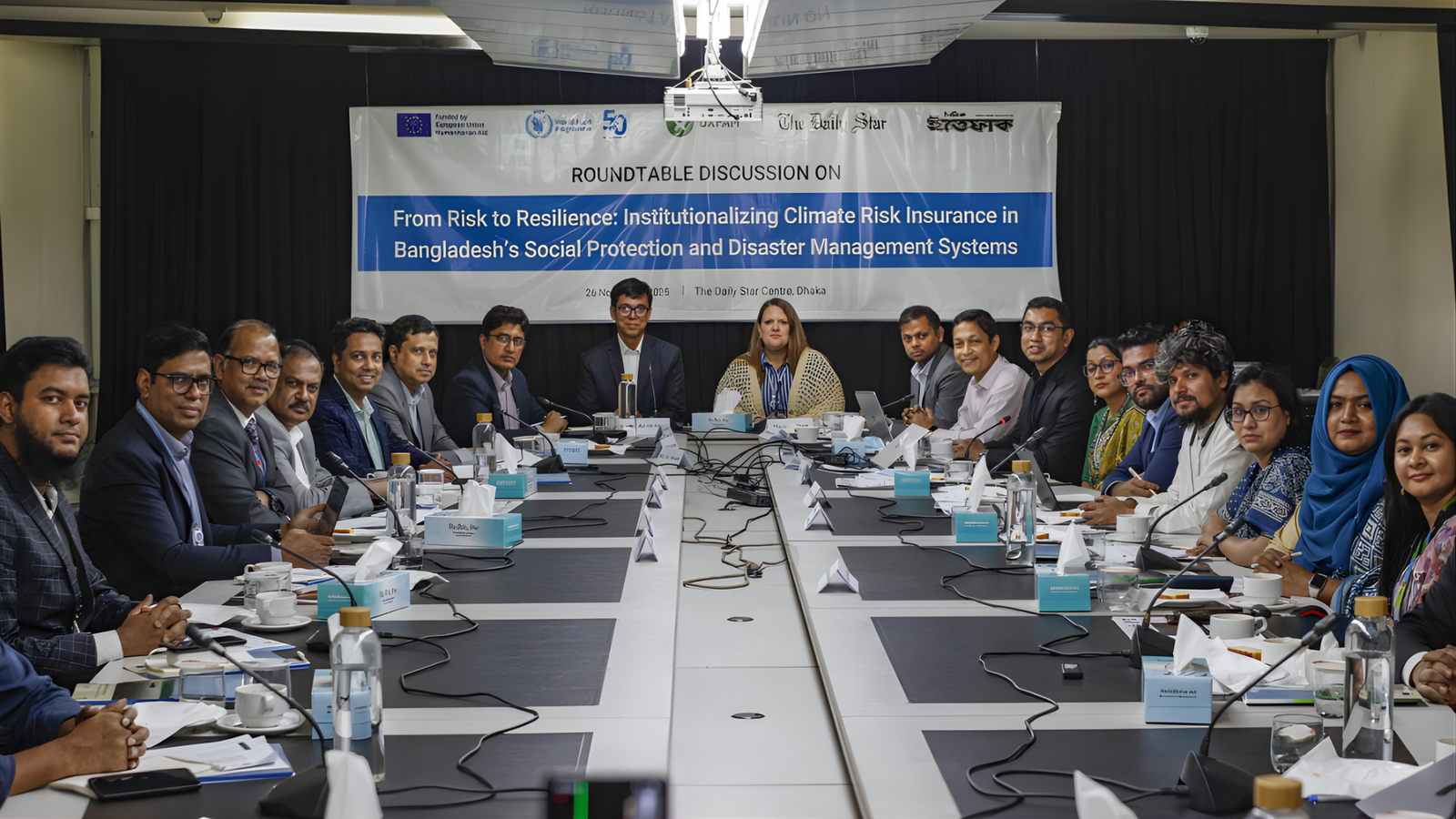
Climate change poses a significant and growing threat to Bangladesh, one of the most climate-exposed nations in the world. Regularly hit by floods, cyclones, and unpredictable weather patterns, Bangladesh’s vulnerable communities, particularly smallholder farmers, are increasingly at risk of losing everything to climate-related disasters. To combat this, experts are calling for the introduction of climate risk insurance (CRI) as part of Bangladesh’s national disaster management and social protection systems.
At a joint event held in Dhaka, titled “From Risk to Resilience: Institutionalising Climate Risk Insurance into Bangladesh’s Social Protection and Disaster Management Systems,” experts and policymakers gathered to discuss solutions. The event was organised by the World Food Programme (WFP), Oxfam, and The Daily Star and focused on the urgent need for creating comprehensive climate insurance products that would provide a safety net for vulnerable populations facing the impact of climate change.
Experts at the event agreed that the government must remove regulatory barriers and implement policies that would attract private insurance companies to the market. This includes offering VAT exemptions for micro-insurance products, revising commission ceilings, and developing targeted premium subsidies based on a household’s vulnerability and exposure to climate risks.
Prof. Suborna Barua, Chairman of the Department of International Business at the University of Dhaka, argued that opening the reinsurance market to more private and foreign firms would lead to improved services, lower costs, and greater efficiency in climate risk insurance provision. “The government should formally recognise climate and disaster risk insurance in national plans and policies, providing fiscal incentives such as VAT exemptions. Better coordination between ministries is also essential to ensure the rapid adoption of CRI in Bangladesh,” he said.
Bangladesh’s vulnerability to climate change is undeniable. The country is regularly subjected to devastating floods, cyclones, and erratic rainfall patterns, threatening food security and the livelihoods of millions. For many, particularly smallholder farmers, a single climate disaster can wipe out an entire season’s worth of crops, pushing them further into poverty and debt. In fact, many of these farmers already struggle with limited access to financial services, making it harder for them to recover after a disaster.
Maribeth Black, Deputy Head of Programme at the WFP, discussed the importance of designing and testing climate insurance products tailored to Bangladesh’s needs. “WFP is working closely with the Bangladesh government to review and adapt current policies to ensure climate insurance can be effectively integrated into future response mechanisms,” she stated.
In addition to government efforts, the role of private companies in providing climate risk insurance is critical. Tarik Ur Rahman, a consultant at Green Delta Insurance, highlighted the need for scalable, tech-driven insurance models. “With rising climate risks, our proven, farmer-centric model is ready to be replicated at a national and global level. This gives vulnerable communities the confidence they need to face an uncertain future,” said Rahman.
However, some challenges remain in the adoption of climate risk insurance. Mohammad Emran Hasan, Head of Climate Justice and Natural Resource Rights at Oxfam Bangladesh, noted that both the government and private actors need to be cautious when introducing new insurance products into the market. He stressed that products must be designed to meet the needs of vulnerable communities without placing an additional financial burden on them.
Imanun Nabi Khan, Assistant Country Representative of FAO Bangladesh, added that data collection and technology play a pivotal role in the design of effective climate insurance models. “Loss and damage due to climate change are inevitable, but we must have precise data and tools to measure these losses accurately,” Khan explained. “During last year’s floods, even households receiving remittances struggled to meet basic needs and communicate with their families abroad. This highlights that money alone is not enough — technology and accurate data are essential.”
As the government considers new policies to support the climate risk insurance market, Md Najmul Alam, Deputy Secretary to the Ministry of Planning, urged development partners to collaborate with the government to help cover the cost of insurance premiums for farmers. Bangladesh already provides extensive subsidies to support farmers, but with climate change exacerbating risks, additional measures are necessary to ensure long-term resilience.
M Aslam Alam, Chairman of the Insurance Development and Regulatory Authority, noted that while the current insurance law does not yet cover parametric insurance, amendments to the Insurance Act are underway. “Once the proposed amendment is approved, this legal barrier will be removed, enabling a more robust climate insurance framework,” Alam said.
With increasing threats from climate change, the introduction of climate risk insurance could provide the financial safety net that vulnerable communities in Bangladesh so desperately need. By addressing the barriers to implementation and ensuring that policies are tailored to the unique needs of these communities, experts believe that climate risk insurance can help build a more resilient Bangladesh.