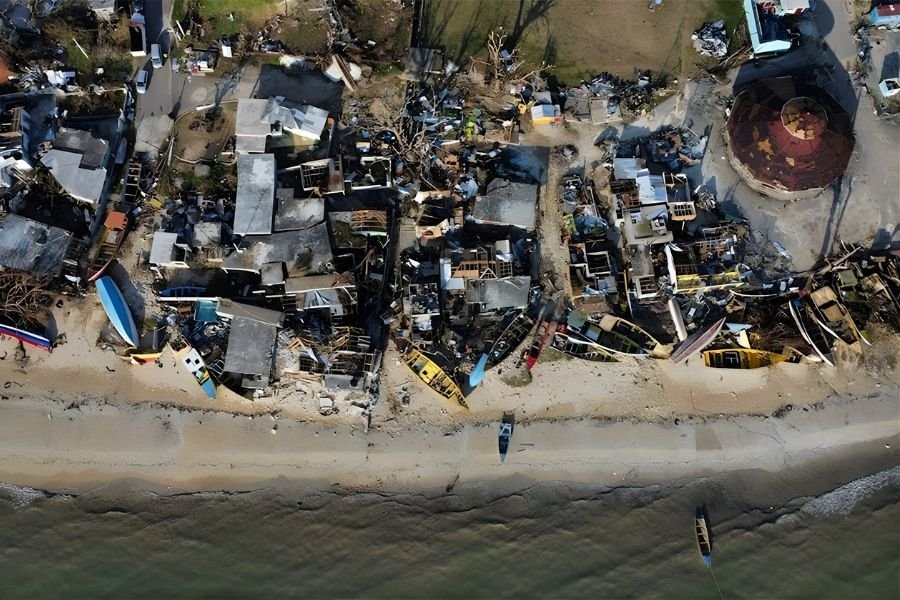
Jamaica’s Prime Minister Andrew Holness revealed on Tuesday that Hurricane Melissa, which struck the island last week, caused damage equivalent to approximately 28% to 32% of the country’s GDP in 2024. This makes Melissa the most powerful storm ever to hit Jamaica, with an estimated economic loss ranging from $6 billion to $7 billion.
Holness told the nation’s lower house that the damage assessment, based on initial evaluations, was considered conservative. He also warned that Jamaica’s short-term economic output could decline by between 8% and 13% as a result of the disaster.
The Prime Minister cautioned that the cost of the recovery would push Jamaica’s debt-to-GDP ratio higher. In response, the government is activating emergency measures to temporarily suspend fiscal rules in order to expedite the recovery process.
“We are already seeking financial support from our regional partners, development agencies, and the private sector,” Holness said. “We had made provisions for storms like Hurricane Beryl last year, and now we are working to secure additional funding.”
Hurricane Melissa has been described by experts as being on the extreme edge of what is physically possible in the Atlantic, driven by record-high sea temperatures. Holness added that its force was so immense that seismographs, hundreds of miles away, detected its passage. “Hurricane Melissa wasn’t just a tragedy; it was a warning,” he said.
Impact of Climate Change and Rising Storm Intensity
Scientists have pointed to the link between rising sea temperatures, driven by greenhouse gas emissions, and the intensification of storms. As a result, leaders in the Caribbean have long advocated for reparations from wealthy, high-polluting nations, either in the form of direct aid or debt relief.
In light of the escalating climate threat, Holness pledged to rebuild Jamaica’s infrastructure to better withstand future storms. He emphasised the importance of designing homes, roads, and bridges that are resilient to the storms of tomorrow. As part of this plan, the government will move certain sections of the electric grid underground and has waived import taxes on relief materials such as solar panels and satellite communication kits.
“Every repaired bridge, every re-roofed home, and every rebuilt road must be designed with future storms in mind, not the storms of the past,” Holness stated.
Death Toll and Destruction Across the Region
As of Tuesday, the death toll from Hurricane Melissa stood at 75, with 32 confirmed deaths in Jamaica and 43 in Haiti, where 13 more people remain missing. Despite not being directly hit by the hurricane, Haiti endured days of heavy rain that caused devastating flooding. One town in Haiti reported 25 deaths, including 10 children, and nearly 12,000 homes were flooded, with roads rendered impassable and access to drinking water lost.
Both Jamaica and Haiti expect the death toll to rise as rescue operations continue and more bodies are recovered. Holness noted that more than 30 communities in Jamaica are still likely cut off due to damage to roads and bridges. He also highlighted the difficulty of relief efforts, which have been hindered by shortages in helicopters, social workers, doctors, and engineers, underscoring the need for better disaster preparedness in the future.
Cuban authorities also reported significant damage from the storm, though there were no confirmed fatalities. Hundreds of thousands were evacuated from the city of Santiago and surrounding areas. The storm caused severe damage to homes, crops, and infrastructure across the island.
Economic Fallout and Tourism Sector Impact
AccuWeather, the US-based weather forecaster, estimated total damages across the Caribbean to be between $48 billion and $52 billion, while data firm Verisk projected insured losses in Jamaica alone to range between $2.2 billion and $4.2 billion.
Jamaica’s agricultural heartlands, already reeling from the effects of last year’s Hurricane Beryl, bore the brunt of Melissa’s impact. Lawmakers warned that food prices could rise as a result of the storm’s destruction. Furthermore, parts of the country’s vital tourism sector, including popular tourist destinations, were also hit, leaving thousands of tourism workers without jobs.
In the aftermath of the disaster, Jamaica faces a long road to recovery, with urgent calls for international aid and strategic planning to address the increasing frequency and intensity of storms in the region.