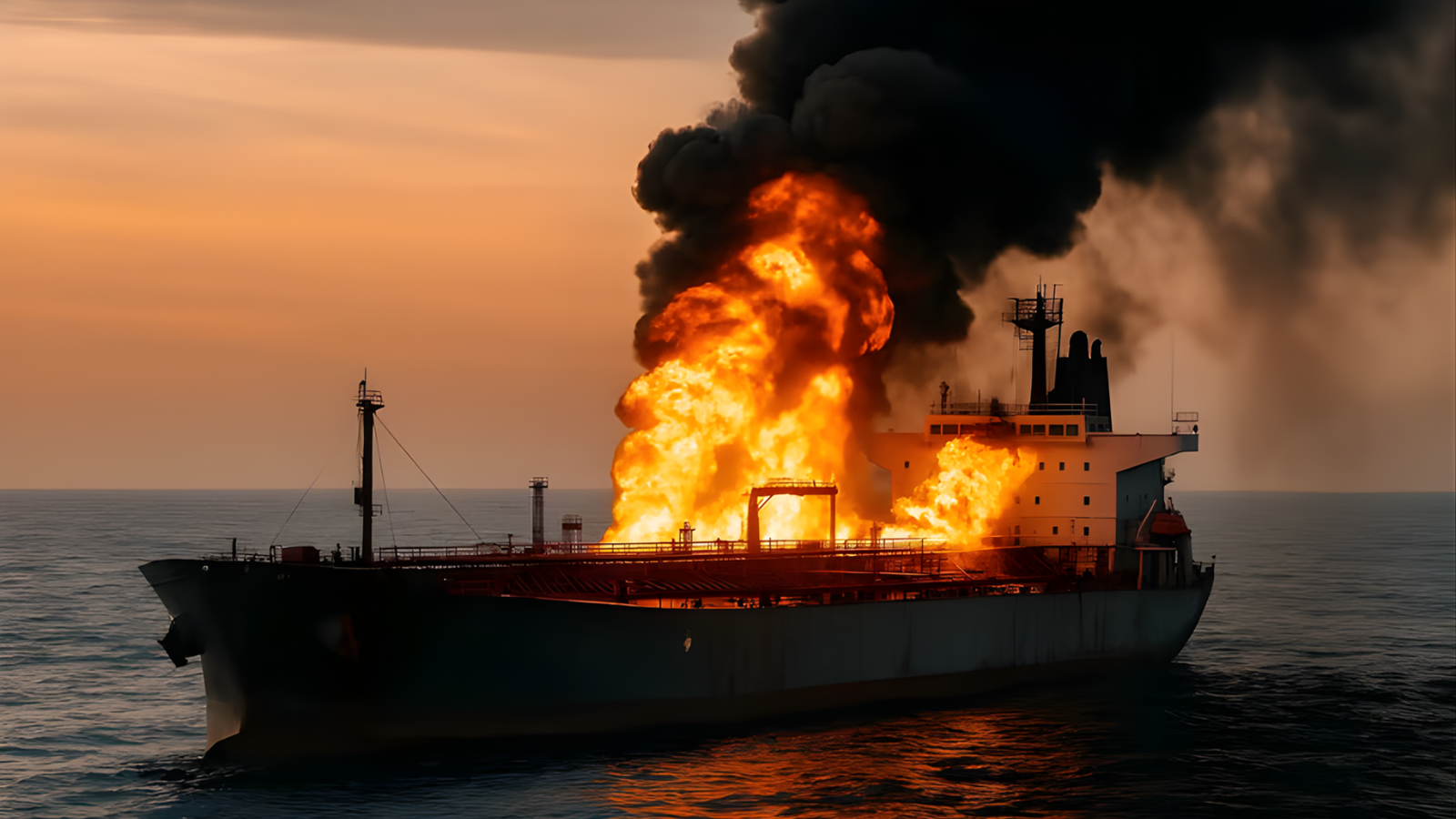
Two oil tankers linked to Russian sanctioned trades erupted in fire on Friday in the Black Sea, prompting urgent maritime response and raising renewed safety concerns in one of the world’s busiest energy corridors. Turkish authorities swiftly launched large-scale rescue operations following distress reports from both vessels.
The first tanker, Kairos, measuring 274 metres in length and registered under the Gambian flag, issued a distress signal approximately 28 nautical miles north of the Turkish coast. Sailing in ballast and destined for Novorossiysk, the vessel experienced a severe engine room explosion. Turkish search and rescue teams quickly reached the scene and successfully evacuated all 25 crew members, none of whom sustained injuries. The rapid response prevented what could have escalated into a major environmental and humanitarian crisis.
Further east, the Aframax-class tanker Virat reported heavy smoke some 35 nautical miles offshore. Assisted by Turkish authorities and nearby commercial vessels, all 20 crew members were rescued safely. Although the cause of the smoke and fire is still under investigation, preliminary reports suggest possible structural or mechanical failure compounded by risky operational practices.
| Vessel | Length | Crew | Flag | Offshore Distance | Incident Type |
|---|---|---|---|---|---|
| Kairos | 274 m | 25 | Gambia | 28 nm | Engine room explosion |
| Virat | Aframax | 20 | Unknown | 35 nm | Fire/smoke |
Maritime analysts have highlighted growing concerns surrounding the so-called “shadow fleet”—vessels that operate with fraudulent certification, lack valid insurance, or deliberately evade sanctions. The Kairos had recently been removed from the Gambian registry amid allegations of falsified safety certificates, rendering it particularly high-risk. Experts warn that such sanction-evading tankers frequently operate without regulatory oversight, elevating the likelihood of accidents and environmental disasters in sensitive regions like the Black Sea.
The incidents come amid heightened geopolitical tensions, as the Black Sea continues to serve as a strategic conduit for oil and gas exports. Shipping sources have emphasised the pressing need for stricter enforcement of maritime safety regulations, especially for vessels involved in sanctioned trades. Analysts also note that accidents involving unregulated tankers could trigger broader economic and environmental repercussions, including oil spills and disruptions to international shipping routes.
Both fires have since been contained, but authorities continue to monitor the area closely for residual hazards. The events underscore persistent vulnerabilities in global maritime logistics, particularly in regions where geopolitical disputes intersect with high-risk commercial shipping.