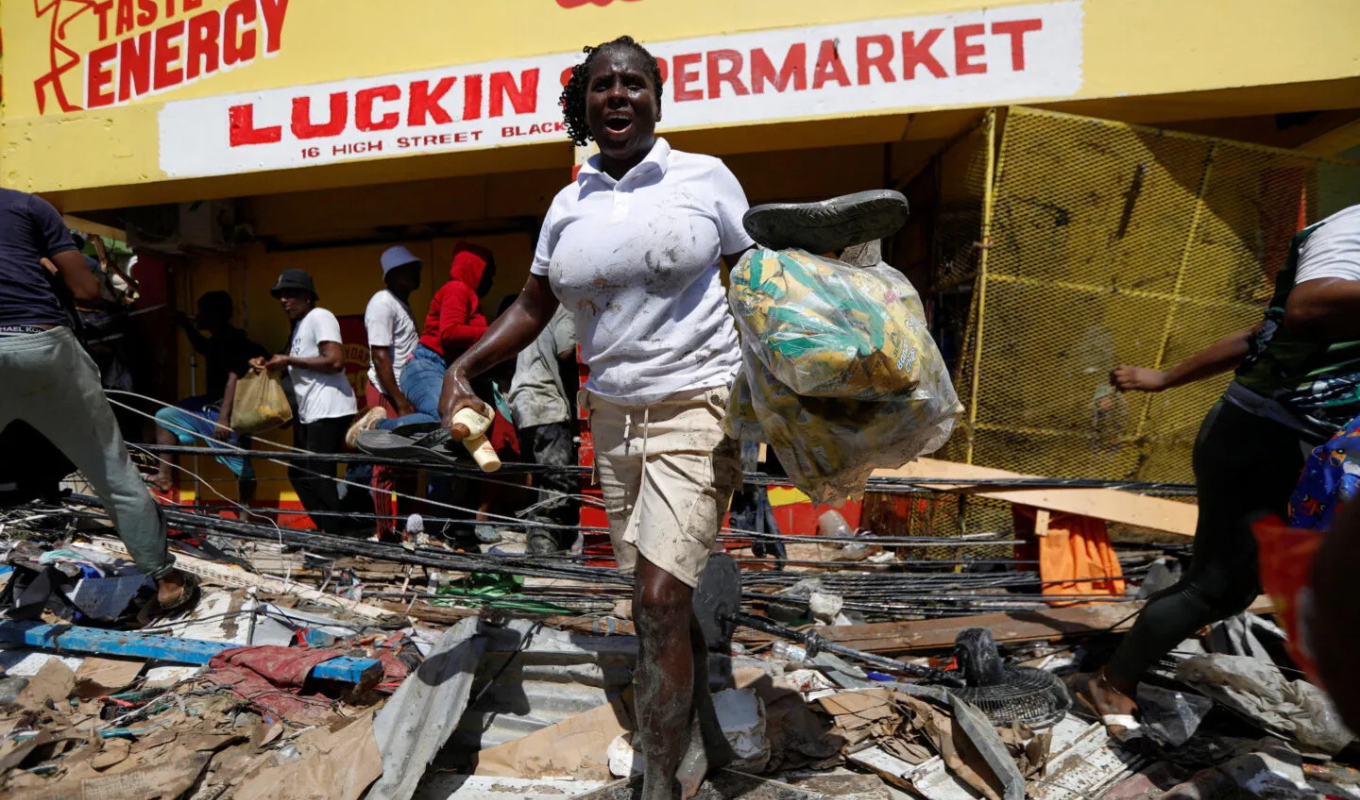
Jamaica is poised to receive a significant payout following the devastation caused by Hurricane Melissa, thanks to its robust disaster insurance arrangements. Yet, while the funds will provide much-needed relief, experts warn that such mechanisms are no long-term substitute for global climate justice or meaningful resilience investment.
In June, Finance Minister Fayval Williams announced that Jamaica had secured J$130.6 billion (US$820 million) in disaster financing coverage. This included policies through the Caribbean Catastrophe Risk Insurance Facility (CCRIF) and a US$150 million catastrophe bond, both of which are expected to pay out in full after the hurricane’s landfall.
Finance and climate specialists have since commended Jamaica’s foresight. Sara Ahmed, adviser to the Climate Vulnerable Forum, praised the government’s “leadership in deploying a mix of risk-financing tools as climate change intensifies tropical storms and hurricanes.”
Mafalda Duarte, Executive Director of the UN Green Climate Fund (GCF), told Climate Home News that although the GCF’s involvement in insurance remains limited, it is exploring greater investment in such instruments. “A lot more needs to be done in this area,” she said.
Insurance That Pays – But Only Part of the Bill
While Jamaica’s preparedness has been widely lauded, climate and finance analysts caution that the expected insurance payout will likely cover only a fraction of the hurricane’s true economic cost. Preliminary estimates suggest damages could reach tens of billions of dollars, dwarfing the US$150 million bond coverage.
Pepukaye Bardouille, Special Adviser on Resilience to the Government of Barbados, described the bond payout as “a drop in the ocean, but a useful one,” adding that insurance should be seen as part of a layered strategy, not a solution in itself.
Connor Meenan, a disaster risk specialist at the UK-based Centre for Disaster Protection, echoed that sentiment:
“The real value of insurance is that on day one, governments have certainty about a significant sum they can call on immediately. That allows them to focus on directing funds where they are needed most.”
He added that Jamaica’s proactive planning had clearly placed the country in a stronger position than it would otherwise have been.
Catastrophe Bonds: A Double-Edged Sword
Catastrophe bonds, first developed in the United States in the 1990s, allow investors – rather than insurance companies – to shoulder the financial risk of rare but severe disasters such as hurricanes and earthquakes. The World Bank has since promoted these instruments in developing nations vulnerable to climate extremes, including Jamaica.
Explaining Jamaica’s rationale earlier this year, Minister Williams told Bloomberg:
“We are situated in the hurricane belt. When a storm hits, it can damage infrastructure, roads, and homes — it takes us out for a while. You can’t start planning when a hurricane is already on the radar. You must plan well in advance.”
However, experts warn that as climate impacts intensify, the cost of such insurance may rise sharply. Ritu Bharadwaj, Director of Climate Resilience and Loss & Damage at the International Institute for Environment and Development (IIED), cautioned that “as catastrophes become more frequent, investors will demand higher premiums — eventually, it will become uninvestable.”
Climate Justice and the Burden of Premiums
Critics argue that small island nations such as Jamaica are being forced to pay for the consequences of a crisis they did little to create. Jamaica’s per-person carbon emissions are roughly half the global average, yet its taxpayers must finance hefty premiums to protect against the growing risks of climate-induced disasters.
“Taxpayers in small islands are effectively paying twice — once through the impacts of climate change and again through rising insurance costs,” Bharadwaj said.
The strict conditions that determine when catastrophe bonds pay out have also sparked frustration. Payments are triggered only when specific meteorological thresholds — such as wind speeds or air pressure levels — are met. Last year, Jamaica narrowly missed out on a payout after Hurricane Beryl caused around US$1 billion in damages, but did not meet the defined triggers.
Fending for Themselves
Bharadwaj further warned that funding from wealthy nations remains woefully inadequate. The UN’s Fund for Responding to Loss and Damage (FRLD), designed to support vulnerable countries, currently holds just US$407 million — far less than the losses Jamaica alone has suffered.
Because developed nations and international institutions have failed to mobilise adequate resources, developing countries are being forced to fend for themselves, she said.
Some, like Fiji, have issued sovereign resilience bonds to raise capital for defensive infrastructure — from sea walls and flood defences to hurricane-resistant hotels and coastal roads. Bharadwaj suggested that such measures should be viewed not merely as “impact investing”, but as long-term economic strategy that safeguards livelihoods and future growth.
“This spending is not just doing good,” she said. “It’s an investment that will yield benefits in the future by preventing loss and damage.”
Rethinking Global Finance for a Warmer World
Regional leaders and economists are increasingly calling for more radical solutions. Avinash Persaud, Climate Adviser to the President of the Inter-American Development Bank, has argued that developing countries should receive debt relief in exchange for investments in resilience.
His home nation, Barbados, pioneered the world’s first debt-for-resilience swap last year. Building on its success, international development banks are expected to announce a “multi-guarantor debt-for-resilience facility” at COP30 this month, expanding access to such mechanisms for other vulnerable nations.
Persaud and Bardouille have also advocated for the inclusion of “pause clauses” in loan agreements, allowing debt repayments to be suspended when a natural disaster strikes.
A System Under Strain
For now, Jamaica’s insurance safety net will deliver a timely financial boost in the aftermath of Hurricane Melissa. But the bigger picture remains troubling.
As climate-related disasters grow more frequent and intense, the insurance system designed to protect vulnerable nations is showing signs of strain. Premiums are rising, coverage is tightening, and the promise of resilience is increasingly dependent on global financial fairness.
Jamaica’s prudence may be paying off today — but without deeper systemic change, tomorrow’s storms could find even the most prepared nations dangerously exposed.