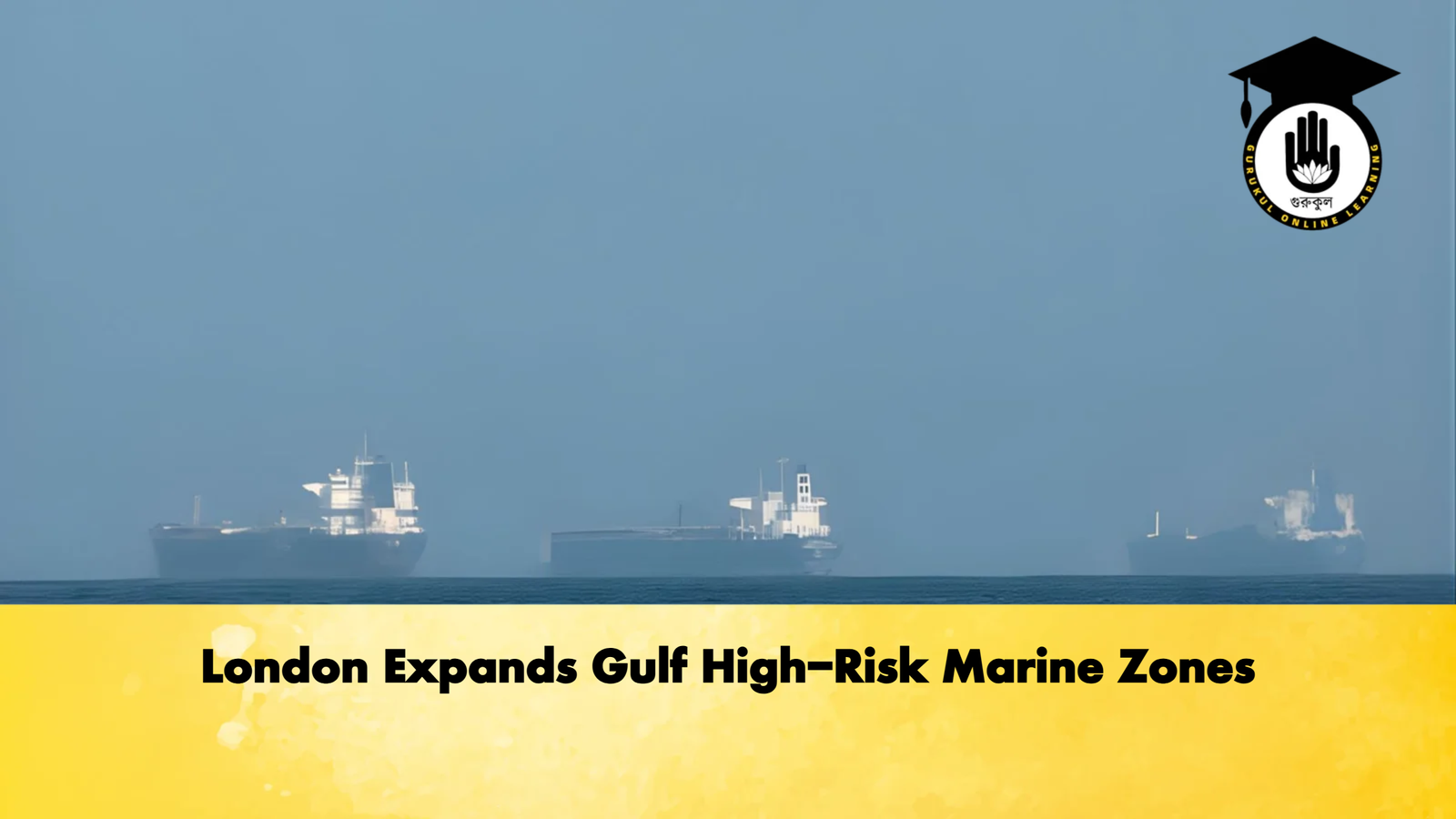
LONDON, 3 March 2026 – London’s marine insurance market announced on Tuesday that it has expanded the areas of the Gulf considered high-risk due to escalating tensions in the Middle East. The directive comes from the Joint War Committee (JWC), a body comprising syndicate members of the Lloyd’s Market Association and representatives from various London-based insurance companies. JWC’s guidance is critical for determining marine insurance premiums and assessing risks for fuel and cargo shipments traversing these waters.
In its statement, JWC indicated that, following a recent assessment, the waters off Bahrain, Djibouti, Kuwait, Oman, and Qatar have now been reclassified as high-risk zones. The committee’s secretary, Neil Roberts, explained, “In light of recent incidents, we revised the map at Monday’s meeting. Vessels in these areas may now face ‘increased perils’ associated with war risk.”
The move comes against the backdrop of rising tensions in the Gulf, which have already seen marine war-risk premiums surge fivefold in the past week, particularly following U.S. and Israeli airstrikes. This surge has imposed hundreds of millions of dollars in additional costs on individual shipments. Industry sources noted that certain previously exempt shipping routes now fall under full coverage, providing commercial vessels with greater protection.
Munro Anderson, a marine war insurance specialist at Vessel Protect, Pen Underwriting, said, “The JWC’s expanded guidance will help stabilise global supply chains. It reduces uncertainty for the transport of fuel, goods, and critical materials, ensuring safer passage through volatile regions.”
The table below summarises the changes in high-risk waters:
| Country / Waters | Previous Risk | New Risk | Summary of Impact |
|---|---|---|---|
| Bahrain | Medium | High | Increased war risk for vessels; higher premiums |
| Djibouti | Low | High | Previously limited coverage now fully insured |
| Kuwait | Medium | High | Additional costs for oil and gas exports |
| Oman | Low | High | Enhanced safety for commercial vessels |
| Qatar | Medium | High | Reduced premium volatility for fuel shipments |
Analysts note that the expansion offers vessels operating in these waters significantly greater protection and certainty compared with previous assessments. The measure is expected to help maintain relative stability in commercial activity amid ongoing regional tensions.
Globally, the move directly affects energy and cargo supply chains, particularly major trade routes servicing Europe and Asia. While increased insurance premiums may slightly elevate costs and contribute to minor supply fluctuations, experts stress that the guarantee of comprehensive coverage for vessels and cargoes is a critical stabilising factor.
Overall, the London marine insurance market’s action provides a crucial safety net for commercial operations in the Middle East, ensuring that even amid heightened geopolitical risks, the transport of fuel and essential goods can continue with enhanced security and reliability.