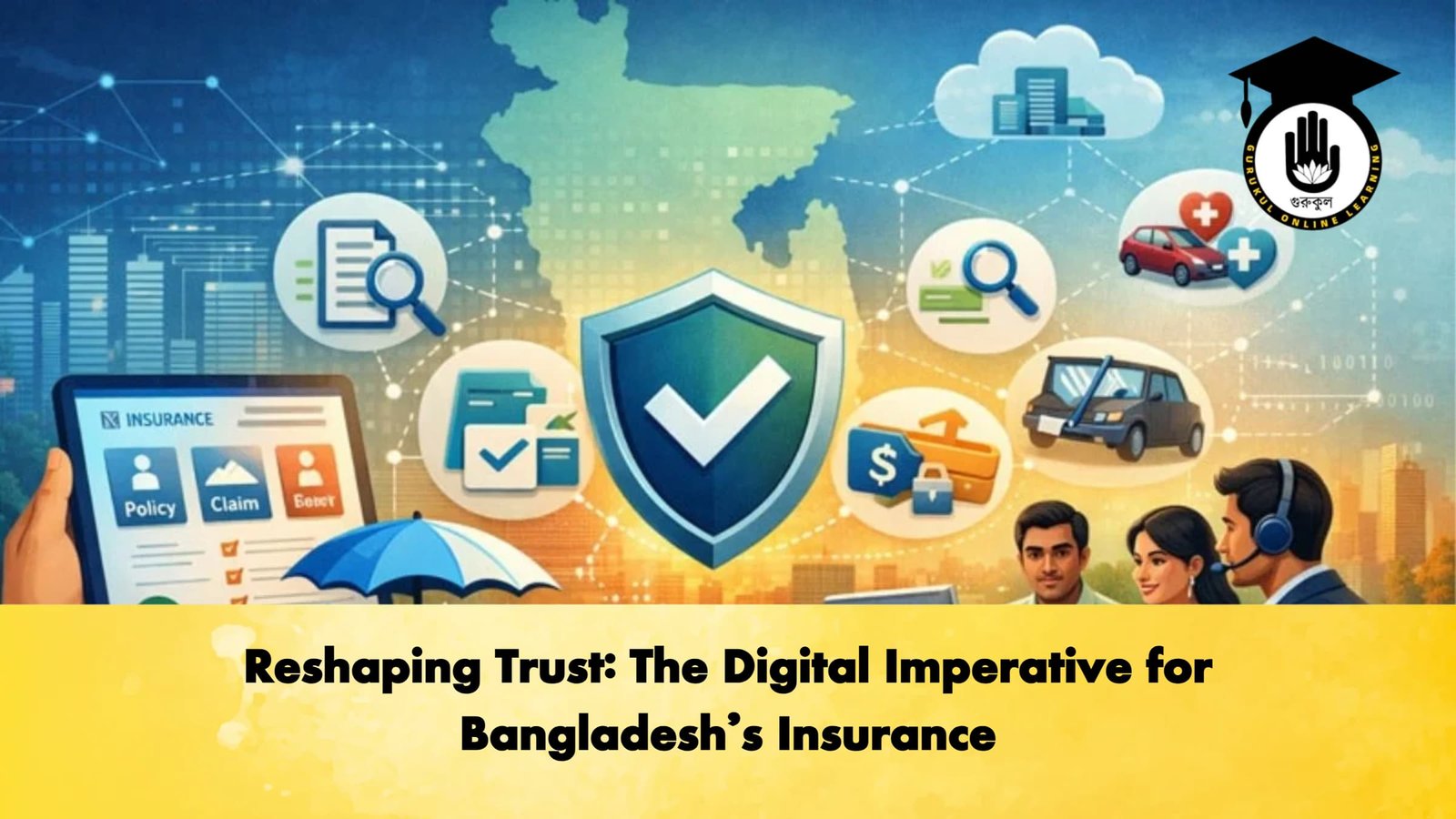
In the modern financial landscape of Bangladesh, digital transformation has evolved from a secondary convenience into a primary expectation. As consumers grow accustomed to the seamless immediacy of mobile banking and digital commerce, the insurance sector finds itself at a critical juncture. To remain competitive and, more importantly, to bridge the pervasive “trust deficit,” the industry must move away from archaic, paper-based workflows and embrace integrated insurance software.
The Anatomy of Digital Integration
Integrated insurance software is far more than a simple database; it is a comprehensive operational ecosystem. It synchronises policy issuance, risk underwriting, premium billing, and claims management into a single, cohesive stream. By replacing disparate physical files with a unified digital trail, companies can ensure that every decision—from a premium adjustment to a claim approval—is transparent, traceable, and accountable.
Redefining the Claims Experience
The “moment of truth” in insurance occurs during the claims process. In Bangladesh, public confidence has historically been undermined by the opaque and protracted nature of manual settlements. Customers are often left in the dark regarding the status of their applications, leading to frustration and a sense of insecurity.
Digital platforms revolutionise this experience by introducing real-time tracking. When a policyholder can view each stage of their claim’s progress via a mobile app, the psychological distance between the insurer and the insured is bridged. This transparency is the most potent tool available for restoring institutional credibility.
Strategic Comparison: Manual vs. Digital Operations
| Operational Metric | Manual/Paper-Based System | Integrated Software Solution |
| Document Security | High risk of loss, damage, or misfiling. | Encrypted cloud storage with instant retrieval. |
| Processing Speed | Dependent on physical logistics and manual entry. | Automated workflows with real-time validation. |
| Fraud Prevention | Vulnerable to forgery and inconsistent data. | AI-driven anomaly detection and audit trails. |
| Customer Access | Limited to office hours and physical visits. | 24/7 self-service through web and mobile apps. |
| Reporting | Time-consuming and prone to human error. | Instant, data-driven insights and analytics. |
Adapting to the Local Ecosystem
For digital transformation to succeed in Bangladesh, it must be “context-aware.” A foreign solution cannot simply be overlaid onto local realities. Software must be designed to integrate with:
-
Mobile Financial Services (MFS): Direct links to platforms like bKash and Nagad for seamless premium payments.
-
Agent Panels: Providing digital tools to the vast network of agents who remain the backbone of sales.
-
Language & Identity: Incorporating Bengali interfaces and integrating with national NID databases for instant verification.
The Necessity of Change Management
Technological implementation is only half the battle; the other half is cultural. If a company digitises a flawed process without retraining its staff, it merely creates a “faster version of a bad system.” Successful adoption requires Change Management—a comprehensive effort to update internal hierarchies, clarify responsibilities, and prioritise data privacy.
As Bangladesh moves towards a more formalised economy, the insurance sector must decide whether to remain a relic of the past or become a pillar of the future. Integrated software is not just a tool; it is the infrastructure upon which a trustworthy, efficient, and inclusive insurance market will be built.