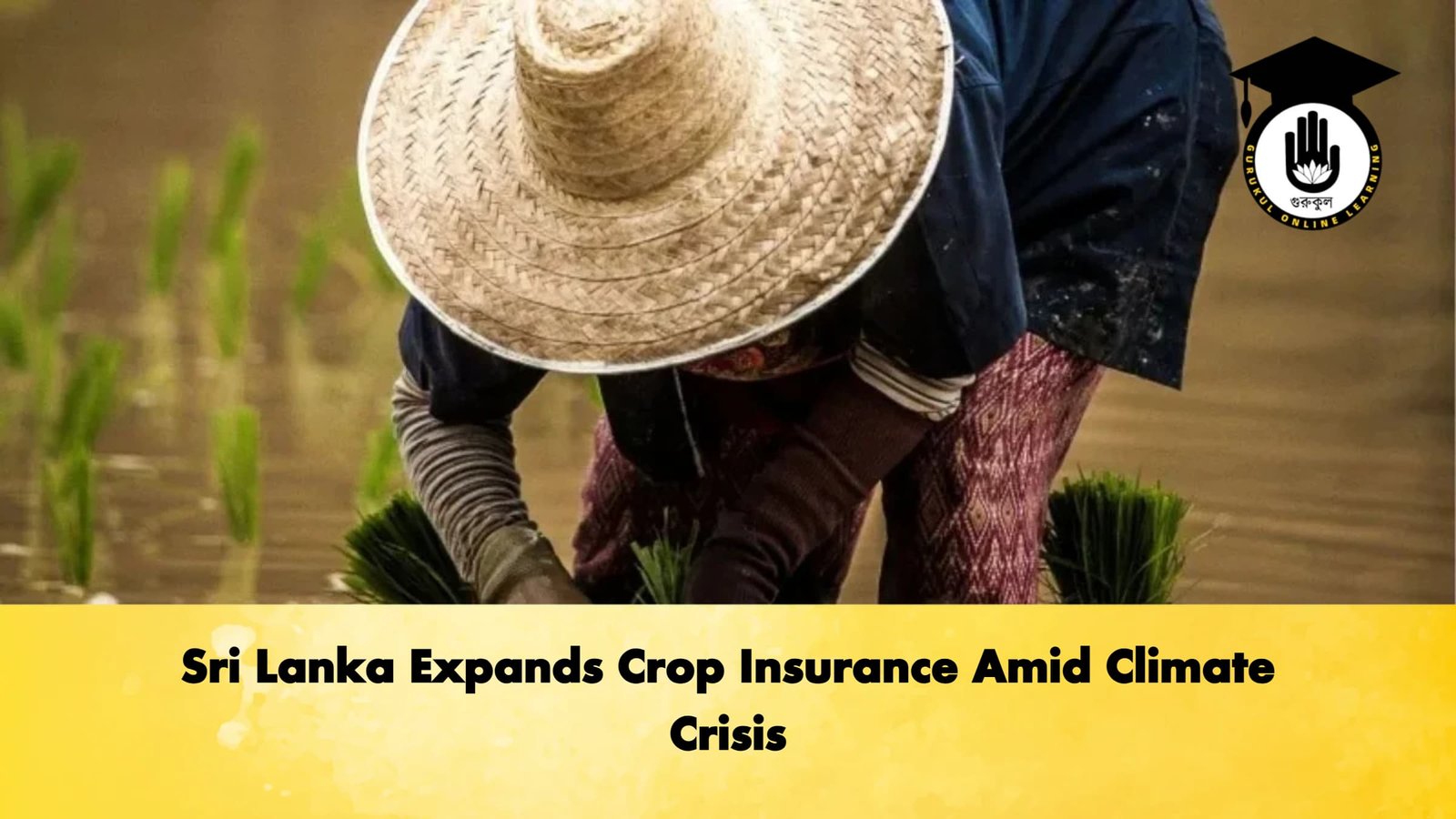
Sri Lanka’s Agricultural and Agrarian Insurance Board (AAIB) has announced the launch of a dedicated “Insurance Month” starting in February 2026. This strategic initiative aims to broaden the safety net for the nation’s farming community, who are increasingly besieged by a volatile cocktail of climate change, pest infestations, and human-wildlife conflict.
Combating Environmental and Biological Risks
Agriculture remains the backbone of the Sri Lankan rural economy, yet it is currently facing unprecedented pressure. Farm incomes have been severely eroded by a cycle of extreme droughts followed by flash floods, a pattern typical of the shifting monsoon dynamics in South Asia.
Beyond the weather, the “wild elephant menace” has become a critical economic factor. As natural habitats shrink, elephants frequently encroach upon agricultural land, destroying entire harvests in a single night. The AAIB’s expanded coverage specifically addresses these diverse threats, offering protection against:
-
Climatic Extremes: Drought, floods, and lightning-induced fires.
-
Wildlife Damage: Specifically losses incurred via wild elephants.
-
Biological Threats: Widespread insect infestations, locusts, and crop-specific diseases.
Tiered Premium and Compensation Structure
To ensure the programme is inclusive, the AAIB has set premiums at “affordable levels,” categorised by crop type and risk profile. For staple legumes and hardy grains like mung beans and finger millet, the compensation is capped at approximately $192 (LKR 60,000) per acre.
For high-value perishables such as tomatoes and cabbage, which require higher capital investment, the coverage limit is significantly higher.
| Crop Category | Max Compensation (per acre) | Premium Rate | Premium Cost (per acre) |
| Grains & Legumes (Cowpea, Millet, Sesame) | $192 (LKR 60,000) | 7% | $13.44 (LKR 4,200) |
| Vegetables & Roots (Sweet Potato, Tomato, Beans) | $320 (LKR 100,000) | 7% | $22.40 (LKR 7,000) |
| Staples (Paddy, Maize, Soybeans) | Variable | Market Adjusted | TBC |
(Currency conversion based on $1.00 = LKR 310.98)
A Push for Food Security
The expansion comes at a time when the Sri Lankan government is prioritising national food security. By de-risking the agricultural sector, the AAIB hopes to encourage farmers to maintain production levels despite the unpredictability of the environment. The move is expected to stabilise market prices for essential goods like chilli, onions, and potatoes, which often see price spikes following local harvest failures.
As February 2026 approaches, the AAIB will conduct regional outreach programmes to register smallholder farmers, ensuring that those in the most vulnerable “Dry Zone” regions are the first to be shielded.