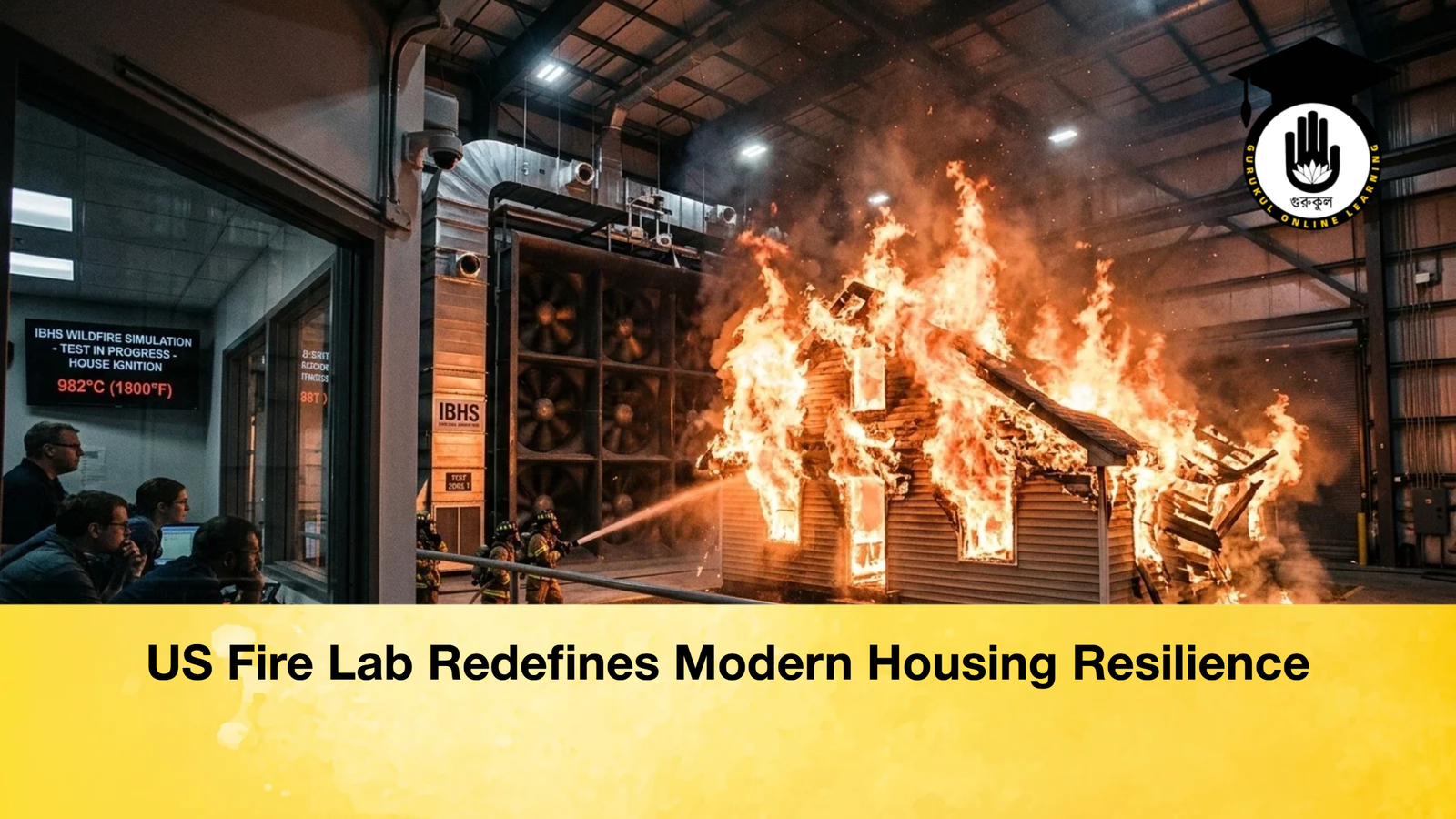
In an era where the climate crisis is no longer a distant threat but a tangible domestic reality, a pioneering disaster simulation facility in the United States is fundamentally altering the architecture of residential safety. Located in South Carolina, the Insurance Institute for Business & Home Safety (IBHS) research centre has become the ultimate testing ground for home endurance, particularly as wildfire-prone regions like California face an existential threat from escalating environmental hazards.
A Crucible of Climate Simulation
The IBHS facility, a sprawling “disaster laboratory,” was born out of the catastrophic lessons of Hurricane Katrina. It stands as a marvel of engineering, capable of conjuring the world’s most violent weather patterns within a controlled environment. Scientists here utilise a massive wind tunnel, equipped with 105 powerful fans, to replicate hurricane-force gales, torrential rain, and—most crucially—the erratic “ember storms” that precede wildfires.
One of the lab’s most harrowing demonstrations involves the systematic destruction of a full-scale wooden residence. By subjecting the structure to simulated wildfire conditions, researchers observe as controlled flames, fanned by high-velocity winds, reach temperatures exceeding 980°C. The experiment illustrates how wind-blown embers, often overlooked, can penetrate standard home vents and ignite a property from the inside out, leading to total structural collapse in mere minutes.
Engineering the Future of Safety
The laboratory’s primary objective is to move beyond the documentation of destruction and towards the engineering of survival. Through exhaustive testing, the IBHS has identified a suite of “resilience retrofits” that can significantly alter a building’s survival probability.
Key innovations include:
-
Ember-resistant ventilation: Mesh screens designed to block microscopic sparks from entering attics.
-
Non-combustible cladding: External wall materials that refuse to feed the fire.
-
Defensible space zoning: Research-backed guidelines on vegetation placement to prevent “fuel ladders.”
Crucially, experts are now advocating for “collective resilience.” Data suggests that a single fortified house remains at high risk if the neighbouring property is combustible. To truly mitigate wildfire risk, entire communities must adopt these standards, creating a unified buffer against the encroaching flames.
The Economic Fallout and Insurance Crisis
The technical findings of the fire lab are being released against a backdrop of severe economic turbulence in the insurance sector. As natural disasters grow in frequency and intensity, the financial viability of covering high-risk properties is evaporating. Since 2019, the cost of protecting a home in the US has soared, leaving many families in a precarious position.
| Indicator | Recent Data Trend | Strategic Implication |
| Premium Escalation | +64% increase since 2019 | Threatens household solvency and disposable income. |
| Protection Gap | 14.1% of homes uninsured (2025) | Millions at risk of total financial ruin post-disaster. |
| Provider Volatility | Major insurer withdrawals in CA | Market contraction leads to “last resort” state-backed plans. |
| Mortgage Stability | Rising insurance-related defaults | Risk of suppressed property values and “stranded assets.” |
A Blueprint for Survival
The broader implications for the property market are stark. Because mortgage lenders mandate comprehensive insurance, the withdrawal of insurers from states like California and Florida threatens to paralyse the housing market.
While the IBHS researchers hope their data will eventually force a revision of national building codes and urban planning, a significant hurdle persists: the “incentive gap.” Many insurers remain hesitant to offer substantial premium discounts to homeowners who invest in these safety upgrades. Until the financial industry aligns its pricing models with the scientific reality established at the South Carolina fire lab, the burden of resilience will continue to fall heavily on the individual.
In the final analysis, the work at the IBHS serves as both a grim warning and a necessary roadmap. It confirms that in a more volatile world, the security of our homes will depend less on their aesthetic appeal and far more on their scientific capacity to withstand the elements.