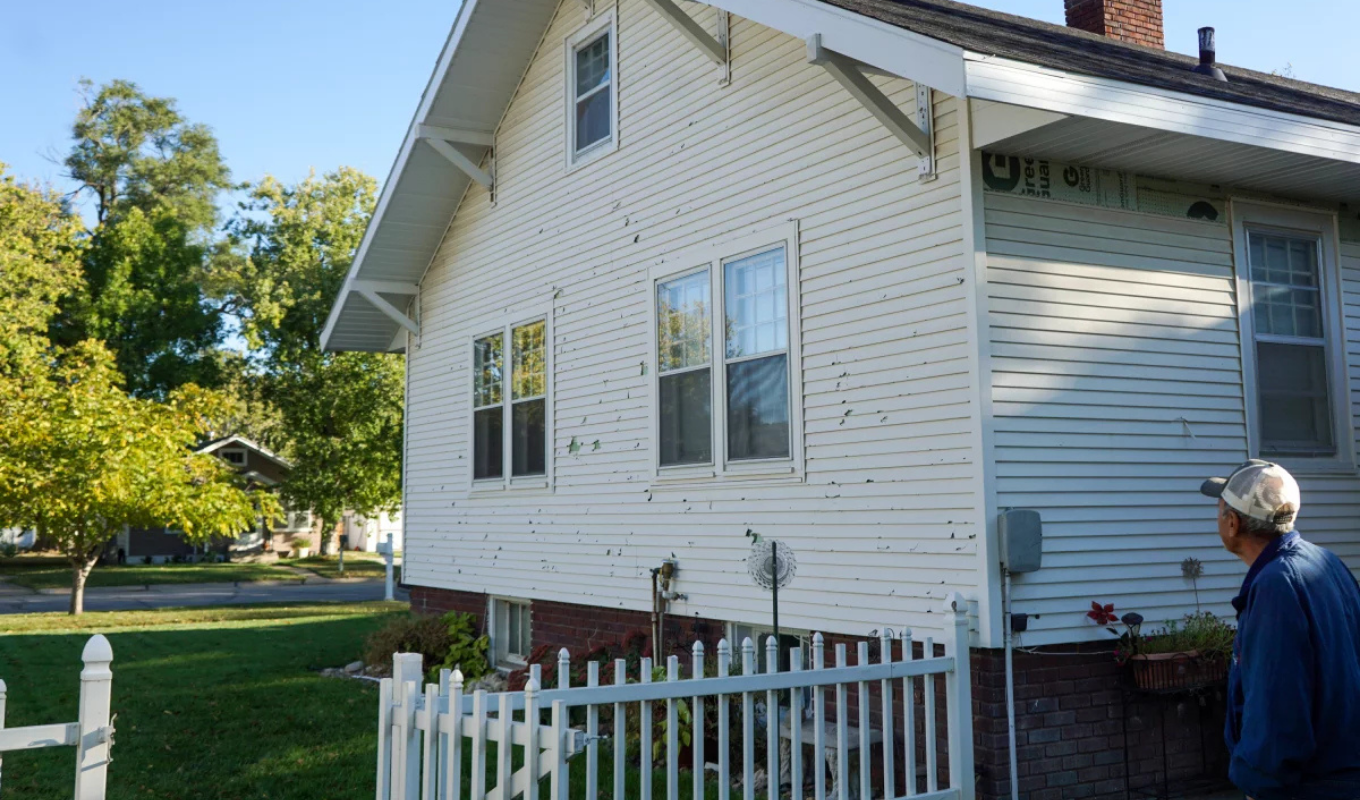
In the early hours of June 29, 2024, a powerful storm struck Cozad, Nebraska. The wind howled like a hurricane, and hailstones the size of softballs battered the small town. Soledad Avalos, a long-time resident, watched helplessly as the storm wreaked havoc on her home and the community.
By morning, the damage was clear. Cozad, a town of around 4,000 people surrounded by cornfields, had been hit hard. Crops were flattened, nearly every vehicle had shattered windows, and most homes had roofs that were either leaking or severely damaged. The local hospital and school were also affected, with the emergency department closing for several hours due to the storm’s destruction.
Although hailstorms like this rarely make national news, they are becoming more frequent, particularly in the central and eastern United States. According to Deborah Bathke, Nebraska’s state climatologist, weather conditions conducive to large hail have become more common in recent years, and the Great Plains are expected to experience more frequent hailstorms as climate change accelerates.
A Growing Threat: Rising Home Insurance Costs
The increasing frequency of hailstorms is directly contributing to the rising cost of home insurance in the central U.S., where the risk of hail damage is among the highest in the world. Insurance companies are facing massive losses from storm damage, and as a result, premiums are climbing. Between 2018 and 2022, home insurance costs increased at a rate 8% faster than inflation, according to a Treasury Department report.
In Nebraska, homeowners are feeling the impact most acutely. The average cost of homeowners insurance in the state is now nearly $6,400 a year, almost $4,000 higher than the national average. In some areas, rates have more than doubled in recent years.
“Insurance in our state has really skyrocketed,” says Josh Tapio, an insurance broker in Omaha, Nebraska. “A few years ago, a homeowner would pay around $1,500 per year for a $300,000 home. Now, that same policy can cost anywhere from $3,000 to $4,500.”
The Domino Effect on Property Ownership
The soaring cost of insurance is forcing some homeowners to rethink their property investments. Jennifer McKeone, a Cozad resident who owned two rental properties in town, found herself in a difficult situation after the storm. Both houses were badly damaged, and her insurer refused to continue providing coverage. When she searched for alternative policies, the premiums were so high that she would have had to raise the rent significantly—making it unaffordable for her tenants.
“I ended up selling the properties,” McKeone says. “Neither I nor my tenants could afford the insurance premiums.”
The Bigger Picture: Climate Change and Rising Risks
Hailstorms, while not as deadly as other extreme weather events like hurricanes or wildfires, cause immense property damage. According to Scott St. George, a climate scientist and head of weather research at WTW, a global risk analysis company, hail can damage virtually anything outside. With more homes, cars, and buildings being constructed, the potential for damage is growing. In 2024, hail damage contributed to a staggering $54 billion in insured losses from severe weather events across the U.S.
This growing financial risk is pushing up premiums for homeowners across the country, particularly in states like Nebraska, where the risk of severe weather is escalating. In 2024 alone, hailstorms caused an estimated $100 million in damage to Cozad, a sum that would seem staggering for a town of just 4,000 people.
A Tipping Point for Homeowners
For many, the sharp rise in insurance costs is making property ownership increasingly unaffordable. With premiums outpacing inflation and storm damage becoming more frequent and severe, millions of Americans in hail-prone areas are finding it harder to keep up with rising insurance rates.
Impact on Homeowners’ Insurance Costs in the Great Plains
| Region | Average Increase in Insurance Costs | Premium Compared to National Average |
|---|---|---|
| Northern Plains | 20% higher than national average | Higher by approximately 20% |
| Southern Plains | 45% higher than national average | Higher by approximately 45% |
| Nebraska | $6,400 (highest in the U.S.) | Nearly $4,000 above the national average |
As climate change continues to fuel more extreme weather events, particularly in hail-prone areas, insurance rates are likely to keep rising, leaving homeowners across the central U.S. grappling with escalating costs and fewer options. For many, the future of homeownership in these areas is uncertain.