Life insurers across Europe are navigating one of the most challenging investment environments in decades. Inflation continues to exceed expectations, market cycles are accelerating faster than models can adapt, and regulatory frameworks such as Solvency II and the new Solvency UK rules are constantly reshaping the capital landscape.
While many insurers talk about tightening Asset-Liability Management (ALM), too many are still relying on basic spreadsheet-based models that belong to an earlier era.
Ortec Finance, a company renowned for its risk and return technology, has published a report examining this growing gap. It highlights how traditional Strategic Asset Allocation (SAA) models are no longer sufficient to meet the demands of modern financial markets. Beinsure has reviewed the report and outlined key trends emerging from this shift.
Key Highlights
- Static Models Are Falling Short: Insurers still relying on static, deterministic SAA models are increasingly blind to rising risks. The market has outgrown simple, one-path projections, demanding dynamic tools that can handle volatility and adjust to evolving capital rules.
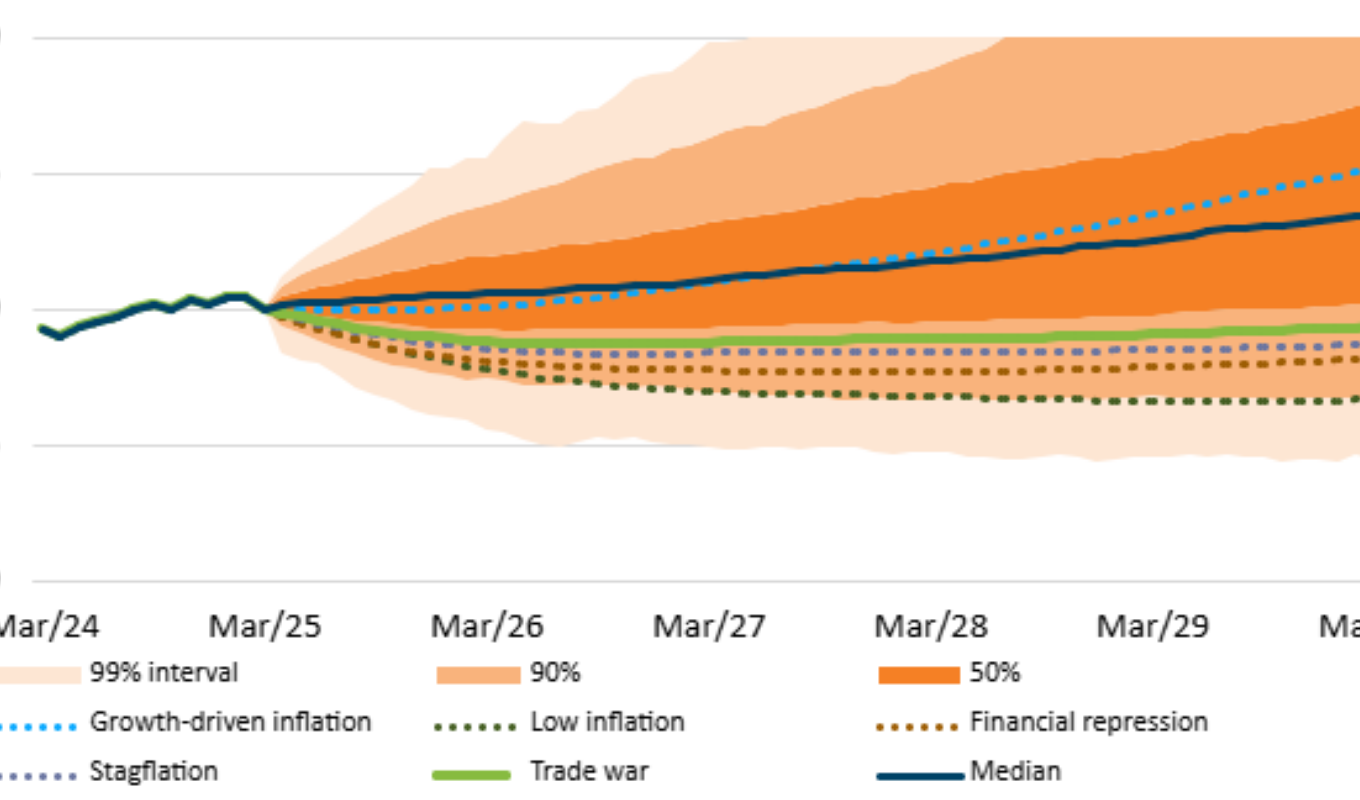
- Simulating Economic Futures: Advanced ALM frameworks can now simulate thousands of economic paths, exposing a wide range of possible outcomes— from tail risks to liquidity shocks— giving management a real-time view of balance sheet behaviour under stress.
- Integration with Solvency II: Modern ALM frameworks integrate Solvency II capital charges directly into investment strategies. This helps insurers identify assets that provide higher returns while consuming less capital.
- Scenario-Based Machine Learning (SBML): SBML models are increasingly used to capture complex, non-linear relationships across asset classes and liabilities, offering a more adaptive and realistic view of portfolio performance.
- Testing “What-If” Scenarios: Insurers can now model bespoke “what-if” scenarios— such as trade wars, stagflation, and climate disruption— to evaluate different economic conditions and guide decision-making in unpredictable markets.
The Need for Advanced Modelling
The days of relying on simple spreadsheets for ALM are over. Actuarial teams already use sophisticated simulations for liabilities, so it only makes sense to apply the same level of sophistication to asset-side modelling.
As insurers diversify into private credit, infrastructure, and other alternative assets in search of yield and diversification, they encounter unique challenges, including illiquidity, irregular cash flows, and complex valuations. Without robust ALM systems, insurers risk misjudging how these assets will perform under different market conditions, leading to mismatches between assets and liabilities that only become apparent under stress.
This raises a critical question: How can insurers optimise capital more effectively?
Capital Optimisation Is Key to Survival
Capital optimisation has become a core concern for insurers. Solvency II requires insurers to hold additional capital to cover investment risks, with the amount depending on the types of assets held. This, in turn, significantly influences asset allocation decisions.
To optimise capital efficiency, insurers must integrate regulatory frameworks into their investment decisions. For example, under Solvency II, the matching adjustment allows insurers to adjust the discount rate based on the types of assets held, with fixed-income assets particularly favoured.
Sophisticated ALM models incorporate these capital rules into the optimisation process, allowing insurers to balance regulatory requirements with return targets.
Some insurers, according to analysts, are already using these tools to identify high-yield, low-capital-consuming assets, freeing up capital for expansion, dividends, or new investments.
The Power of Stochastic Modelling
Stochastic modelling takes capital optimisation a step further by stress-testing solvency ratios across a wide range of market conditions. This provides management with a clear view of potential trade-offs and ensures balance sheet resilience under various stress scenarios.
These systems simulate thousands of economic paths, each testing solvency ratios under different shocks, such as inflation spikes, liquidity crunches, or political disruptions. This process gives insurers a more accurate picture of where their vulnerabilities lie and where they can take risks.
Narrative-Driven ALM for an Uncertain Market
With inflation, interest rates, and private asset pricing all in flux, insurers need more than just mathematical forecasts—they need flexible, scenario-driven tools to guide their strategies. Advanced ALM systems enable insurers to test competing economic views and model different timelines to see how each scenario impacts their balance sheet.
This narrative-driven approach allows insurers to assess risks from a broader perspective. They can simulate “what-if” worlds— such as trade wars, stagflation, or climate shocks— to see how these scenarios would affect solvency and capital buffers.
Moving Beyond Deterministic Models to SBML
One of the biggest flaws of traditional SAA models is their reliance on simplicity. These deterministic models forecast a single “best guess” scenario, assuming a straight-line progression. However, real-world markets are not linear. Inflation rates spike, spreads shift, and credit markets fluctuate.
Stochastic modelling addresses this by running thousands of possible futures, each with its own set of variables, providing a full spectrum of outcomes— from the expected mean to worst-case tail risks, liquidity squeezes, and capital strain.
Despite this, even sophisticated stochastic frameworks struggle to capture the increasingly complex and non-linear behaviours of markets. Assets like private credit, structured products, and hybrid guarantees move in unpredictable ways, and traditional optimisation methods can’t keep up.
This is where Scenario-Based Machine Learning (SBML) comes in. Developed by Ortec Finance, SBML maps these intricate, often counter-intuitive relationships, blending economic modelling with data science to create more realistic and adaptive forecasts.
A Step Forward in Risk Management
SBML is the next step in the evolution of ALM for insurers, offering a more nuanced approach to managing volatility and capital efficiency. It exposes the volatility and tail risks that truly matter for solvency management, helping insurers better prepare for uncertain futures.
Insurers that are embracing advanced modelling and capital-aware ALM frameworks aren’t just responding to market challenges—they are actively shaping their future resilience. By moving beyond spreadsheets and adopting data-driven, flexible ALM tools, insurers can better navigate the uncertainties of the modern market.
This shift marks a significant change in the insurance industry, not just in terms of prediction, but in preparation. Insurers are no longer trying to predict the future with precision. Instead, they are building the agility to pivot quickly, ensuring that their balance sheets remain strong and adaptable in an unpredictable world.