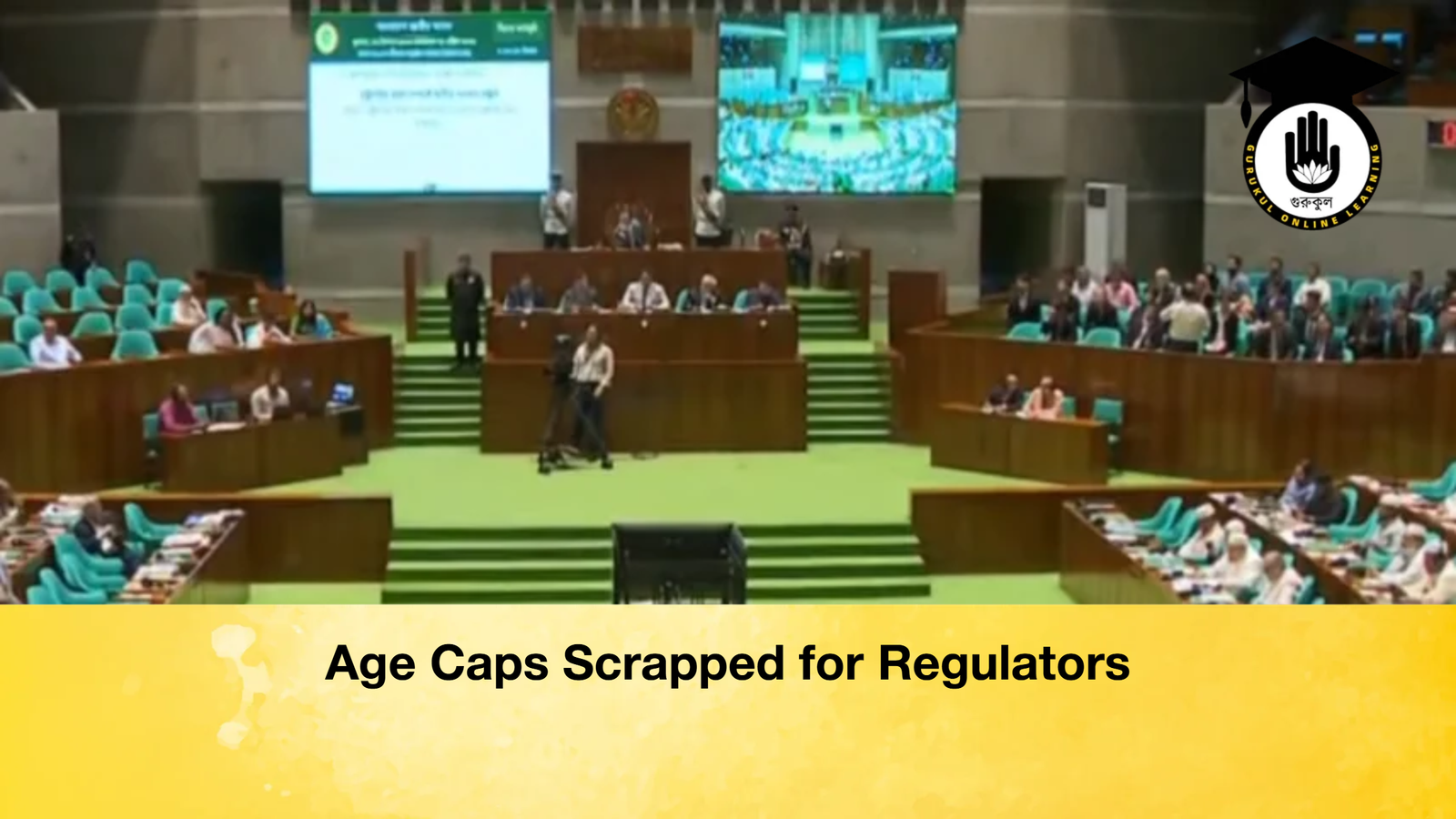
The National Parliament yesterday passed two amendment bills removing the upper age limits for appointing the chairpersons and members of two key financial regulatory bodies in Bangladesh: the Bangladesh Securities and Exchange Commission (BSEC) and the Insurance Development and Regulatory Authority (IDRA). The decision effectively abolishes previously fixed age ceilings for these top positions, marking a significant shift in the recruitment framework for financial sector regulators.
Under the earlier legal provisions, the maximum age limit for the chairperson and commissioners of the BSEC was set at 65 years. Similarly, the chairperson and members of the IDRA were required to be within a maximum age limit of 67 years. The newly approved amendments eliminate these restrictions entirely, allowing appointments to be made without any statutory age ceiling.
The passage of the bills was accompanied by intense debate in Parliament, with opposition members questioning both the timing and intent of the amendments. They argued that such a fundamental policy change required broader consultation and public scrutiny. Several lawmakers also raised concerns over perceived irregularities in recent appointments within financial regulatory institutions, suggesting that transparency in the selection process had been insufficient.
A proposal by an independent Member of Parliament, Rumin Farhana, to send the bills to a scrutiny committee for further review was raised during proceedings. This move temporarily limited detailed debate on the legislation. Opposition leaders further alleged procedural shortcomings, claiming that members had not received the bill documents in adequate time for proper examination.
The Speaker of Parliament, however, rejected these claims, stating that all procedural requirements had been duly followed and that the documents had been distributed in accordance with parliamentary rules the previous day. Following this clarification, both bills were passed.
Finance Minister defended the amendments, arguing that they reflect evolving socio-economic realities. He noted that life expectancy has increased significantly compared to previous decades, making rigid age limits less relevant. According to him, removing such restrictions would help ensure that experienced and highly skilled professionals remain eligible for leadership roles in regulatory bodies, thereby strengthening institutional capacity.
Despite the passage of the bills, political controversy continued outside the chamber. Members of the National Citizens’ Party questioned whether the amendments were designed to benefit specific individuals. They referenced past instances in which changes to age limits in judicial appointments had reportedly influenced administrative outcomes over the long term.
Opposition parties also reiterated concerns about neutrality in recent appointments to high-level financial positions, extending their scrutiny to leadership roles within the central banking system. They called for a fully transparent and merit-based recruitment process across all financial regulatory institutions.
Government representatives dismissed these allegations, insisting that political affiliation alone cannot be interpreted as evidence of partisan appointments.
Summary of Amendments
| Institution | Previous Age Limit | New Status |
|---|---|---|
| Bangladesh Securities and Exchange Commission (BSEC) | Up to 65 years | Age limit removed |
| Insurance Development and Regulatory Authority (IDRA) | Up to 67 years | Age limit removed |
The removal of age restrictions introduces a new approach to regulatory appointments in Bangladesh’s financial sector. However, despite the legislative change, debate over transparency, governance standards, and the motivations behind the reform continues to persist in political circles.