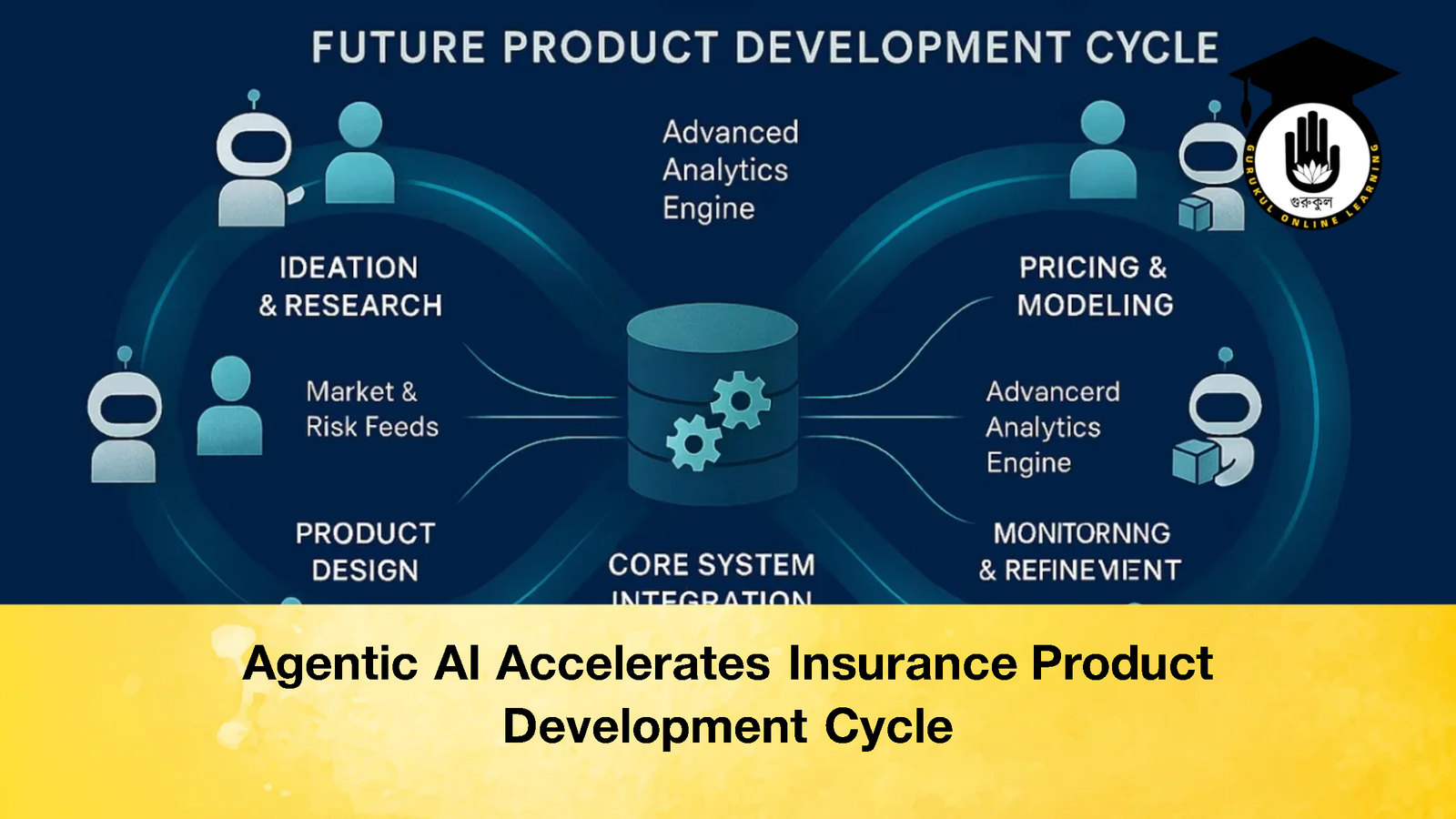
A significant joint whitepaper published by management consultancy Synpulse and artificial intelligence specialist 360F has revealed that the integration of agentic AI can drastically curtail the protracted development cycles synonymous with the insurance sector. Historically, bringing a new insurance offering to market has required a timeline of six to twelve months; however, this new research suggests that autonomous AI agents are poised to reshape this trajectory through an innovative “factory” model of automation.
The publication, titled The Last Slow Industry: How Agentic AI Will Reshape the Way Insurance Products Are Built, examines the systemic inefficiencies that have traditionally categorised the sector as “slow.” By drawing on comprehensive data sets from across Asia, Europe, and the Middle East, the authors illustrate how the industry can transition from manual, siloed workflows to a streamlined, automated ecosystem.
The Agentic Insurance Product Factory
The core proposition of the whitepaper is the implementation of an Agentic Insurance Product Factory. This model is designed to automate the mechanical and data-intensive facets of product design that frequently cause bottlenecks in the development pipeline. Key components include:
-
Pricing Models: Rapidly calculating risk premiums and actuarial adjustments based on real-time data.
-
Underwriting Rules: Codifying complex eligibility criteria and risk appetite frameworks into digital logic.
-
Policy Structures: Drafting technical policy wording and benefits schedules that align with specific market requirements.
In a live trial conducted by the researchers, the agentic AI system was tasked with responding to a specific insurance brief. The system successfully generated production-grade technical specifications and comprehensive launch playbooks in a fraction of the time required by traditional human-led methods. This indicates that the “mechanical” documentation phase, which often spans months, can be condensed into hours or days.
Redefining Human-AI Collaboration
The authors of the whitepaper argue that the adoption of agentic AI does not eliminate the need for human expertise but rather redefines it. By delegating data-heavy documentation and technical drafting to AI agents, insurance professionals—including actuaries, underwriters, and product managers—are liberated to focus on higher-order objectives. These include:
-
High-level strategic decision-making.
-
Creative product innovation.
-
Complex risk assessment requiring nuanced human judgment.
Anirudh Somani, Chief Product Officer at 360F, noted that this technological shift grants insurers a significant competitive advantage. The ability to test and iterate products at high speed allows for a “continuous learning” loop, where insurers can refine their offerings based on market feedback and data insights far more rapidly than their competitors.
Regulatory Transparency and Personalisation
A significant finding within the paper is the marked improvement in regulatory transparency. Because agentic AI generates documentation in machine-readable formats, the resulting files are inherently ready for auditing. This structured data approach provides regulators with clearer insights into the logic behind pricing and underwriting decisions, potentially easing the compliance burden for insurers.
Furthermore, the increased speed of the “Product Factory” enables a higher degree of product personalisation. When the cost and time of development are reduced, insurers can viably create niche products tailored to specific customer segments or emerging risks that were previously considered too small or too expensive to address.
Financial and Practical Feasibility
Sujin Saj, Managing Director at Synpulse Southeast Asia, highlighted the practical implications of this breakthrough. He stated that the technology makes it both financially and operationally feasible for insurers to react to volatile market changes with unprecedented precision. As global markets face shifting economic conditions and evolving risks, the ability to deploy accurate, well-documented products quickly becomes a cornerstone of institutional resilience.
The whitepaper concludes that while the insurance industry has historically been viewed as a laggard in digital transformation, the advent of agentic AI represents a fundamental shift. By moving away from artisanal, manual product construction towards an automated factory model, the industry can finally bridge the gap between initial concept and market launch. This transition towards an automated, precise, and rapid development model marks the evolution of insurance into a modern, data-first industry.