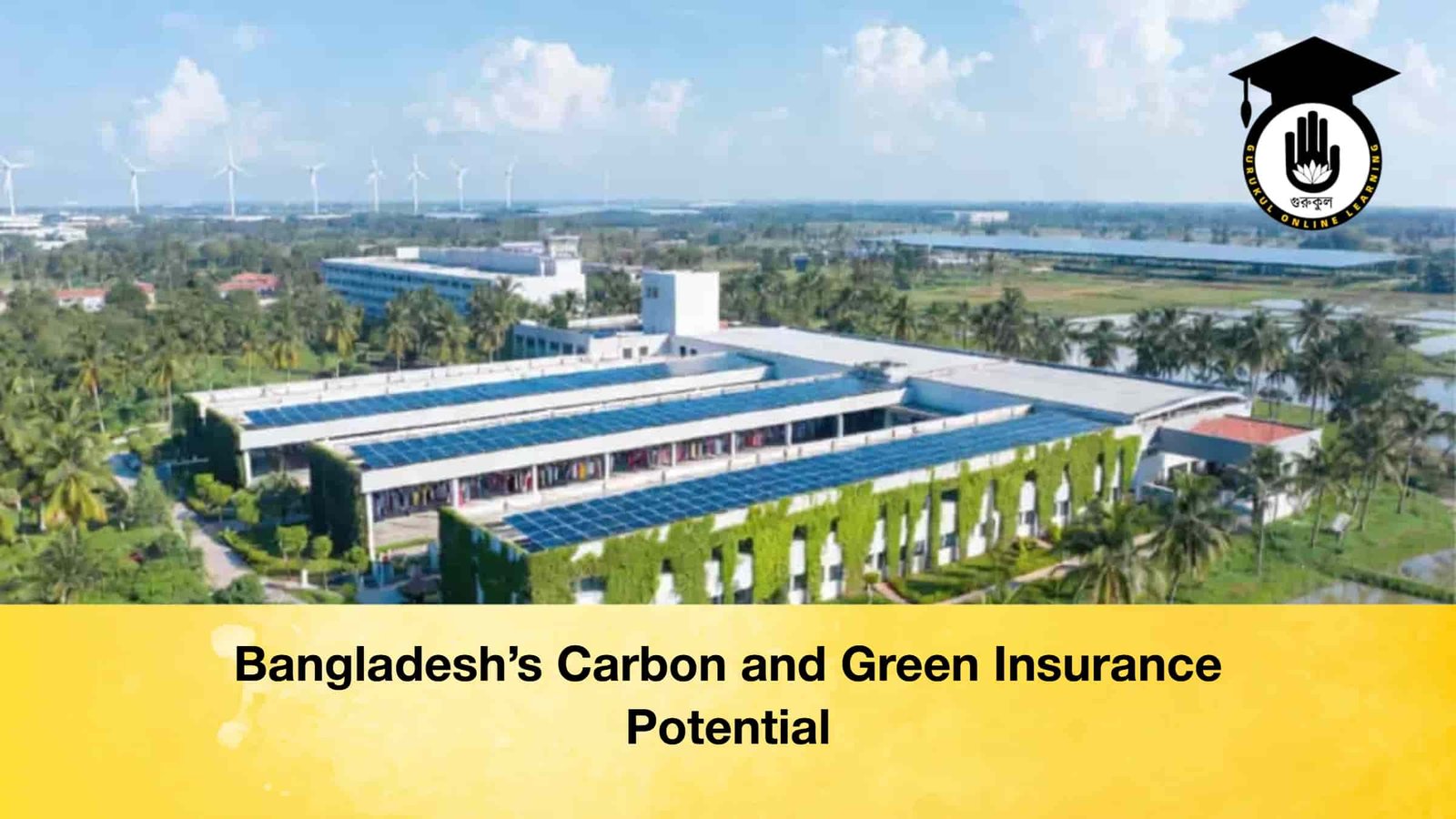
Climate change and its escalating global impact are compelling economies to reassess their development models. In this context, Bangladesh is emerging with new economic opportunities aligned with global carbon reduction initiatives. According to experts, effective utilisation of the carbon credit and green insurance sectors could enable the country to earn approximately 1 billion US dollars in annual foreign exchange.
Table of Contents
ToggleCarbon credits as an income stream
A carbon credit is an international mechanism in which one credit is earned for the reduction of one tonne of carbon emissions. These credits are traded in global markets, where developed countries and large industries purchase them to meet emission reduction targets.
Bangladesh entered this market in 2006 through the Infrastructure Development Company Limited. Since then, the country has sold around 2.53 million carbon credits, generating approximately 17 million US dollars in revenue. However, experts note that this achievement remains modest compared with the sector’s overall potential.
The global carbon credit market is expanding rapidly. According to international research cited in the sector, the market could reach 4.7 trillion US dollars by 2030. This presents significant scope for Bangladesh to increase its participation and earnings.
Progress in green manufacturing
Bangladesh has already established a strong position in environmentally sustainable industrial production, particularly in the ready-made garment sector. The country is recognised globally for its transition towards green factories.
At present, Bangladesh has more than 280 Leadership in Energy and Environmental Design (LEED) certified green factories, many of which hold platinum and gold ratings. Notably, 69 of the world’s top 100 green factories are located in Bangladesh, reflecting the scale of its industrial transformation and commitment to sustainable production.
Green insurance for investment security
Green insurance is considered a crucial tool for encouraging investment in renewable energy by reducing associated risks. Renewable energy projects such as solar and wind power plants are often exposed to natural disasters, technical failures, and market uncertainties.
Currently, Bangladesh’s renewable energy generation capacity stands at 1,315 megawatts, of which approximately 77 per cent comes from solar power. To achieve the 2030 renewable energy targets, an estimated 1 billion US dollars in annual investment will be required. A structured insurance framework is therefore essential to safeguard such investments.
Carbon Border Adjustment Mechanism and export pressure
From 2026, the European Union’s Carbon Border Adjustment Mechanism is expected to be fully implemented. Under this system, higher tariffs will be imposed on carbon-intensive products.
As nearly half of Bangladesh’s total exports are directed towards Europe, the policy is expected to have significant implications. To remain competitive, the country’s industries will need to reduce carbon emissions and adopt more environmentally sustainable production methods.
Structural challenges
Despite its potential, several structural challenges remain. Bangladesh still lacks a comprehensive national carbon registry. There is also an absence of clear policy guidelines and a fully developed legal framework. In addition, the number of internationally accredited carbon auditing and verification institutions remains limited.
Similarly, determining appropriate insurance premiums for green projects remains complex due to insufficient risk assessment data and technical expertise.
Outlook for coordinated development
Experts suggest that with appropriate policy development, capacity building, and stronger international cooperation, Bangladesh could advance significantly in these sectors. Carbon credits and green insurance are not only environmental instruments but also represent emerging economic sectors with substantial financial potential.
In the long term, increased investment in renewable energy, wider adoption of green industrial technologies, and the development of robust insurance mechanisms could strengthen Bangladesh’s position in the global green economy.