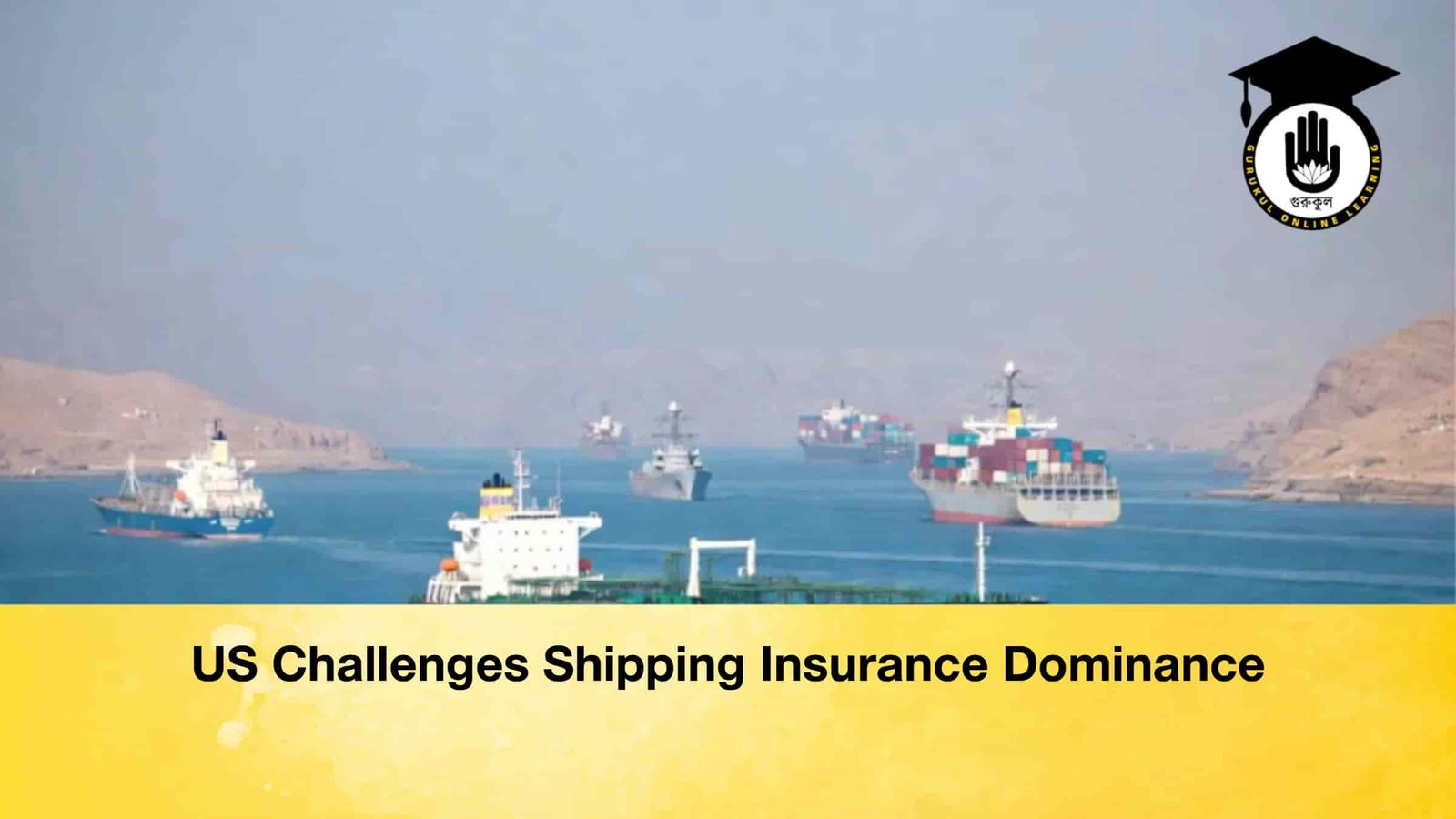
The United States has moved to challenge the long-established dominance of the United Kingdom in the international marine insurance sector, with a particular focus on high-risk shipping routes such as the Strait of Hormuz.
In March 2026, the US administration instructed the United States International Development Finance Corporation (DFC) to develop a government-backed reinsurance facility valued at 20 billion US dollars. The proposed structure is intended to provide coverage for hull, cargo, and political risk insurance, with an emphasis on vessels operating in and around the Persian Gulf and other strategically significant maritime corridors.
The initiative is designed to offer insurance services at lower premiums compared with existing market rates. It also includes consideration of arrangements under which commercial vessels could, where necessary, receive escort support from the United States Navy, particularly in high-risk transit zones.
The move directly places pressure on the long-standing position of the London insurance market, particularly the Lloyd’s of London insurance market, which has played a central role in global marine and war-risk insurance for more than three centuries. Market participants have recently raised concerns about rising premiums and tighter coverage conditions, attributing these developments to increased security risks and incidents involving commercial shipping.
Under the US plan, partnerships with established insurance firms, including Chubb Limited, are being explored in order to structure and distribute coverage through a combination of public backing and private sector participation.
The objective of the initiative includes strengthening confidence in global maritime trade, supporting stability in key energy shipping routes, and redirecting a portion of insurance-related financial flows towards US-supported institutions.
Lloyd’s of London has stated that it views the development positively and remains open to cooperation with new market participants. It has also maintained that its central role in the global war-risk and marine insurance sector remains unchanged, supported by its long-established underwriting network and international market presence.
Industry analysts suggest that, if the US facility becomes operational at scale, some insurance business could shift away from London-based underwriting markets. However, they also note that Lloyd’s is likely to retain a substantial share of the sector due to its depth of experience, global reach, and established risk-management infrastructure.
At the same time, analysts highlight that the long-term impact of the proposed US facility remains uncertain, particularly in relation to implementation challenges, capacity constraints, and the practical scope of coverage in complex maritime risk environments.
Key Elements of the Proposed US Initiative
| Component | Details |
|---|---|
| Institution | United States International Development Finance Corporation (DFC) |
| Funding size | 20 billion US dollars |
| Type of facility | Government-backed reinsurance structure |
| Coverage scope | Hull, cargo, and political risk insurance |
| Geographic focus | Strait of Hormuz and Persian Gulf region |
| Strategic partners | Including Chubb Limited (under consideration) |
| Additional consideration | Possible US Navy escort for commercial vessels |
| Policy objective | Lower premiums and strengthened maritime trade stability |
The development marks a notable policy step in the intersection of maritime security, global trade insurance, and state-supported financial risk mechanisms, with potential implications for established insurance centres such as London.