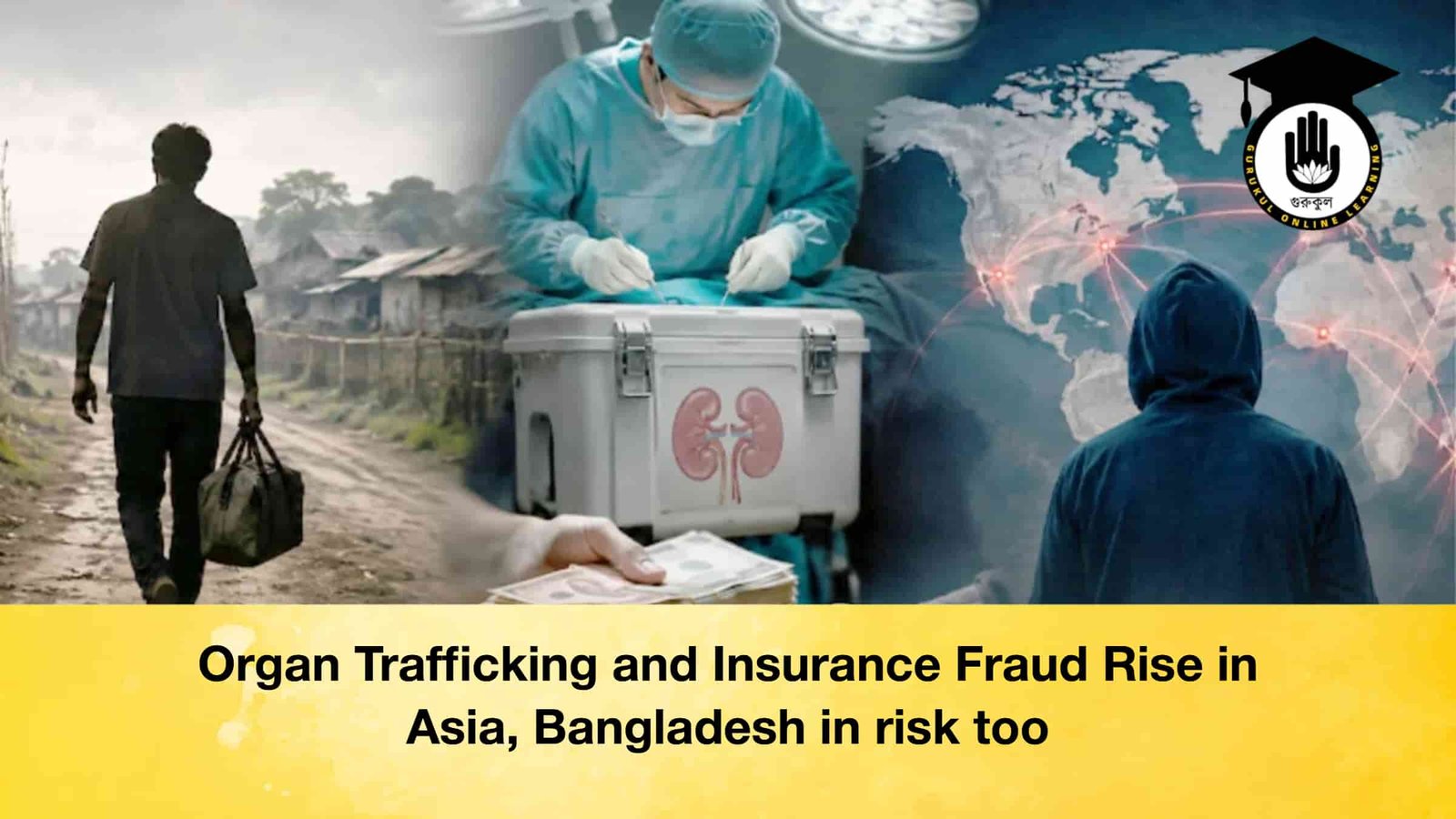
The risks associated with illicit human organ trafficking and life insurance fraud are escalating across South and South-East Asia. Organised criminal syndicates are increasingly exploiting vulnerabilities such as systemic poverty, unemployment, porous border monitoring, and inadequate digital verification infrastructure. This development has subjected thousands of vulnerable individuals to fraudulent schemes, irreversible physical harm, and severe socio-economic distress, whilst generating substantial financial returns for transnational criminal networks.
Global Scale and Financial Dimensions of Organ Trafficking
According to data compiled by international organisations, approximately 150,000 organ transplants are performed worldwide every year. Estimates from the World Health Organisation (WHO) and associated research bodies indicate that 5% to 10% of these procedures involve illegally sourced organs, translating to roughly 5,000 to 12,000 illicit transplants annually. The illicit market is estimated to yield between 840 million and 1.7 billion United States dollars in annual revenue.
Medical and legal experts emphasize that organ trafficking has transitioned beyond a basic medical infraction into a complex financial crime. It operates through integrated networks involving human trafficking, forged documentation, international distribution channels, and systematic institutional fraud.
Emerging Threats in the Life Insurance Sector
Criminal syndicates have broadened their strategies to incorporate the exploitation of life insurance policies. Experts have raised concerns regarding a trend in South Asia where syndicates covertly secure life insurance policies under the names of impoverished individuals. Following the subsequent death or unexplained disappearance of these individuals, the syndicates submit fabricated documentation to claim substantial payouts. In Bangladesh, the absence of an integrated digital database linking national identity metrics with insurance and medical registries has heightened the vulnerability of the domestic financial sector to this type of fraud.
Organ Trafficking Metrics and Economic Dispersion in Bangladesh
The operational routes, financial discrepancies, and primary socio-economic targets of illicit organ trading networks within Bangladesh are structured below:
| Geographic Hubs and Transit Routes | Exploited Socio-Economic Demographics | Compensation Received by the Victim | Sum Collected from the Recipient |
| Primary Hub: Kalai Upazila, Joypurhat District | Microfinance-indebted families, garments workers, and rickshaw pullers. | 200,000 to 300,000 Bangladeshi Taka | 2,000,000 to 5,000,000 Bangladeshi Taka |
| Border Transit Routes: Rajshahi, Natore, Chapainawabganj, Jessore, Kushtia, and Jhenaidah | Unemployed rural labourers and prospective migrant workers. | 200,000 to 300,000 Bangladeshi Taka | 2,000,000 to 5,000,000 Bangladeshi Taka |
| Northern Corridors: Bogra District and adjacent rural localities | Severely indebted individuals under institutional or informal credit pressure. | 200,000 to 300,000 Bangladeshi Taka | 2,000,000 to 5,000,000 Bangladeshi Taka |
Domestic Realities: Vulnerable Hotspots and Cross-Border Transit
Within Bangladesh, Kalai Upazila in the Joypurhat District has long been identified as a critical epicentre for illegal kidney trafficking. International research indicates that approximately one in every 35 adults in this locality has been involved in selling a kidney, underscoring a profound social crisis. Local socioeconomic assessments reveal that systemic poverty, unemployment, and the pressure of repaying non-governmental organisation (NGO) microloans drive residents into the custody of trafficking brokers. Media reports have verified at least 40 specific cases of illegal kidney sales in this region alone, leading international investigative journalists to label certain local settlements as the “Village of One Kidney”.
The financial transactions within this illicit industry reveal extreme economic disparity. Whilst a victim typically receives a minor sum ranging from 200,000 to 300,000 Taka, the transnational syndicates extort between 2,000,000 and 5,000,000 Taka from the organ recipient. The vast majority of the profit is absorbed by international criminal syndicates.
To execute these operations, syndicates utilise specific border corridors, including Rajshahi, Natore, Chapainawabganj, Jessore, Kushtia, and Jhenaidah. Victims are transported across the border into India, where illegal transplant surgeries are performed using falsified relationship certificates designed to bypass legal barriers. A similar upward trend in illegal organ sales has also been observed in the northern district of Bogra and its surrounding territories.
Root Causes, Broad Impact, and Remedial Framework
Analytical assessments attribute the growth of these syndicates to several overlapping factors:
-
Accumulation of microfinance debts and severe domestic poverty.
-
Insufficient law enforcement and surveillance along border boundaries.
-
Deficiencies in cross-referencing national identity cards, hospital admission logs, and insurance databases.
-
Proliferation of deceptive advertisements on digital social networks.
Syndicates specifically target highly vulnerable demographics, including indebted families, ready-made garment factory workers, rickshaw pullers, and prospective overseas labourers. Deceptive techniques often involve publishing fraudulent online advertisements for lucrative foreign employment or urgent appeals for voluntary organ donors.
The consequences of this criminal activity are multi-dimensional. Victims suffer permanent physical debilitation or fatal complications, leaving their dependent families financially and socially ruined. Simultaneously, the life insurance sector faces substantial financial liability from fraudulent claims, a cost that ultimately impacts ordinary policyholders.
To mitigate this complex crisis, experts advise immediate structural reforms, including the enhancement of regional intelligence sharing, the integration of national identity databases with medical and insurance registries, increased border surveillance, and the rigorous monitoring of suspicious financial transactions. Failure to execute these combined measures risks further expansion of these criminal networks.