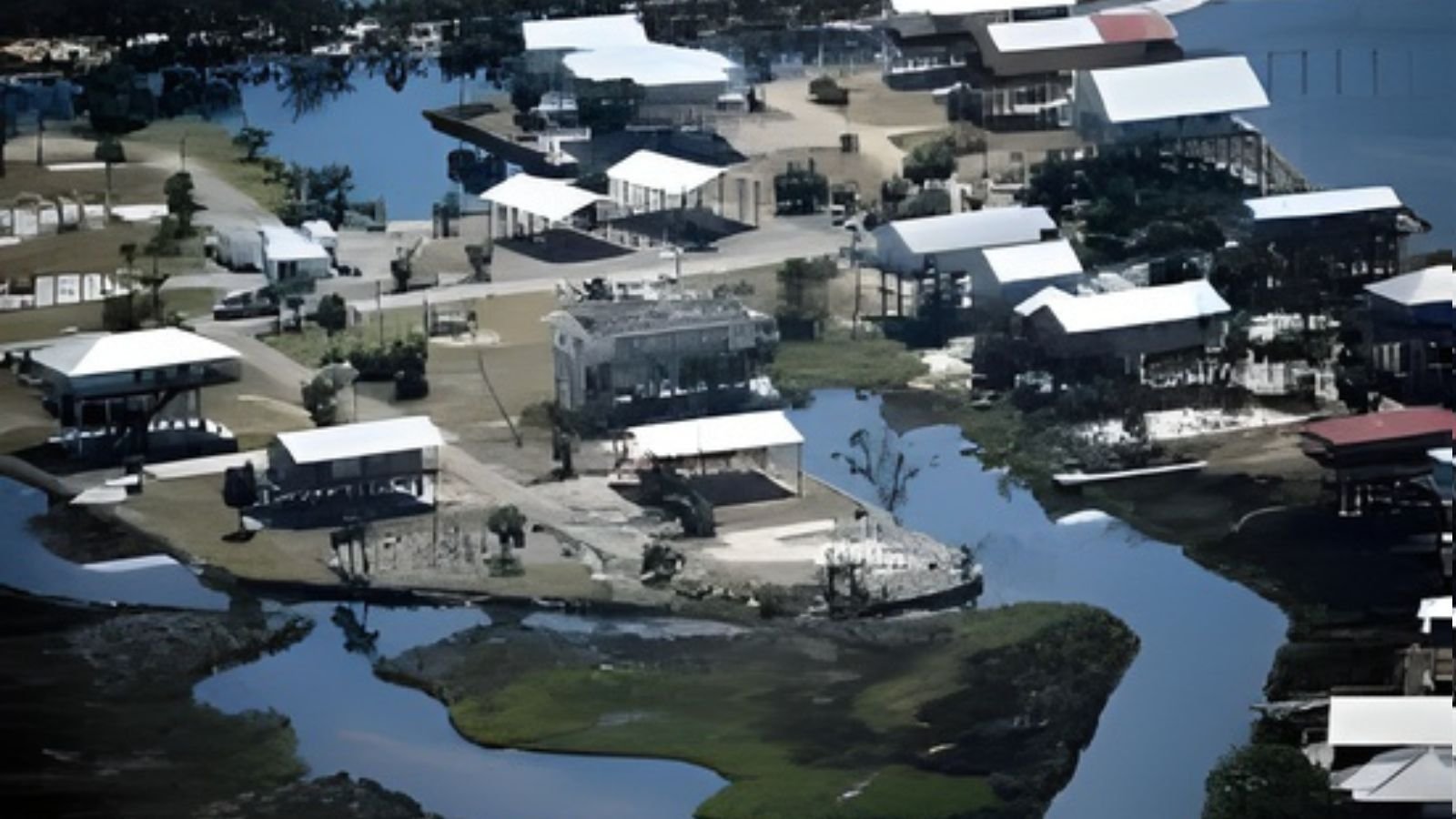
American neighbourhoods most vulnerable to flooding are experiencing a notable exodus.
For the first time since 2019, high-flood-risk counties saw a net loss of domestic residents, with 30,000 more people moving out than moving in, according to a recent Redfin report. This represents a sharp reversal from the pandemic years, when remote workers flocked to coastal and Sun Belt cities. However, some high-risk counties still recorded population growth due to strong immigration from overseas.
Redfin analysed 310 high-flood-risk counties identified by climate-risk modelling firm First Street, cross-referencing the data with U.S. Census Bureau population estimates for the 12 months starting in July 2023. Of these counties, 132 experienced net outflows while 178 saw net inflows — but in total, more people left high-risk areas than arrived.
The largest losses occurred in major coastal metropolitan regions. Miami-Dade County led the nation, losing 67,418 residents, up sharply from 50,637 the previous year. Harris County, Texas, home to Houston, saw 31,165 people depart, while Kings County, New York, which includes Brooklyn, lost 28,158 residents. Orleans Parish, Louisiana, where 99% of homes face high flood risk, recorded 4,950 departures. In contrast, low-flood-risk counties gained 35,941 people — the largest increase since 2019.
A separate survey of departing residents found climate risk was a stronger motivation for leaving among Floridians than Texans, who were more likely to cite rising costs. Florida’s coastal communities have faced steep increases in insurance premiums, homeowners’ association fees, and special assessments following the 2021 collapse of the 12-storey Surfside condominium, which killed nearly 100 people. These factors have made living on Florida’s coasts increasingly expensive.
Hurricane Helene, which caused an estimated $93 million in damage to Pinellas County in 2024, also contributed to population losses. Some displaced residents relocated to neighbouring Pasco County, where flood risk is lower, while others left the state entirely.
International migration partially offset these domestic losses. Many flood-prone counties continue to grow due to arrivals from abroad; more than 120,000 immigrants moved to Miami-Dade County, more than compensating for those who left. Six of the ten counties with the largest domestic outflows still recorded overall population gains.
Redfin Chief Economist Daryl Fairweather noted that federal immigration policies could affect this trend. “Many Americans who left flood-prone areas last year were replaced by immigrants, who could previously seek shelter during disasters,” Fairweather said. “With stricter immigration enforcement, many immigrants are now hesitant to evacuate during storms for fear of detention.”
Redfin also highlighted that high-flood-risk counties still attracting domestic residents tended to be slightly less vulnerable. Counties with the largest inflows had a median home price of $376,026, with 36% of homes in high-risk flood zones, while counties losing the most residents had median prices of $437,239, with 44% of homes in danger areas.