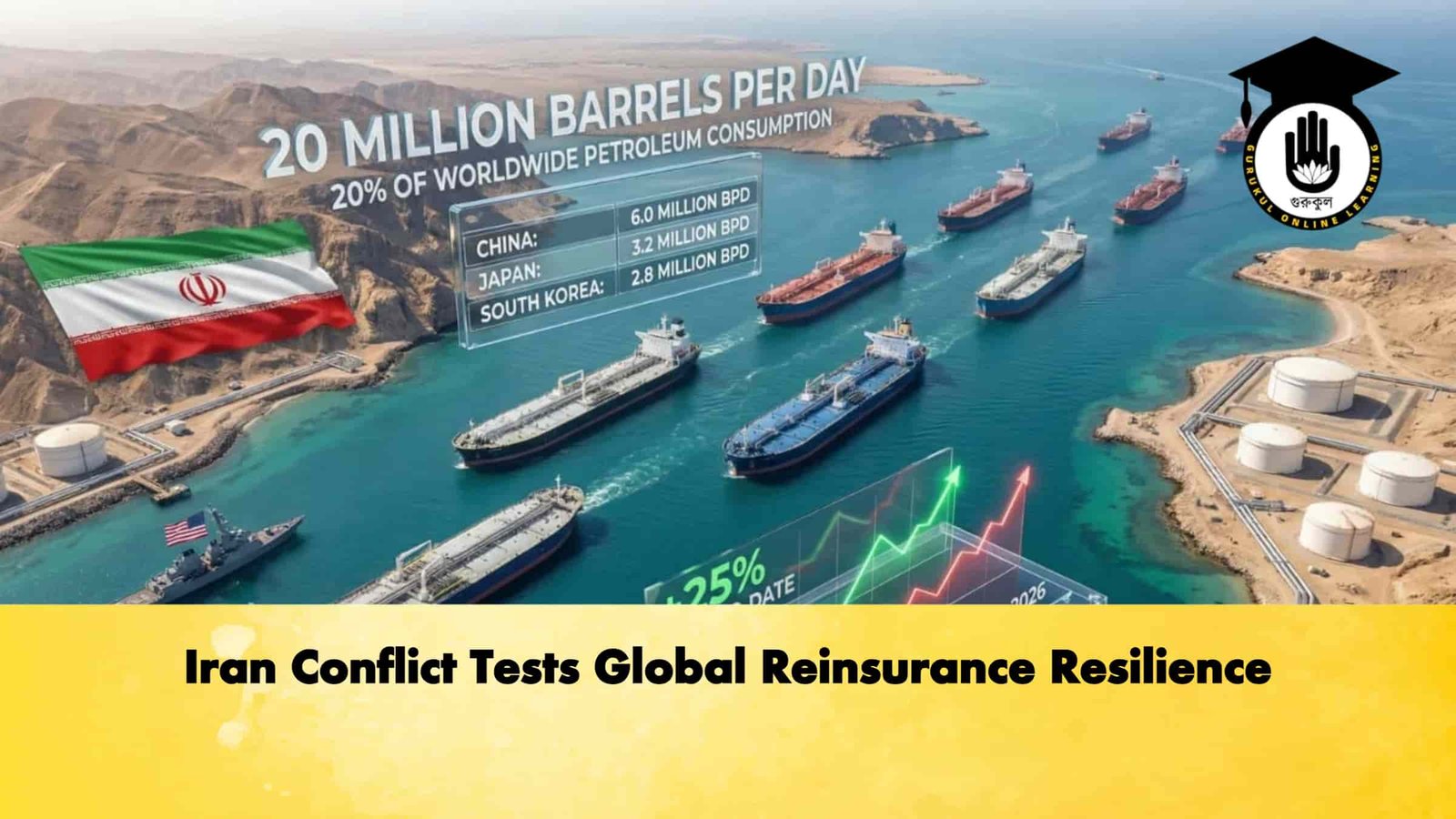
The escalating tensions between the United States, Israel, and Iran are placing global reinsurance structures under unprecedented strain, as insurers and reinsurers reassess exposure across multiple lines. Ben Rose, co-founder of Supercede, warns that the crisis is a severe test of how well reinsurance chains can absorb geopolitical shocks.
“Reinsurance is essential to a functioning insurance market, but it is not a blank cheque,” Rose said. “Carriers will not ignore the true level of risk simply because cover is available or cheaper: they have brands and long-term client relationships to protect.”
He added that underwriter pricing sends crucial signals to the wider market. “If cover becomes prohibitively expensive, it prompts a fundamental question: is the activity still safe or sustainable?”
Surging War Risk Premiums
Market data reflects these concerns. War risk premiums for vessels navigating the Gulf have surged from approximately 0.2% of a ship’s value to as high as 1–1.5%, depending on proximity to the Strait of Hormuz, according to Dylan Mortimer, marine hull UK war leader at Marsh.
With most tankers valued between $200 million and $300 million, hull war risk costs can now reach $7.5 million per vessel. Jefferies analysts estimate that potential losses from at least seven vessels already reported damaged could total $1.75 billion. Sheila Cameron, CEO of the Lloyd’s Market Association, noted that around 1,000 vessels remain in the Persian Gulf and surrounding waters, approximately half of which are oil and gas tankers with an aggregate hull value exceeding $25 billion.
JPMorgan analysts place total insurance exposure for Gulf-operating vessels at roughly $352 billion.
| Metric | Value |
|---|---|
| War risk premiums (pre-conflict) | ~0.2% of vessel value |
| War risk premiums (current) | 1–1.5% of vessel value |
| Typical tanker value | $200–$300 million |
| Maximum hull war risk per vessel | ~$7.5 million |
| Damaged vessels reported | 7 |
| Estimated potential industry losses | $1.75 billion |
| Number of vessels in Gulf waters | ~1,000 |
| Aggregate hull value of oil & gas tankers | >$25 billion |
| Total insurance exposure (Gulf) | ~$352 billion |
Reinsurance Chains Under Pressure
The conflict has exposed vulnerabilities in the reinsurance chain. Several P&I clubs, including NorthStandard, Steamship Mutual, and Skuld, cancelled war risk cover after reinsurers withdrew support. Stephen Rudman, head of marine Asia at Aon, observed that hull war coverage has been most immediately affected, while cargo war risk premiums are also rising on a voyage-by-voyage basis.
Morningstar DBRS warned that reinsurers may respond by raising attachment points or reducing capacity, forcing primary underwriters to retain more risk. Moody’s, in a separate analysis, noted that missile and drone attacks are increasing tail risk for specialty insurers. While disciplined underwriting should allow major carriers to absorb losses under baseline scenarios, a prolonged conflict could trigger multi-asset losses.
Two weeks into the crisis, Rose emphasised that insurers are closely evaluating where reinsurance structures provide protection and where gaps remain. “Reinsurers are also assessing broader economic impacts, including shifts in global growth, inflation, and interest rates. The longer the conflict continues, the higher the likelihood that Iran targets something large, tall, or expensive,” he warned.