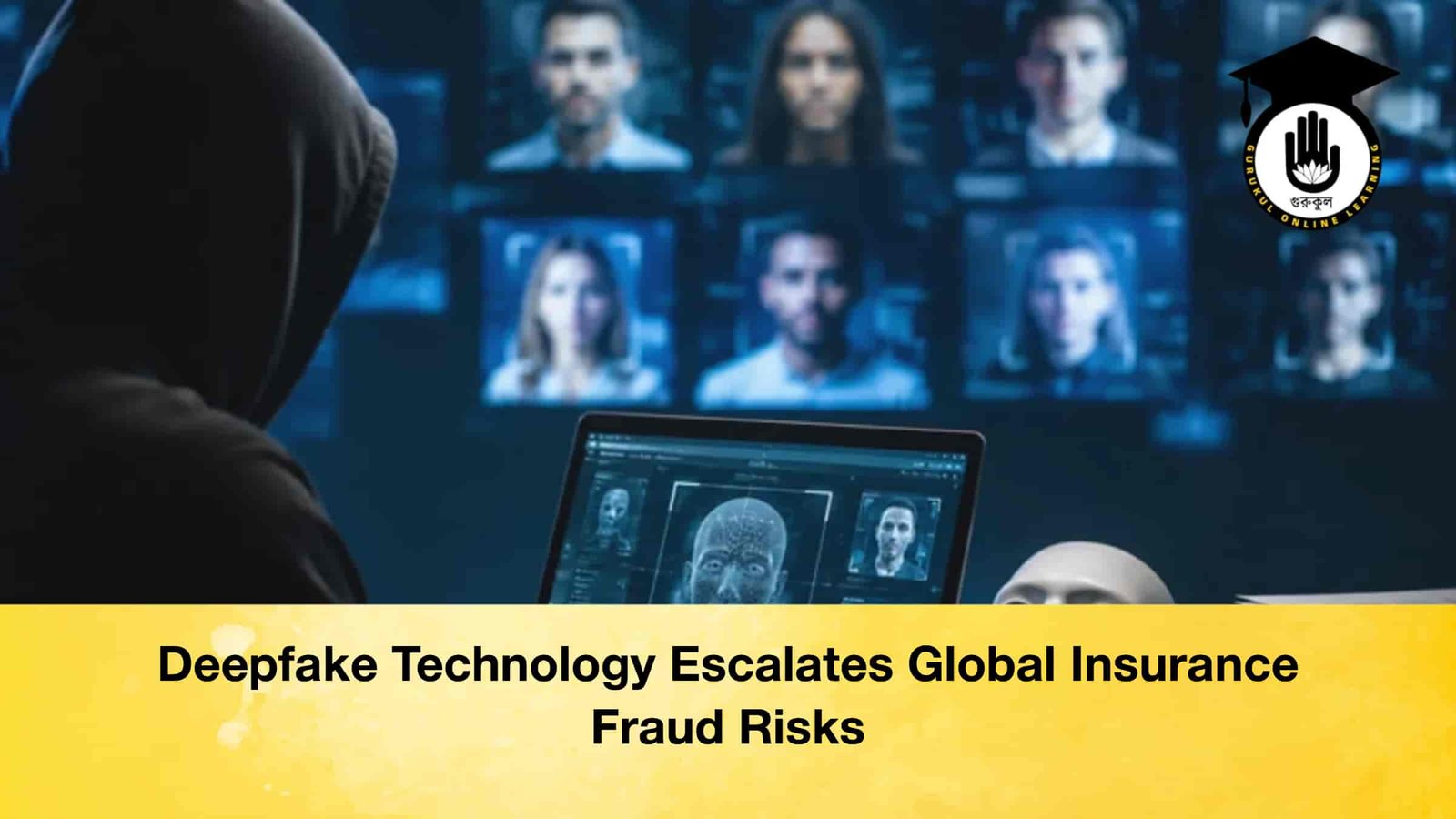
The rapid advancement of Artificial Intelligence (AI) has introduced a sophisticated tier of risk to the global insurance industry. Specifically, the proliferation of “deepfake” technology—AI-generated synthetic media—is now a primary concern for insurers. Once limited to social media misinformation or political propaganda, deepfakes are being repurposed as powerful tools for financial crime and insurance fraud.
The Rise of Synthetic Deception
Generative AI allows fraudsters to create highly realistic images, videos, audio clips, and forged identification documents within minutes. This shift from traditional paper-based forgery to high-tech cyber fraud threatens various sectors, including motor, health, property, and life insurance.
In the United Kingdom, the insurer Admiral reported identifying fraudulent claims worth approximately £86.8 million in 2025, a significant rise from £50.9 million in 2024. This represents a 71% increase within a single year. Fraudulent methods include AI-altered images of vehicle damage, counterfeit number plates, and the use of internet-sourced images to claim for high-value electronics or watches.
Similarly, the German insurer Allianz noted a 300% increase in fraud involving manipulated images and documents between the 2021-22 and 2022-23 periods. Experts identify “shallowfakes” (basic edits) and deepfakes as the fastest-growing threats in motor insurance.
Global Statistics on AI-Driven Insurance Fraud
| Metric / Organisation | Key Finding / Statistic |
| Admiral (UK) | 71% increase in detected fraud value (2024 to 2025). |
| Allianz (Germany) | 300% rise in manipulated media fraud cases. |
| NICB & Verisk (USA) | 36% of consumers would consider digitally altering photos for claims. |
| Sprout.ai Survey | 83% of claims handlers see AI-based fraud in at least 5% of claims. |
| Association of British Insurers | Detected fraud costs exceed £1 billion annually in the UK. |
Voice Cloning and Corporate Threats
The threat extends beyond visual media. Voice cloning and deepfake video calls are being used to impersonate policyholders or officials. A prominent example occurred in Hong Kong, where the UK-based engineering firm Arup lost approximately $25 million (HK$200 million) after fraudsters used deepfake audio and video during a conference call to impersonate company executives. While this was a corporate heist, it demonstrates how AI can circumvent established verification protocols in any financial sector.
Vulnerabilities in the Bangladeshi Insurance Sector
While specific government statistics on deepfake insurance fraud in Bangladesh are yet to be released, the risk is escalating alongside the digitisation of financial services. Law enforcement recently arrested ten individuals for operating deepfake-based scams, seizing laptops, smartphones, and dozens of SIM cards. This confirms that the technical capacity for AI-driven fraud already exists within the country.
The Bangladeshi insurance sector is particularly vulnerable due to existing crises. According to the Insurance Development and Regulatory Authority (IDRA), life insurance claim settlement rates dropped to 66.06% in 2025, down from 85% in 2020. Outstanding life insurance claims total approximately Tk 38.80 billion, with 1.5 to 1.6 million policyholders at risk due to the insolvency of several weak companies. Furthermore, insurance penetration has plummeted to 0.30% of GDP, compared to 0.90% in 2010.
Economic Impact and Preventative Measures
Industry experts warn that deepfake fraud will inevitably harm legitimate customers. To counter losses, insurers may increase premiums. Furthermore, the rigorous verification required to detect AI fraud may delay claim settlements for honest policyholders.
To mitigate these risks, global insurers are investing in:
-
Digital Forensics: Analysing metadata and pixel consistency.
-
Biometric Verification: Using real-time liveness checks.
-
AI-Based Detection: Identifying facial movement anomalies and audio inconsistencies.
-
Regulatory Frameworks: Implementing the EU AI Act and proposed US legislation like the ‘Preventing Deep Fake Scams Act’.
For Bangladesh, experts recommend establishing a central fraud monitoring framework under IDRA, mandatory metadata verification for online claims, and human-led physical verification for high-value settlements to protect the industry from an impending trust crisis.