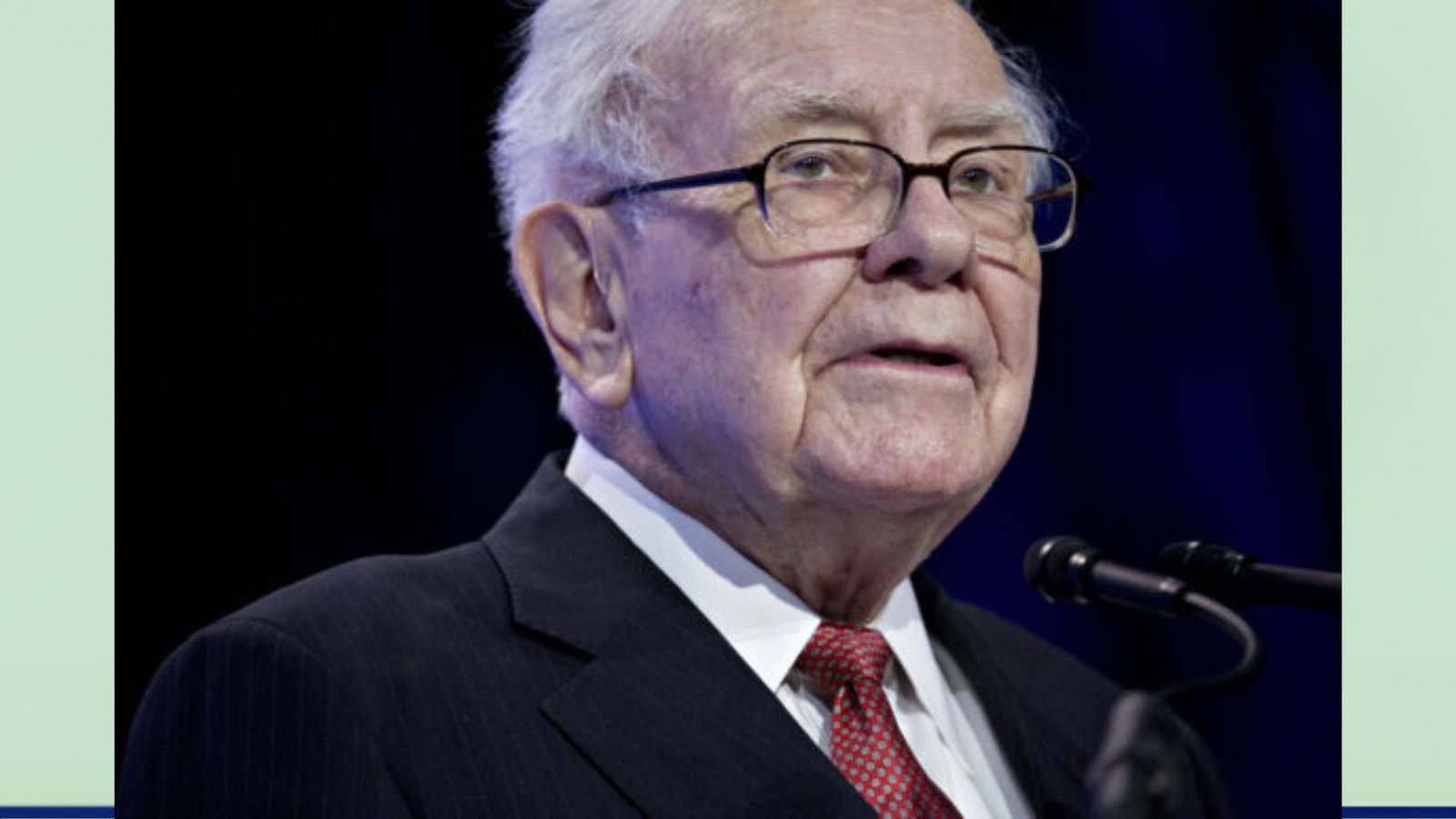
Berkshire Hathaway Inc.’s cash reserves reached a record $381.7 billion in the third quarter, while operating earnings surged 34%, according to filings published on Saturday.
Operating earnings hit $13.5 billion, driven largely by a tripling of the firm’s insurance underwriting profit during a period marked by unusually low disaster activity. Earlier this year, CEO Warren Buffett appeared ready to pursue acquisitions, including a $1.6 billion stake in UnitedHealth Group Inc. and a $9.7 billion deal to acquire OxyChem. However, Berkshire remained largely on the sidelines in Q3, selling $6.1 billion of shares during the period.
“There isn’t much opportunity in Buffett’s eyes right now,” said Jim Shanahan, an analyst at Edward Jones.
Despite the growing cash pile, Berkshire’s net investment income fell 13% to $3.2 billion, reflecting lower short-term interest rates. Both its primary insurance and reinsurance businesses posted pretax underwriting profits this quarter, reversing losses from the same period last year.
However, auto insurer Geico saw a 13% drop in pretax underwriting profit due to slightly higher claims and a 40% rise in underwriting costs, largely driven by increased policy acquisition expenses. “That’s likely to be mostly advertising,” Shanahan noted. “Geico is everywhere right now.”
Berkshire’s earnings are closely monitored as the conglomerate spans insurance, rail, energy, and manufacturing, offering insight into the broader US economy. Investors are also preparing for a transition as Buffett plans to step down as CEO, with Greg Abel set to take over at the end of the year.
Operating earnings at railroad unit BNSF rose 5% to $1.4 billion, supported by higher transportation volumes for agricultural and energy products, partly due to increased grain exports. Meanwhile, Berkshire’s utilities division, including PacifiCorp, MidAmerican, and NV Energy, saw a 9% decline in operating earnings to $1.5 billion.
One notable weakness was Pilot, which posted a $17 million loss in Q3. Berkshire attributed this to lower wholesale fuel and retail margins, alongside rising expenses. “The Pilot business is not really doing very well,” Shanahan said. Bloomberg reported in July that the truck-stop chain may sell its water-management business to focus on core operations.
For the fifth consecutive quarter, Berkshire opted not to repurchase its own shares, which have dropped nearly 12% since Buffett announced his planned departure in May. “I think that sends a very powerful message to shareholders,” said Cathy Seifert, an analyst at CFRA Research. “If they’re not buying back their shares, why should you?”
Despite robust earnings growth, the firm’s modest revenue expansion is unlikely to boost investor sentiment. “I’m struggling to find a catalyst for an increase in the stock price,” Seifert added.