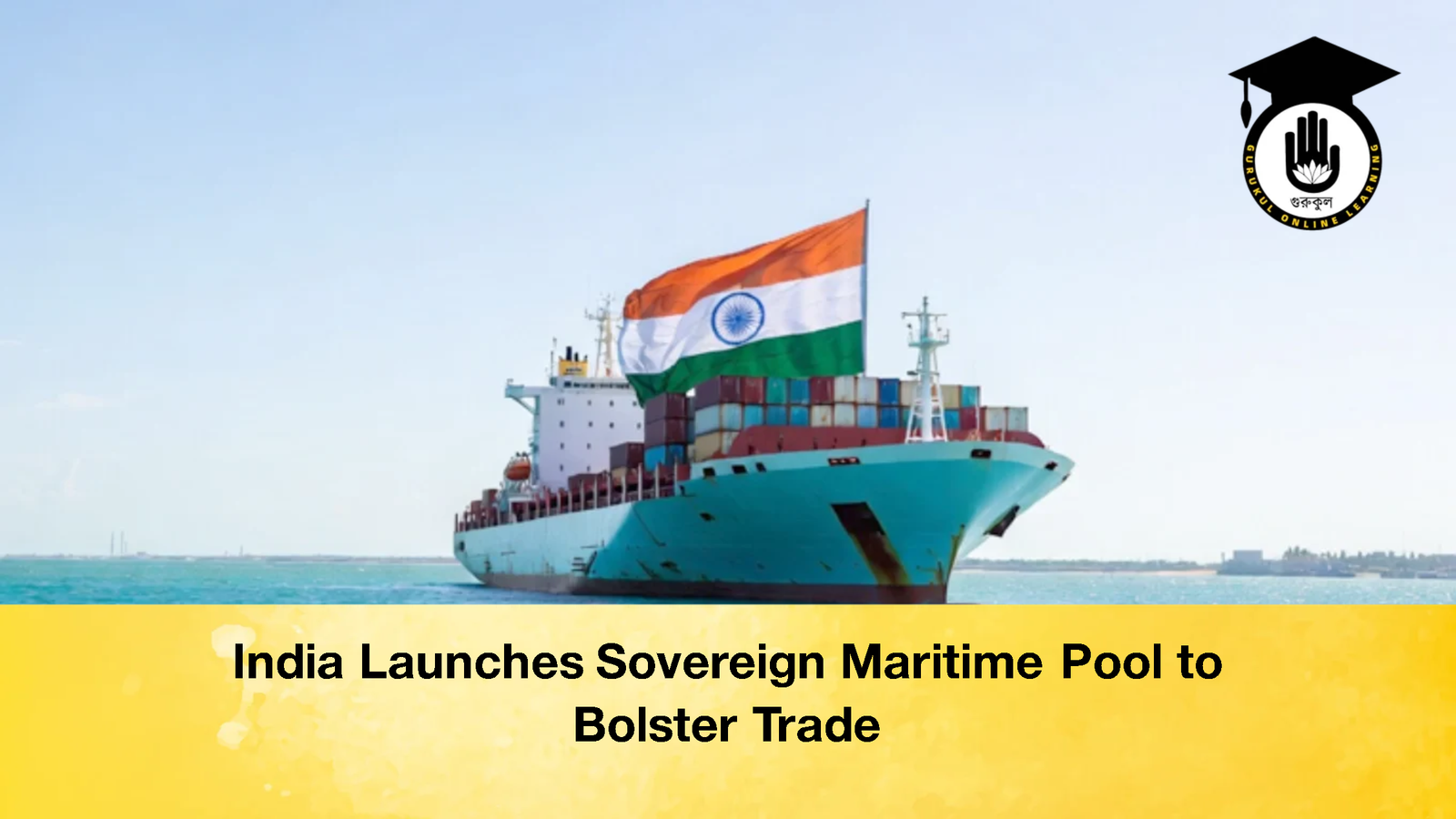
In a decisive move to dismantle its historic dependency on foreign financial institutions, the Indian government has officially sanctioned the establishment of a robust domestic maritime insurance framework. Backed by a formidable $1.4 billion (£1.1 billion) sovereign guarantee, the newly christened Bharat Maritime Insurance Pool (BMIP) serves as a strategic cornerstone in India’s quest for economic self-reliance. This initiative is meticulously designed to insulate the nation’s burgeoning shipping sector from the caprice of global market fluctuations and the increasing unpredictability of Western underwriting syndicates.
A Strategic Pivot from Overseas Reliance
For generations, the Indian maritime industry has been tethered to overseas markets, with over 90% of its insurance needs traditionally met by the International Group of P&I Clubs and various London-based entities. While this arrangement sufficed during eras of relative geopolitical calm, the “poly-crisis” of the mid-2020s has laid bare the inherent risks of such a lopsided reliance.
Recent escalations in the Red Sea, the Strait of Hormuz, and the Gulf of Oman have seen global insurers hike premiums to prohibitive levels or, in some instances, withdraw coverage entirely. Such volatility directly threatens the flow of Indian trade, which accounts for roughly 95% of the nation’s commerce by volume. By establishing the BMIP, New Delhi is effectively creating a financial “breakwater.” This ensures that Indian-flagged and Indian-controlled vessels can navigate troubled waters without being held hostage by foreign policy shifts or external economic shocks that often originate in the boardrooms of the City of London or Singapore.
Comprehensive Coverage and Structural Integrity
The BMIP is far from a mere stop-gap measure; it is a sophisticated, multi-tiered insurance vehicle intended to mature into a global competitor. The $1.4 billion sovereign guarantee provides the essential capital required to underwrite high-value risks that domestic private insurers might otherwise find too daunting to manage.
The pool’s architecture is specifically tailored to cover four critical pillars of maritime risk:
-
Hull and Machinery (H&M): This protects the physical assets—the ships themselves—against damage from collisions, groundings, or mechanical failure.
-
Protection and Indemnity (P&I): Essential for third-party liabilities, this covers crew welfare, injury claims, and the immense costs associated with environmental remediation and oil spills.
-
Cargo Liability: By securing the goods in transit, the pool ensures that the logistics chain remains unbroken, safeguarding the interests of both exporters and importers.
-
War Risks: Perhaps the most vital component in the current climate, this provides coverage for vessels operating in active conflict zones where traditional commercial cover often evaporates.
Comparative Analysis of Insurance Models
| Feature | Foreign Underwriting Model | Bharat Maritime Insurance Pool (BMIP) |
| Capital Backing | International Private Markets | $1.4bn Indian Sovereign Guarantee |
| Geopolitical Sensitivity | Reactive to Western Foreign Policy | Aligned with Indian National Interest |
| Premium Retention | Capital Outflow to Foreign Markets | Capital Reinvestment within India |
| Risk Appetite | May withdraw during active conflict | Sustained coverage for high-risk routes |
| Legal Jurisdiction | Predominantly English Law | Subject to Indian Maritime Statutes |
| Operational Control | External Syndicates | Domestic Oversight Committee |
Galvanising the “Maritime India Vision 2030”
Shipping Minister Sarbananda Sonowal has emphasised that the BMIP is a vital cog in the Maritime India Vision 2030. This long-term roadmap aims to transition India from a passive consumer of maritime services into a dominant global provider. Currently, the “invisible drain” caused by insurance premiums flowing to London represents a significant loss to the national exchequer—capital that could otherwise be used to modernise Indian ports.
By internalising these financial services, India is fostering a domestic ecosystem of expert underwriters, maritime lawyers, and risk assessors. Furthermore, this domestic safety net is expected to act as a powerful incentive for shipowners to register their vessels under the Indian flag. A larger national fleet not only bolsters economic security but also enhances India’s strategic influence across the Indian Ocean Region (IOR).
Future-Proofing Global Trade Routes
The timing of this intervention is critical. As global trade routes become increasingly weaponised and insurance becomes a tool of geopolitical leverage, India’s move towards “Atmanirbharta” (self-reliance) in maritime finance is a masterstroke of economic diplomacy. The BMIP ensures that whether through energy imports or the export of manufactured goods, India’s economic lifeline remains firmly in its own hands.
In essence, the $1.4 billion pool represents a bold declaration that India will no longer permit its maritime destiny to be dictated by foreign entities. As the global shipping industry watches closely, New Delhi has signalled that it is ready to shoulder the risks of the high seas, ensuring that the Indian tricolour continues to flutter confidently across the world’s most vital trade arteries. This shift not only protects domestic interests but positions India as a potential alternative hub for maritime insurance for other nations seeking to hedge against Western-centric financial systems.