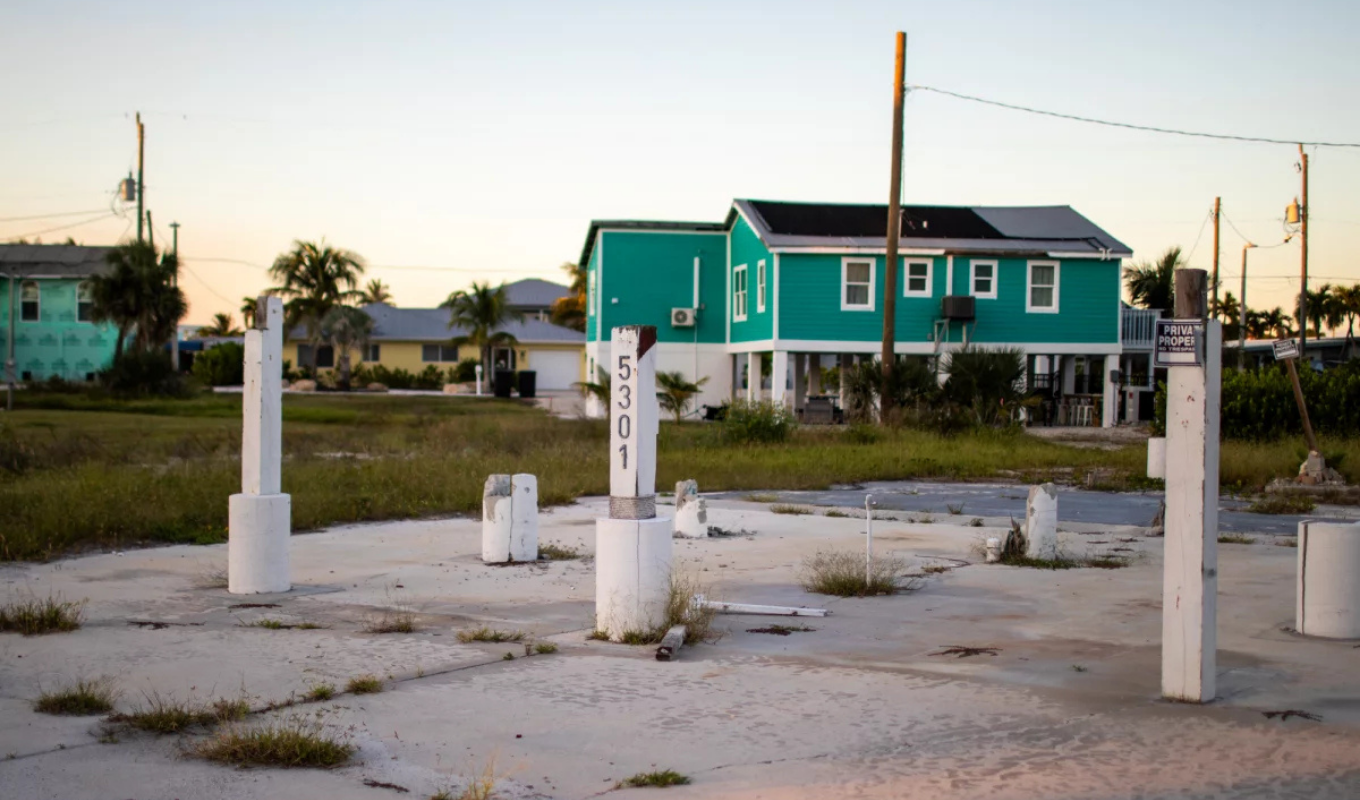
Home insurance costs are soaring across the United States, with insurers scaling back coverage in certain regions as the price of natural disasters continues to rise. This trend is pushing the limits of affordability for many ordinary Americans trying to protect their homes.
Community leaders are increasingly raising alarms about a growing crisis that is already taking root and is likely to intensify as climate change drives more frequent and severe hurricanes, floods, and wildfires.
“The risk of extreme weather events is escalating as the planet warms, and some of these impacts are now occurring more rapidly,” says Carolyn Kousky, an economic policy expert at the Environmental Defense Fund and a seasoned property insurance researcher.
The rising costs of disasters are being exacerbated by an influx of people moving to coastal areas vulnerable to hurricanes and forested regions prone to wildfires. This has placed more properties at risk, while inflation has driven up the cost of building materials, further increasing the price of rebuilding homes. Nationwide, home insurance premiums grew about 8% faster than overall inflation between 2018 and 2022, according to a key report published by the U.S. Treasury Department in January.
As disaster-related losses mount, insurers are passing those costs directly onto consumers. “We’ve seen increasing prices across the board,” Kousky adds.
These price hikes are putting extra pressure on family budgets already strained by rising food and transportation costs. Home insurance is mandatory for most homeowners with a mortgage in the U.S. But even for renters, the costs may trickle down through higher rent prices as landlords pass on their own rising insurance premiums.
“If people want to keep building more expensive homes in high-risk areas, the cost of insuring them will only increase,” explains Robert Gordon, senior vice president at the American Property Casualty Insurance Association, an industry body.
NPR visited three different communities across the U.S. to explore the cascading effects of unaffordable home insurance and investigate potential solutions to mitigate rising costs. The issue is not confined to wildfire or hurricane-prone areas but is becoming a national crisis.
Home Insurance Woes Beyond the Coasts and Wildfire Zones
Coastal regions have grappled with expensive home insurance for years, but in recent times, the crisis has begun spreading inland.
Areas like the Gulf Coast, which are particularly prone to hurricanes, have long faced some of the country’s highest insurance premiums. Over the past few years, many insurers have also begun pulling out of the region. Florida, in particular, has seen a dramatic rise in the nonrenewal rate of policies, which surged by 280% between 2018 and 2023, according to a 2024 Senate Budget Committee report.
California, with its history of devastating wildfires, has also been hit hard, as large insurance companies have retreated from the state in recent years. Yet, the problem is not isolated to these areas. The central U.S. is also facing a sharp rise in home insurance costs. The average price of property insurance in the Great Plains, for example, now exceeds the national average, with some areas seeing premiums up to 45% higher than the rest of the country.
This surge is partly due to an increase in hailstorm damage, which cost an estimated $160 billion in 2024, according to the Insurance Information Institute. In the central and eastern U.S., weather conditions that lead to large hailstorms have become more frequent. Deborah Bathke, Nebraska’s state climatologist, explains that as the planet warms, the likelihood of such storms is expected to grow.
Middle-Class Americans in Florida Already Feeling the Pressure
In southwest Florida, a wave of foreclosures may be looming as residents struggle to afford both home and flood insurance. Jessica Gatewood, a Realtor in Fort Myers, says that many retirees who had planned to live out their golden years in their homes are now finding it impossible to keep up with rising insurance premiums. “It boils down to insurance costs,” she says.
This year, Floridians are paying an average of nearly $5,800 for home insurance, according to Bankrate, making it the third-highest in the nation. That’s about $3,350 above the national average. In addition to home insurance, many coastal residents are also paying thousands more for flood coverage, further escalating their financial burdens.
Shelton Weeks, director of the Lucas Institute for Real Estate Development and Finance at Florida Gulf Coast University, notes that the high cost of insurance is depressing home values. When insurance premiums rise, the overall cost of homeownership increases, reducing the pool of potential buyers who can afford the added expenses. This, in turn, forces sellers to lower their asking prices to stay competitive. Buyers, in turn, may avoid high-risk properties altogether.
Research from Florida State University indicates that a 10% increase in home insurance premiums leads to a 4.6% drop in property values. In Lee County, where Fort Myers is located, home values in September 2024 were already down by over 10% from the previous year and nearly 16% lower than in August 2022, just before Hurricane Ian devastated parts of the county.
A National Warning from Southwest Florida
The situation in southwest Florida serves as a warning for communities nationwide. David Burt, CEO of DeltaTerra Capital, an investment firm specialising in climate risks, suggests that in one in five U.S. communities, home values could fall by around 30% due to rising insurance costs. This drop in home values could trigger a rise in mortgage defaults, especially if people owe more than their homes are worth, Burt warns. Such defaults could then ripple across the national housing market.
“If this does lead to widespread foreclosures in places like Florida and California, the cost of mortgages could rise everywhere,” Burt says.
The Role of Home Improvements in Mitigating Costs
Experts suggest that one way to reduce the cost of disasters is for homeowners and communities to take proactive steps to protect themselves. For example, investing in fortified roofs and automatic flood barriers can help lower the risk of damage. While some of these efforts are already underway, consumer advocates argue that the insurance industry isn’t yet reflecting the benefits in premiums.
Incentivising Resilience: The Case of Lake County
In Lake County, California, a region repeatedly ravaged by wildfires, residents are working to retrofit homes to make them less likely to burn. The local Kelseyville neighbourhood has undertaken a range of measures, including replacing flammable vegetation with gravel and replacing wooden gates with metal ones. The aim is to create neighbourhoods that are resilient to wildfires by fortifying homes in groups, increasing the chances of survival as fires spread.
Jessica Pyska, a member of the Lake County Board of Supervisors, says, “The insurance crisis is one of the symptoms that is showing us our vulnerabilities. We want our communities to be safe and insurable, with lower risks.”
However, despite these efforts, insurance outlooks in the region continue to worsen. Cancellations of insurance policies in Lake County have outpaced most other areas in the country. The only option for many homeowners is California’s last-resort insurance, the FAIR plan, which is seeking approval for a 36% rate hike.
Though some insurance companies are offering small discounts for home retrofitting, larger, community-wide efforts are often not considered in insurers’ risk assessments. Nancy Watkins, a consulting actuary with Milliman, a risk analysis firm, explains that for such efforts to be reflected in premiums, data on community risk reduction needs to be consistently gathered and made available to insurers.
Disaster experts emphasise that, given the increasing vulnerability of many communities, it is crucial for insurers to incentivise preparation by offering better rates to homeowners who take protective measures. “It’s starting, but more needs to be done,” Kousky says. “It’s important they do that to build trust in the market and to send a clear financial signal to consumers and communities.”