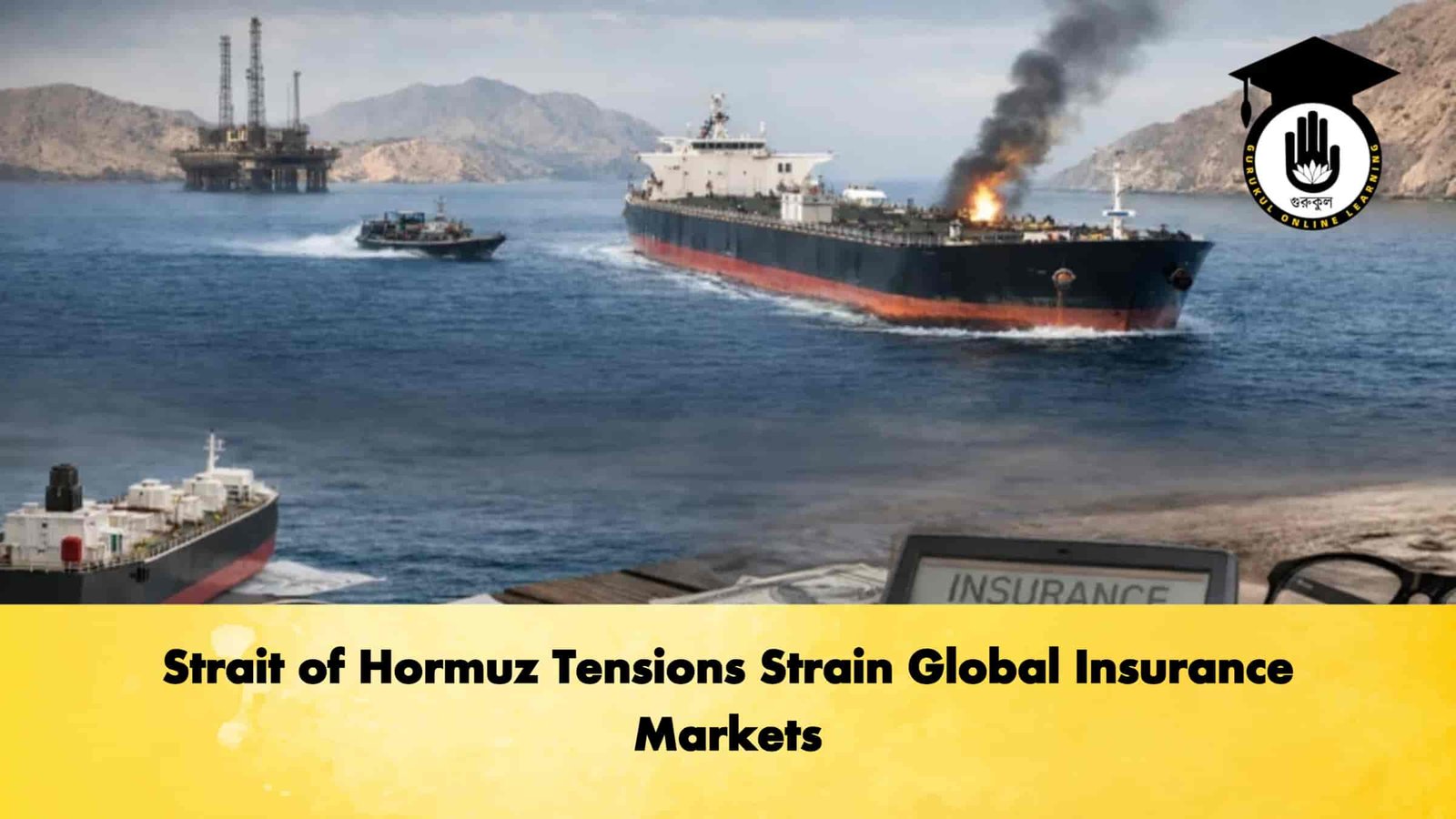
Ongoing geopolitical tensions surrounding the Strait of Hormuz have triggered heightened uncertainty across the global energy and insurance sectors. The implications extend beyond crude oil and natural gas prices, placing significant pressure on marine insurance, cargo coverage, fuel-related risk insurance, and reinsurance markets. Industry experts describe the current situation as a critical juncture for risk reassessment within the insurance sector.
The Strait of Hormuz serves as a pivotal artery for international energy supply, with millions of barrels of crude oil and liquefied natural gas (LNG) passing through daily en route to global markets. Any disruption to maritime traffic or perceived security threats can create significant uncertainty in shipping operations, compelling insurers to reassess coverage terms. Demand for war-risk insurance in high-risk regions rises sharply, often accompanied by steep premium adjustments.
The effects on marine and cargo insurance are particularly pronounced. Shipowners face increased insurance costs, while cargo insurers impose stricter conditions. Heightened risks of delays, route diversions, or potential losses translate into greater claims pressure. LNG transport is especially sensitive to these developments, as high-value specialised vessels complicate risk assessments, and supply disruptions increase the likelihood of cargo delays or losses.
Reinsurance markets are equally affected. Companies that rely on reinsurance support for large-scale risks are now confronting rising premiums and stricter underwriting conditions. Uncertainty in energy supply cascades into broader industrial production and trade activities, prompting higher demand for business interruption and commercial insurance coverage. Increased import and export costs strain corporate cash flows and elevate credit insurance risk.
Financial market volatility adds a further layer of complexity for insurers. Share price fluctuations in energy and transport sectors affect investment portfolios, intensifying the need to align underwriting and investment risk strategies carefully.
Insurance firms are responding by implementing stringent risk evaluation, real-time data analytics, and robust claims management. Trends include recalibrating coverage limits, deductibles, and policy terms in high-risk regions. Insurers are also emphasising client awareness, promoting alternative routing strategies to mitigate potential losses.
A summary of the impact across different insurance sectors is presented below:
| Insurance Sector | Primary Impact | Industry Response | Potential Outcome |
|---|---|---|---|
| Marine Insurance | Maritime traffic uncertainty | Increased premiums, coverage limit review | Higher shipping costs |
| Cargo Insurance | Increased risk of delay and loss | Stricter conditions, cautious underwriting | Greater claims pressure |
| LNG Transportation | Risk associated with specialised vessels | Complex risk assessments | Supply disruptions, delivery delays |
| Reinsurance | Exposure to large-scale risks | Premium hikes, stricter terms | Higher reinsurance costs |
| Credit Insurance | Pressure on business and cash flows | Risk reassessment | Elevated trade and loan risks |
The Strait of Hormuz crisis underscores how rapidly geopolitical instability can ripple through the global insurance architecture. Adjustments in premiums, restructured coverage, and increased reliance on reinsurance constitute a strategic pivot for the sector. In the long term, structural changes in marine and energy-related insurance markets may be inevitable. Insurance companies are thus compelled to adopt rigorous, forward-looking risk management practices to safeguard industry stability and client protection.